Theme Layout

Boxed or Wide or Framed

Theme Translation

Display Featured Slider

Featured Slider Styles

Display Grid Slider

Grid Slider Styles

Display Trending Posts

Yes

Display Author Bio

Display Instagram Footer

Dark or Light Style

Showing posts with label Synthetic Diamonds. Show all posts
Would You Propose With a Lab-Grown Diamond?

Would You Propose With a Lab-Grown Diamond?


It's no secret that people have been gaining awareness to the trend of artificially created diamonds. First in the U.S., now here in Metro Manila. Lab-grown diamonds have the same essential carbon-composition and isometric structure as natural diamond, but they are products of factories rather than mined from the earth.


What does this mean for people who are looking for a diamond to use during their proposals? Getting married to the love of your life is a once in a lifetime event, and the marketing behind the diamond trade centers around diamond's traits and rarity for being a symbol of everlasting commitment.
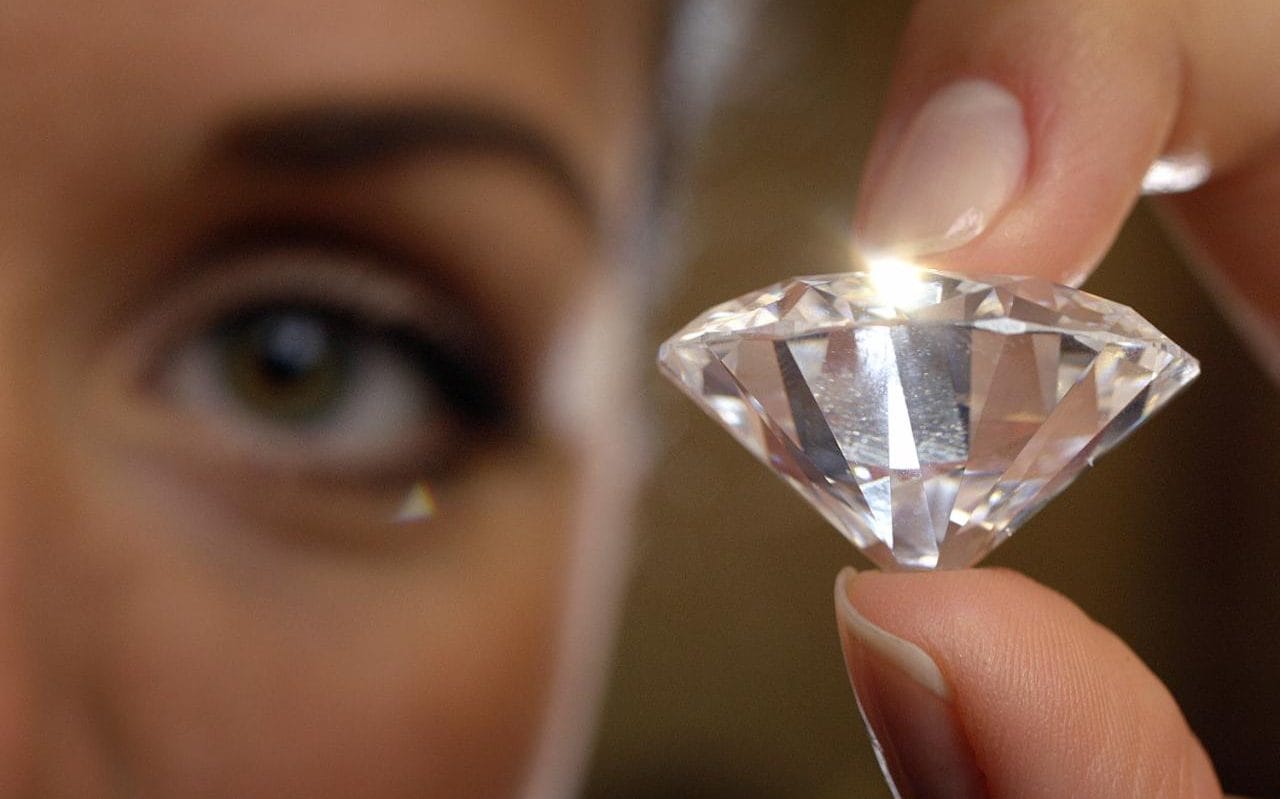

A diamond is a diamond, and lab-grown stones have the same hardness and brilliance as their natural counterparts, so if you're worried somebody will come up and say "Ah, that diamond is lab-grown", there is virtually no possibility of that happening (unless they already know, or are bluffing, or your diamond is much older type of HPHT stone with metallic inclusions). The latest lab-grown diamond synthesis method- CVD growth, can create diamonds with or without tiny inclusions, but their products are almost always non-diagnostic to make a separation between natural and lab-grown. You would need advanced spectrometers, like the ones we have here at Gemcamp for proper testing. Normal thermal or electric conductivity testers (DIY diamond testers) will not help with this specific separation.


Going back to the topic, a diamond is usually purchased not just because of its physical beauty, but also because of its rarity and investment value. These two things are very tricky issues to consider when considering to purchase a lab-grown stone. Although we as a laboratory are neither in favor nor in resistance to the usage of lab-grown diamonds as proposal gemstones, in terms of rarity- the technology to produce lab-grown diamonds is (and will continue) to become more accessible and affordable in the future, thereby allowing more people to create man-made diamonds which may possibly affect how their prices will fare over time. In the 1800's, lab-grown ruby and lab-grown sapphire were first created by August Verneuil (a french chemist). Today, you can find these lab-grown gemstones for a a few dollars per carat at most marketplaces. Some retailers may sell them for 100 or so dollars per stone with proper marketing. These stones have the same physical beauty as natural rubies and sapphires, but the only difference is that they were made by human beings, so why are their prices so different? Well, they're not rare anymore. People from all over the world are now creating rubies and sapphires on the commercial-scale, and this supplies the demand for cheaper, costume jewelry.

We're not commenting that we know the future of diamond and man-made diamond prices, or the relationships between them. We're simply giving you a look into this fast-changing topic of interest. Supply and demand, the popularity of lab-grown diamonds is rising, but the number of suppliers worldwide is also rising with the continuing ease of their creation technology. It's up to the buyer whether he is for- or against- investing in a lab-grown diamond. They are after all, still very beautiful products. They are as hard and as brilliant as natural diamonds. These symbolical characteristics are important for the idea of marriages and proposals. If you're looking to use a diamond because of these traits, then a lab-grown stone will not be any different. Then again, if you're looking to use a diamond because of its story- like how this rare stone was mined out from deep beneath the earth, or how it formed millions of years before you were both born- then maybe you should go for a natural stone. In the end, it is an issue of interest, divided by many diverse opinions. Some people don't even use diamonds at all. Princess Diana's main engagement stone was a marvelous blue sapphire that captivated the entire world with its vivid blue hue.
Note that the current prices of natural diamonds are also higher than the prices of lab-grown stones. This may be a factor in your selection process as well. Natural diamonds have been around for a long time, but man-made diamonds are a relatively newer class of product.
Feel obliged to ask us more about lab-grown stones during your appointment sessions.

Read more »
Gemcamp Laboratories
0 Comments

You Might Also Like

A Bit of Jewelry Trivia for Beginning Filipino Jewelry Collectors

A Bit of Jewelry Trivia for Beginning Filipino Jewelry Collectors


Here we'll just briefly discuss some of the commonly misunderstood concepts observed in the local trade. Now, certain people may already be aware of these, but it seems that every now and then some people express confusion regarding what many terms mean, and what they don't mean. This short article should give you a bit of insight (and trivia) about gemstones and jewelry.


1. 'Emerald Cut' refers to a specific cutting style and shape, not necessarily or specifically to the emerald gemstone itself. Most diamond collectors may be familiar with the popular term 'emerald cut', but some people are not aware that this term refers to how a gemstone (diamond or any other) is fashioned and polished into a rectangular shape with step-cut (four sided) facets on its body. Emeralds themselves, are very often cut in this rectangular style, because of the way their crystals grow, and the intention of gem cutters to save the most weight. Today, many other gemstones, such as aquamarine, diamond, amethyst and quartz are frequently fashioned as 'emerald cuts'. This specific cutting style is well suited for stones of high clarity, or stones that tend to form elongated or columnar in nature.


2. Rubellite is not ruby. We've come across a few parties that previously believed rubellite to be a form or type of ruby. This is simply not true. Rubellite is a trade named color variety for red to pinkish red tourmaline. Both tourmaline and ruby maintain very differnet gemological properties, and prices. Ruby is traditionally much more expensive than rubellite tourmaline, given a situation where color intensity and clarity levels are generally equal.


3. The term 'synthetic' is different from the term 'imitation' or 'simulant'. A synthetic gem refers to a man-made counterpart of that gem, with the same essential crystal structure and chemistry. A synthetic diamond, is still made of carbon, crystallized in the cubic crystal system for example. This is in stark contrast to an imitation gem (also called a simulant gem). An imitation gem merely looks like the gem it is trying to copy. Moissanite for example, is an imitation of diamond, as it is made of silicon carbide instead of pure carbon. It also grows in a different crystal system.


4. Cultured Pearls, not wild pearls, comprise a majority of all middle to high-end pearl jewelry collections in the country. Some people are not aware that over 99% of all pearls used in the jewelry industry today (especially the mid-to-high ranges) are actually cultured pearls. Cultured south sea pearls for example, are among the most expensive pearl items you can procure, with some necklaces costing hundreds of thousands of dollars. For pearls there are three categories you have to be familiar with. Imitation pearls, cultured pearls and wild-caught pearls. Imitation pearls are simply simulant items usually made of plastic or glass coated with iridescent substances. Cultured pearls and wild-caught pearls both come from actual live animals (mollusks, oysters etc), but a cultured pearl means that man has assisted the developmental stage by putting either a piece of mantle tissue or a shell-bead nucleus inside the mollusk in order for it to coat with nacre over long periods of time- to eventually form a pearl. The nacre layers are still organically produced by the same animal. Wild-caught pearls statistically speaking, are rare coincidences in nature today, and almost never come in large enough symmetrical shapes (round, oval etc.). The vast majority of fine pearl jewelry makes use of cultured pearls. (This statement does not apply for giant clam pearls, which we do not currently test at the laboratory).


5. Diamonds are not indestructible. We would not suggest that people perform any possibly-destructive test to find out if their stone is actually a diamond. Stories of sandpaper-scratching or hardness testing using rocks or other materials seem to be very prevalent among Filipinos. While diamond is the hardest mineral to 'scratch', it does maintain multiple planes of atomic weakness (cleavage). When struck in specific directions, a diamond can chip, fracture or even split in two. Thin areas of a diamond, like its girdle or culet, are also very prone to breakage. This can still happen even if it impacts with something with a generally lower hardness, if done in certain ways. Additionally, diamonds can also burn if subjected to high enough fire temperatures and sufficient levels of oxygen (because they're still carbon).


6. Proper heat treatment in rubies and sapphires is okay and an accepted part of the trade. There are those out there who detest the thought of their rubies being treated, but the vast majority (over 95%) of rubies and sapphires today are actually subjected to some form of heat treatment. It's a normal practice in the industry, and can bring out a stone's potential when done in the correct conditions using appropriate methods. While premium prices do exist for unheated stones, it's just as likely that an originally duller stone's value can eventually be heightened by subjecting it to heat treatment and increasing the overall color quality.


7. Glass-filled rubies are not nearly as expensive as natural or heated-only rubies. These items can be filled with glass in up to 50% of their composition. If someone tells you that their value is basically the same as rubies that aren't filled, you should probably do a bit of research first. Most likely you'll find that glass-filled rubies were originally very opaque-looking low-quality stones. Their durability post-treatment is also not that stable, according to many of our visitors and our own observations.


8. DIY Handheld Diamond Thermal Testers cannot differentiate between natural diamonds and lab-grown / man-made diamonds. These instruments make use of a technology that measures thermal conductivity, a property that is essentially the same for both natural and synthetic diamonds. Other testers like duo or multi testers that also check for moissanite, make use of electrical conductivity. These also cannot separate CVD or HPHT lab grown diamonds from natural diamonds. Advanced spectrometric testing is more suitable for this differentiation, which we make use of here at Gemcamp Laboratories.
Read more »
Gemcamp Laboratories
0 Comments

You Might Also Like

Be Aware of Those Who Tend to Mix Man-made Diamonds into Natural Diamond Pavé-set Jewelry

Be Aware of Those Who Tend to Mix Man-made Diamonds into Natural Diamond Pavé-set Jewelry


It's been notoriously known that many shady manufacturers of jewelry these days tend to con people by mixing both natural and man-made stones into the same piece of jewelry. Sometimes they use a lab-created diamond for the center stone, but other times people want to hide the deception much better.

Here at the laboratory, we have seen some people bring jewelry pieces (to be examined only), where up to 34% of the melee accent-stones turned out to be HPHT lab-grown diamonds. It should be noted that most of the pieces were purchased by their owners from sellers outside of the Philippines. This can be quite a concern though, as the value of an entire jewelry piece changes once you know that many of the stones came from being grown artificially at a lab or factory. Likewise the demand for a certain piece can also change once this realisation comes into play.


Diamonds with sizes like the ones above, are more easily replaced with man-made stones due to people not being as paranoid over them.

Side stones are generally melee-sized diamonds, often times not getting larger than .10 carats (in weight). These stones are often overlooked by clients, however the trends in jewelry design currently favor pieces that are highly encrusted by rows and rows of pave-set diamonds. Just imagine the cost that manufacturers would save if they used lab-created stones for 30-40% of the diamond melee batch.


Some of the newest CVD synthetic diamonds to hit the market are virtually inclusion-free (Internally Flawless)

Man-made or lab-created diamonds, again have the same chemical composition and structure as natural stones. The words "real", "authentic" and "genuine" do not really define the difference anymore between these stones and natural earth-mined stones. Despite this though, man-made diamonds can be easily detected and separated by experienced gemologists that possess the proper scientific equipment setup.

These stones are also cheaper than their natural counterparts, by anywhere from 40-60% at wholesale, but sometimes 30-40% through retail as far as we've observed during our research trips to country fairs like those held thrice a year in hong kong.


If you're particular about whether or not your diamond is man-made or naturally mined from the earth, feel free to set an appointment with our gemologist via our facebook page. Gemcamp Laboratories use advanced luminescence spectroscopy, aside from other gemological techniques and practices to help identify if your diamond is indeed a natural stone by chemical trace-element type analysis.

Needless to say, we are also capable of separating imitations and simulants from diamond. Imitation generally means something that is not a diamond, in crystal structure and essential chemistry. The only similarity it has to diamond is in visual semblance.
Read more »
Gemcamp Laboratories
0 Comments

You Might Also Like

Man-made Diamonds Are Getting Better.

Man-made Diamonds Are Getting Better.


The growing concern over separating man-made or lab-grown diamonds from natural ones is well grounded on the fact that this gem species is one of the hardest ever to segregate visually, even for gemologists. In fact, for stones that are grown using the HPHT (High Pressure, High Temperature) method, exposure to the trade and processes involved with manufacturing man-made diamonds allowed laboratory gemologists to take note of certain characteristics observable in grown stones. These include specific types of metallic looking flux residues, and peculiar looking growth marks that showed the difference in a stone's crystal-development history.


The HPHT method has been the staple of the jewelry industry for many years, and still accounts for the production of many of the world's man-made diamonds today. Despite this, more and more technologically advanced companies have been working on (and developing proprietary advancements) the other method of diamond growing called Chemical Vapor Deposition or CVD for short. This type of laboratory-grown diamond is much less likely to show visible traces of its synthesis today. The diamonds themselves are grown from flat sheets, by depositing material layer by layer from a carbonaceous cloud of gas (like methane).


Lab-grown CVD diamonds have finally reached the point where their colors and clarities produced can be directly comparable to those of high quality natural diamonds. While lab-grown / man-made diamonds sold on with open disclosure and honest documentation are very beautiful products, the problem lies in the sale of these stones under the guise or label of 'natural diamonds'. These are two different categories of salable gems with two different price points in the trade, and therefore should not be mistaken for one another.

For natural diamond identity checks, we combine the use of scientific spectrometric equipment with the many years of experience held by our gemological staff through their involvement in the global diamond trade. For visits to our laboratory, you can set up an appointment with us through our official facebook page.
Read more »
Gemcamp Laboratories
0 Comments

You Might Also Like

Man-made Diamond Retail Store Closes Shop After Only 6 Months in Operation

Man-made Diamond Retail Store Closes Shop After Only 6 Months in Operation


It's no secret to the jewelry-buying community that synthetic (a.k.a. man-made, cultured) diamonds have been growing in market reach, with more and more producers creating lab grown diamonds every year. The challenge of gemological institutes grows stronger as time passes, due to the barriers of entry weakening for this industry.


(These are different from simulant diamonds, which atomically, are not diamonds at all. Simulants, or imitation diamonds are actually chemically composed of another material altogether, like moissanite or cubic zicronia. Pictured above is a simulant diamond)

Man-made diamonds on their own, present a legitimate opportunity for both buyers and sellers, IF disclosed properly. There's nothing fraudulent about selling one of these stones, as long as they are sold as synthetic gemstones or laboratory-made gemstones. The problem is, because there seems to be an influx of these products flowing into the international jewelry markets, some shady sellers try to move their items in an underhanded fashion, sneaking man-made gemstones into parcels of natural diamonds. Even store owners often fall prey to this scheme, as you need advance spectrometric equipment to detect a fake.


Despite their monetary values being very different, visually a synthetic diamond is almost impossible to separate from a natural one, even for experienced jewelers. The cause for concern is starting to hit many, as the public starts to gain awareness on the reality of this issue and what it means for security in the diamond trade.

According to news sites in the US, a subsidiary retail brand of Diamond Foundry will be shutting down their physical store in Los Angeles branch after just six months in business. The manufacturer legally produces or grows synthetic diamonds using controlled machinery.


The closure of their establishment is occurring for reasons we can only speculate from halfway around the world, but the company isn't out of the ballgame just yet. Reports say that the brand will continue with its online business activity, as they still state that fast-paced movement of their lab-grown diamond products is prevalent throughout many digital markets.

It's unclear whether the public's reception of synthetic diamonds would be similar in other localities, but the fact that these artificially made products are being sold online to millions of people across the world, should stir up the possibility of gradually diffused security in the overall diamond trade.

Are these buyers acquiring the stones for personal jewelry, or are they re-selling them to unsuspecting people who do not yet know of the technology to produce diamonds with machines? Here in the Philippines, synthetic diamonds have also made their way into our community. We actually applaud the local retailers who openly disclose their items as synthetics, but hold fear regarding the small-scale traders that may be too tempted to gain a quick buck at someone else's expense.


Hopefully the ethics and open disclosure stay true for businessmen here in Metro Manila, as the separation of natural VS synthetic diamonds is currently a fast-growing issue. Gemcamp Laboratories has already encountered several synthetic stones at our facility, some of which had owners who were not aware of their production from machines. It's a pressing matter, and we hope to always do our best in helping the Filipino people stay away from any possible fraudulent purchases.

Read more »
Gemcamp Laboratories
0 Comments

You Might Also Like

News on Artificially-Grown Diamonds Cause Jewelry Buyers to Worry Over Authenticity of Purchases in the First Quarter of 2018

News on Artificially-Grown Diamonds Cause Jewelry Buyers to Worry Over Authenticity of Purchases in the First Quarter of 2018


Although man-made diamonds have been a prevalent topic of controversy in many western countries, the trend has caught up to the jewelry trade of Southeast Asia and the Philippines. Buyers now are much more cautious and have gained awareness of the possibility that their diamonds may have been grown in a factory. Synthetic, cultured, or man-made diamonds are all identical terms for these materials that have been made from pure carbon, using state-of-the-art technology.


The growing, televised features on synthetic diamonds and the capability of companies to produce them by the hundreds- have caused some concern among the local jewelry collectors in our society. Many who have visited the laboratory fear that the gem trade is becoming more "loose" and scary in terms of undisclosed diamond authenticity.

Fox News has recently aired a segment about an American company that grows synthetic diamonds ethically. Leonardo Dicaprio, the famous Hollywood actor has even invested in this progressive diamond growing operation with the hopes that their product may lessen the current plague of 'conflict' diamonds that are also a cause for concern in the industry. In essence, any item can be good or bad if used or sourced the wrong way.

The same company was said to be able to create hundreds of man-made diamonds in a span of just two weeks, as told during the news segment.

Despite the two opposing sides that are constantly battling between the pro's and con's of synthetic diamonds in the trade, we do have to consider the facts beyond the bias of sales.

With regards to artificially grown diamonds- their value is not the same as that of natural diamonds, and despite the near-impossible difficulty in telling them apart with your naked eye, our gemologists can separate the two kinds of materials with ease.


More and more news articles regarding the advent of synthetic diamonds are making headlines this quarter, with some commentaries stating that millennials are especially prone to falling victim to synthetic diamond scams. Some fraudulent vendors and suppliers aim to take advantage of the younger generations' lack of awareness in "heritage-type" items like jewelry and diamonds.

Here in the Philippines, it's extremely important to always be sure of your item's authenticity. Third party laboratories like Gemcamp help to support the trade by minimizing the chances of diamond fraud, and encouraging a safe and ethical environment for the Filipino jewelry collectors.

Synthetic diamonds are not inherently bad, they are just a different type of product. Many people actually appreciate their beauty and appeal. The only concern that poses a threat to the public, is when synthetic diamonds are sold as natural gemstones.


Many synthetic diamonds and gemstones unfortunately, are also being misused by illegal sellers and con-artists to fool buyers into paying more, with the guise that the products are natural gems. A man-made flame-fusion ruby for example can be bought at around 5-20 US dollars in high qualities, but a natural ruby counterpart may fetch over a thousand dollars due to its factual rarity.

These HPHT synthetic diamond machines (pictured below) are still being used today, despite the invention of many smaller sized growing machines (like those used for CVD synthetics). HPHT machines mimic the extreme heat and pressure needed for diamonds to form deep beneath the earth's landmasses.


Please also note that synthetic diamonds will fool the automatic diamond testers often used in pawnshops and jewelry stores. These testers are often based off of electrical and heat conductivity, which synthetic diamonds will be able to possess in similarity to their natural counterparts. Some other materials, such as cubic zirconia coated with synthetic diamond, and some types of Moissanite will also be able to fool even the most advanced thermal testers out there on the market.

In our efforts to spread awareness and education across the Philippine public sector, we are currently developing a workshop curriculum that will teach people about gemstones, gemology, diamonds and synthetics. It will be made available mid-2018, and you can join our updater's list by inquiring on our facebook page.


Read more »
Gemcamp Laboratories
0 Comments

You Might Also Like

Lab-Grown Diamond Manufacturer Creates an Enormous 6 Carat Man-made Diamond.

Lab-Grown Diamond Manufacturer Creates an Enormous 6 Carat Man-made Diamond.


While diamond synthesis isn't something new to the trade, it's still a hot topic all around the international jewelry industry. "Will synthetic diamonds influence the prices of earth-mined stones in the long run?". "How do we protect ourselves from man-made diamonds being peddled as natural gemstones?". There are a lot of questions that many experts are currently concerned over.


Laboratories can detect the vast majority of natural diamonds using advanced instruments that read spectrometric emission and absorption patterns, but to people who are just looking to buy (or sell) diamonds, it can be daunting to realize just how many ways they can be fooled by unscrupulous individuals.

Synthetic diamonds grown using the chemical vapor deposition process, or CVD for short, are almost impossible to distinguish without specific gemological equipment. Many visitors to our laboratory here in Quezon City, have already submitted diamonds that turned out to be man-made through controlled, artificial growth methods. Around 60% of them did not know, or were not sure about the nature of these stones, which causes some concern over honesty in the jewelry trade.

In the US, a company called WV Lab Grown Diamonds uses the CVD technique to pursue ultra-high qualities of synthetic diamond. Their products have now been elevated in size ranking, as the lab has just announced its most recent 6 carat production through trade sites like Rapaport.


Their facility, located in Washington, D.C., aims to pursue forward leaps in the field of diamond synthesis, remarking that the future will probably hold even bigger sizes of CVD man-made diamonds for the public to enjoy.

A 6 carat, colorless diamond was recently created at facet-grade quality. The company stated that their product would price similarly to a 3.5 carat natural diamond in the same color and clarity grade levels, but that's still their own appraisal on the item. (We do not endorse nor confirm their estimate.)

As far as Gemcamp's independent research shows, synthetic diamonds were often priced at 75% the value of their natural counterparts back in 2009. Now, during last year's March expo in Hong Kong, our team of gemologists asked around to find out more regarding the current prices of CVD synthetic stones. One large manufacturer (brand shall remain private), was willing to sell its products initially for 60% the price of a natural counterpart, but later settled for 50% after negotiation.


Man-made diamonds can be a great product for jewelry buyers who are looking for a specific set of criteria in their stones. We will not however, comment on their investment worth, as our position still remains neutral. Research publications from our laboratory only publishes data gathered by our gemologists in and outside of the Philippine market.

We can only attest to the investment appreciation of natural diamond, as it has been stable appreciative asset when evaluated throughout the past decades. Much of the public's interest in natural diamond has paved the way for labs like GIA to create and fortify the grading systems we all follow today, creating a way for industry experts to price and essentially commoditize natural diamond, similar to gold, platinum or other precious metals traded internationally.

Read more »
Gemcamp Laboratories
0 Comments

You Might Also Like

Lab-Grown, Man-Made or Cultured Diamonds in the Philippines

Lab-Grown, Man-Made or Cultured Diamonds in the Philippines


Half a decade ago, there were issues that began plaguing the international jewelry trade, hitting it's most lucrative market- diamond jewelry buyers. Synthetic, a.k.a. man-made or cultured diamonds, have been around for quite a while now, however these days the manufacturers have already mastered the quality and size creation necessary to rival the representation of most natural high grade diamonds.


Man-made diamonds are essentially made up of the same chemical composition and structure that natural diamonds possess, namely carbon atoms arranged in a specific lattice formation. This, along with a near-colorless nature, allows for a great public difficulty in their separation. Man-made diamonds are not to be confused with "simulants" or "imitations", which are stones that look like diamond, but are entirely made up of something else- such examples of this would be cubic zirconia and moissanite.

Lab-grown diamonds are made using two popular processes in today's markets; 'High Pressure High Temperature' (HPHT) method and the 'Chemical Vapor Deposition' (CVD) method. The latter has proven to be slightly more advanced, and harder to detect by the public. None of those older pen-type (thermal-conductivity) diamond testers or (electrical property) moissanite testers will be able to handle an undisclosed threat if these materials are the ones being tested.

Man-Made Diamonds Are Circulating in Metro Manila. The Growing Possibility of Undisclosed Artificially-Grown Stones on the Market Causes More People To Worry Over the Authenticity of Their Diamonds.


The Philippines for years, has not had too much concern for these types of stones, however with the advent of retail stores directly (and honestly) selling lab-grown diamonds, certainly there will be a rise of other parties who may consider more unethical ways of integrating these man-made counterparts into jewelry sets or parcels. These man-made stones at the moment, cost around 50-60% less than natural diamonds, based on data we have collected visiting the largest diamond and jewelry trade exhibitions in the world, including those held in Hong Kong.

There is nothing wrong with man-made / cultured diamonds, in fact many people praise them for being more ethically responsible, eradicating the possibility of "blood diamonds"or "conflict diamonds" in their production. The fault and fraud comes when an entity, company or person attempts to pass off a man-made diamond as a natural stone, which we've heard happens quite often in the trade, now growing in frequency and locality ranges.

We urge the Philippine consumer market to have caution in the buying of both man-made and natural diamonds. Always be sure that your supplier is trustworthy and try to establish a good relationship with any jeweler who's store you purchase from.

For anyone who wants to make sure that their diamonds are indeed of natural origin, we can help you distinguish the identity of your stone here at Gemcamp Laboratories. Our gemologists use a combination of spectrometry and photoluminescence to help you identify if your stone is a natural type IaAB diamond. Gain awareness on the value, and quality of your gemstones by bringing it to one of our GIA graduate gemologists for checking. 
Read more »
Gemcamp Laboratories
0 Comments

You Might Also Like

[name=Gemcamp Laboratories] [img=http://www.gemcamp.org/img/gemcamp-black-badge-3.jpg] [description=A Philippine-based laboratory group headed by GIA graduate gemologists who share a collective passion for the sciences that support gemstone identification and evaluation.] (facebook=https://www.facebook.com/gemcamplab/) (twitter=https://twitter.com/gemcamplab) (instagram=https://www.instagram.com/gemcamplaboratories/) (pinterest=https://www.pinterest.ph/gemcamplaboratories/)

Follow @Gemcamp Instagram