Theme Layout

Boxed or Wide or Framed

Theme Translation

Display Featured Slider

Featured Slider Styles

Display Grid Slider

Grid Slider Styles

Display Trending Posts

Yes

Display Author Bio

Display Instagram Footer

Dark or Light Style

Showing posts with label Tourmaline. Show all posts
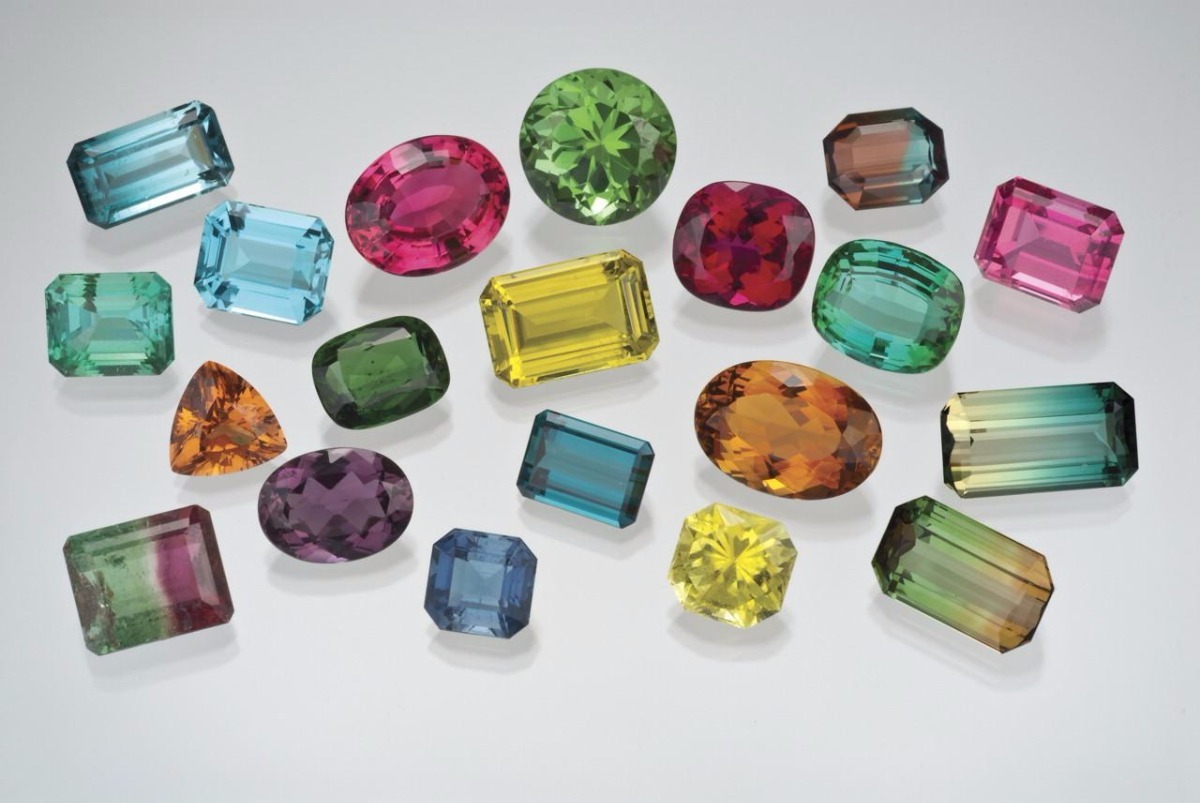
The Many Colors of Tourmaline

The Many Colors of Tourmaline


When you think of tourmaline, what color comes to mind first? Is it the raspberry red hues of rubellite? The neon electric blues of specimens from Paraiba? or is it the multi-colored elongated crystals of liddicoatite?

Tourmaline isn't a single gemstone species, it's actually a group. Specifically, it's a boron-silicate group that has a lot of different species and many different varieties, which can all possess a large diversity of colors, inclusions and appealing factors.


Tourmaline though, is the term people are most familiar with. Not many who buy tourmaline jewelry refer to a species specifically by name- examples of which would be elbaite, or dravite. These names are not really used in mainstream jewelry very much.

Certain trade-locality names like Paraiba, named after the vibrant green-to-blue specimens from Brazil's Paraiba area, have become popularly used as well. Paraiba tourmaline is now one of the most expensive kinds of tourmaline.


Other names like indicolite (normal blue) and verdelite (normal green) are also sometimes used for both jewelry and loose-stone trading at gem fairs and shops, but the group name 'tourmaline' is by far the most popularly used name for this gemstone.

Tourmaline is probably the (if not one of the) largest group of gem-worthy minerals out there, with colors ranging from black (schorl) to colorless (achroite), and nearly every color of the rainbow.

It can compete with the upper tiers of colored stones in terms of value, and can also provide slightly more affordable alternatives to traditional gems like ruby or emerald. Tourmaline is one of the fastest growing gems today, in terms of recognition amongst new jewelry collectors and enthusiasts.

Here at Gemcamp, we do see many colored gemstones being brought in for testing, tourmaline being one of the fairly common ones. One of its most defining gemological traits is a very consistent level of birefringence or double refraction, which can be spotted even in faceted gems.
Read more »
Gemcamp Laboratories
0 Comments

You Might Also Like

Have You Heard of Watermelon Tourmaline?

Have You Heard of Watermelon Tourmaline?


As gem enthusiasts and jewelry collectors, we're sure that at least some of you have encountered this label before. Watermelon tourmaline is a very unique variety of the gem group that showcases a lovely pairing of fertile greens with vivid red cores. The curious ratio of color gave the variety its name, but did you know that a long time ago, the first green tourmaline gems discovered in Brazil were initially confused with emeralds?


Tourmalines are mixed crystals of aluminum boron silicate that also contain elements such as iron, manganese, sodium, lithium, or potassium. Today, they can be distinguished by their chemical composition, and by the optical and physical properties observable by gemological testing.


The gem got its name from the Sinhalese word "Toro Mali" meaning mixed stones of many different colors. Back then, gems were usually just identified by their hues, and so many people weren't really aware that many species of tourmaline actually belonged to the same gem group. The species called "Elbaite", although not as popular a label, is actually the one we most often see when we buy rubellite, paraiba (copper-bearing neons) or even watermelon varieties of tourmaline.


What causes the color in watermelon tourmaline? As the raw tourmaline crystal grows larger and thickens out, it's exposed to different elements such as manganese and lithium, which consequentially cause the gemstone to change color from a pink core through a pale zone to the outer green rind, creating the duo-color we're all familiar with.


Despite first being discovered in the state of Maine in the U.S., watermelon tourmaline can also be found in Brazil, Nigeria, Madagascar, and Afghanistan among other localities. Miners sometimes refrain from sending the rough stones off to cutting plants, as certain specimens can be worth more in their natural uncut state. This is only true for well-formed crystals that are hard to find and extract safely from their host matrix rock.


A lot of gem cutters like to 'slice' rough stones like loaves of bread, in order to fully exhibit the beautiful medley of color that makes it so unique. These tourmaline slices often become the centerpieces of pendants or earrings for designer jewelry pieces.
Read more »
Gemcamp Laboratories
0 Comments

You Might Also Like

By the Way, What's Your Birthstone?

By the Way, What's Your Birthstone?


In several places around the world, people associate specific varieties of gemstones with different aspects of their life. Some people consider using crystals as a means for enhancing health, prosperity and wellness, with each crystal type affecting a certain goal or aspiration.


Others put an attachment between crystals and their zodiac signs, which are different for the western and eastern versions of the zodiac system. The interweaving of crystals into our culture seems to be derived from history's longstanding view of crystals and gems as symbols of importance.

One particular, and very often uniformly accepted association of gemstones to human culture- is the designation of birthstones. Here's a quick look at each month's assigned birthstone according to the general public:

January's Birthstone is Garnet, which is actually an entire mineral group that's made up of different species and varieties- all called garnet as well. Tsavorite, Demantoid and Rhodolite are all garnets that have slightly different properties due to deviances in their crystals.

February's Birthstone is Amethyst. Along with citrine, amethyst is one of the most popular varieties of the mineral known as quartz. There was a time long ago when amethyst was considered as precious and as valuable as ruby, sapphire and emerald. When the vast Brazilian mining sources turned up, the supply of amethyst skyrocketed and was able to meet worldwide demand. Because of this though, it's prices also became much more affordable for everyone.


March's Birthstone is Aquamarine. This is the stone of the ocean, whose name is literally derived from the sea. Aquamarine is the second most expensive variety of the gem species known as beryl, and is the most famously known light-blue colored gemstone in the world.

April's Birthstone is Diamond, which needs no introduction. Diamond is the hardest mineral on the planet. It symbolizes one's eternal commitment to a partner, and has grown to be the ultimate symbol for marriage in our contemporary society.

May's Birthstone is Emerald. The green variety of beryl is typically its most expensive type. Emerald is also considered one of the 'Big Three' colored stones that make up a huge portion of the jewelry industry. It's said that the best emerald source is Colombia, where the mines of Muzo and Chivor produce emeralds with intensely saturated viridian greens.

June's Birthstone is either Pearl or Alexandrite. There are four types of pearls used today in the jewelry trade: Akoya, South Sea, Tahitian and Freshwater. Any can be used as appropriate birthstone jewelry for June. Likewise, alexandrite is also a famously traded stone today, as the color-change variety of fine chrysoberyl.

July's Birthstone is Ruby, which was once referred to as ratnaraj or 'the king of all colored gemstones'. Ruby actually holds the most expensive price-per-carat of all gemstones apart from diamond. It's also been mentioned in bible passages four times, and has a distinct recognition in the history of many popular cultures and ethnicities.

August's Birthstone is Peridot, which is the most famous light green stone variety in the world, and the gem-quality version of the mineral known as olivine. Peridot specimens were even harvested from meteorites that fell from space.


September's Birthstone is Sapphire. The blue hues of sapphire may be the most famous, but sapphire actually comes in a rainbow of colors, including orange, yellow, pink, black and green. Ruby and sapphire actually have nearly the exact same chemical composition, differing mainly just by their trace-elements that cause their unique colors.

October's Birthstone is either Tourmaline or Opal. Tourmaline is also a mineral group, and one that boasts the greatest variety of colors out of any popularly traded gem today. Some tourmaline specimens can even have up to five colors in a single crystal (Liddicoatite). Opal on the other hand, is an amorphous gem that exhibits a beautifully dazzling phenomena called play-of-color.

November's Birthstone is either Topaz or Citrine. Both are famously known golden gemstones, although topaz can come in other colors as well. These two gems are very much associated with fortune and the attraction of prosperity.

December's Birthstone is either Tanzanite, Zircon or Turquoise. Each of these three stones exhibit different shades of blue, with tanzanite usually holding the most in terms of saturation and intensity. It is also the most expensive of the three.


Some say that the origins of adopting gemstones to symbolize one's birth month has its roots in biblical sources. In the book of Exodus, there is a mention of Aaron's breastplate, which was inlaid with twelve different gemstones to symbolize the twelve tribes of Israel during that period. The stones that were present included sapphire, emerald, topaz, carbuncle, sardius, agate, amethyst, ligure, onyx, beryl, jasper, and diamond.

Carrying one's birthstone, or wearing it on your person is said to bring benefits to him or her, especially during the month of their birth. While this is again, outside of the gemological realm, it is a part of jewelry market studies. People often use birthstone themes to create beautiful pieces that appeal to each individual by a specific personal attachment (the birthday).

Whether you believe in birthstones or not, it is quite curious to note that gemstones that have had significance back during the days of our ancestors, still hold a special place and meaning for us today, in modern society.
Read more »
Gemcamp Laboratories
0 Comments

You Might Also Like

This Beauty Company is Putting Tourmaline Gemstones in their Revitalizing Facemasks

This Beauty Company is Putting Tourmaline Gemstones in their Revitalizing Facemasks


It's not new that many people look to crystals for revitalizing or healing energies. Although this subject is quite separate from the field of gemology, we found it very curious how modern day businesses seem to be adapting to this long-standing trend.


Certain crystals like tourmaline for example, have scientifically documented properties- like being both piezoelectric and pyroelectric. This means that if the gem is put under pressure or subject to specific temperature changes, it generates an electric charge that can be felt.


Make-up and skin care companies across the world are finding new ways of appreciating gemstones in response to the trend of crystal revitalization.


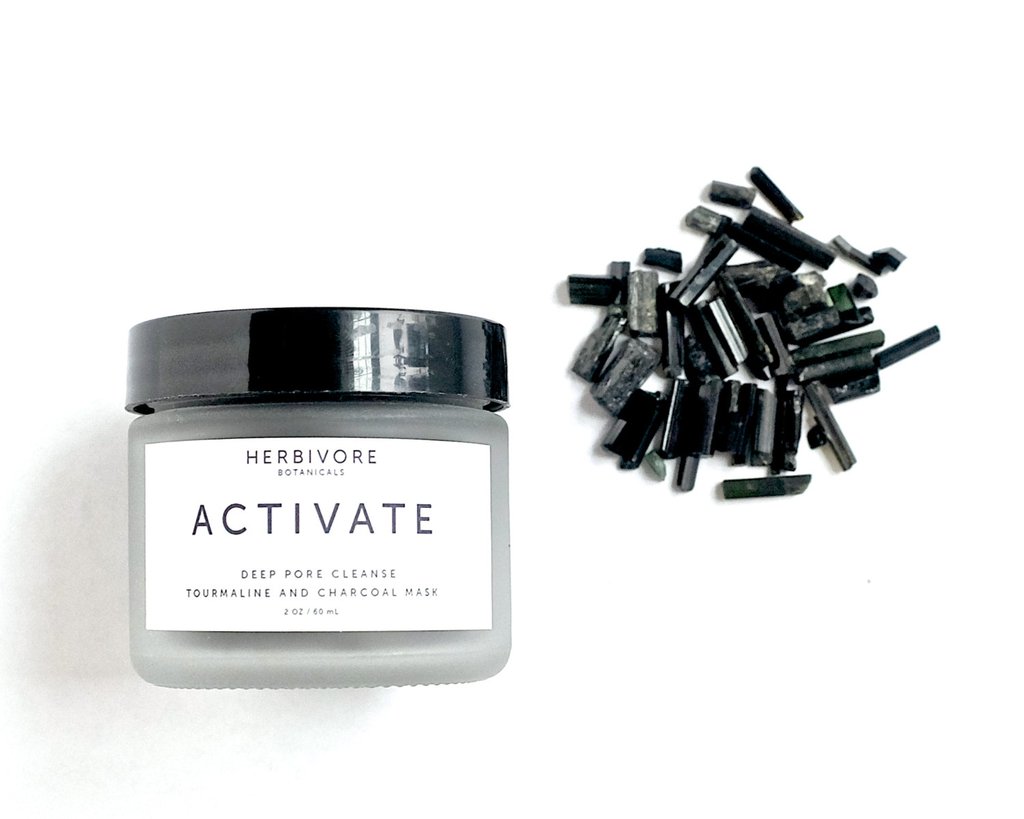
Micronized Brazilian Tourmaline is being used in a face mask product sold by a brand called Herbivore. They say that the gemstone's presence creates a warming feeling that aids in healthy physiological circulation. While we can't claim to comment on the actual measurable effect of tourmaline on circulation, it is admittedly a very curious product, even to mineralogists who know about the gem's unique electric-heat properties.


Other brands have also tried infusing gems such as moonstone feldspar, citrine and certain forms of chalcedony. It's also public knowledge that quartz and its many varieties also possess the piezoelectric trait, which could be the direct inspiration for the gemstone's integration into many revitalizing and wellness products.


Gems are starting to move across industries, from predominantly being encapsulated by the jewelry trade, to gaining popularity as additives in perfumes, candles, and even certain projects related to biotechnology.

Most of these scenarios however, make use of crushed or micronized gemstone bits, as their mineralogical properties hold true to a certain degree of miniaturization. It would still be too expensive to use facet-grade or jewelry-grade gemstone specimens for beauty products. These highly prized rarities of nature command much higher values and are still reserved for the luxury markets and auction houses of the world's high societies.

(Note: We do not recommend products mentioned on this article in any way, nor do we support any claims they make about their variety of effects. Only use or purchase them at your own discretion.)
Read more »
Gemcamp Laboratories
0 Comments

You Might Also Like

[name=Gemcamp Laboratories] [img=http://www.gemcamp.org/img/gemcamp-black-badge-3.jpg] [description=A Philippine-based laboratory group headed by GIA graduate gemologists who share a collective passion for the sciences that support gemstone identification and evaluation.] (facebook=https://www.facebook.com/gemcamplab/) (twitter=https://twitter.com/gemcamplab) (instagram=https://www.instagram.com/gemcamplaboratories/) (pinterest=https://www.pinterest.ph/gemcamplaboratories/)

Follow @Gemcamp Instagram