Theme Layout

Boxed or Wide or Framed

Theme Translation

Display Featured Slider

Featured Slider Styles

Display Grid Slider

Grid Slider Styles

Display Trending Posts

Yes

Display Author Bio

Display Instagram Footer

Dark or Light Style

Showing posts with label Fake Diamonds. Show all posts
Man-made Diamond Retail Store Closes Shop After Only 6 Months in Operation

Man-made Diamond Retail Store Closes Shop After Only 6 Months in Operation


It's no secret to the jewelry-buying community that synthetic (a.k.a. man-made, cultured) diamonds have been growing in market reach, with more and more producers creating lab grown diamonds every year. The challenge of gemological institutes grows stronger as time passes, due to the barriers of entry weakening for this industry.


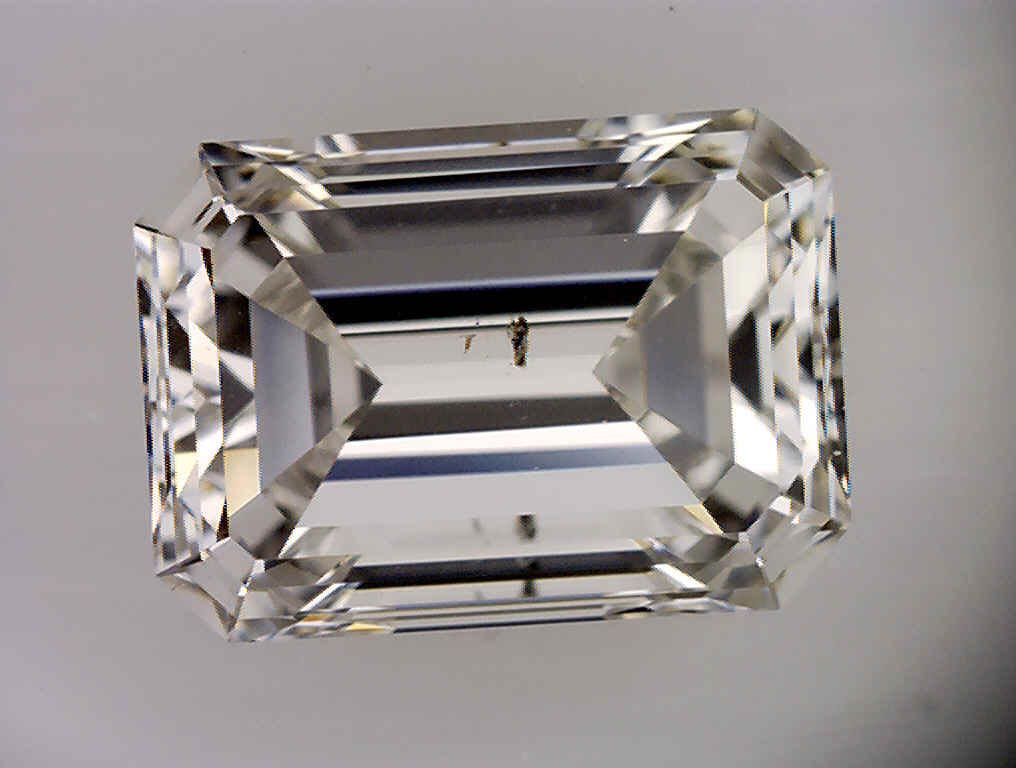
(These are different from simulant diamonds, which atomically, are not diamonds at all. Simulants, or imitation diamonds are actually chemically composed of another material altogether, like moissanite or cubic zicronia. Pictured above is a simulant diamond)

Man-made diamonds on their own, present a legitimate opportunity for both buyers and sellers, IF disclosed properly. There's nothing fraudulent about selling one of these stones, as long as they are sold as synthetic gemstones or laboratory-made gemstones. The problem is, because there seems to be an influx of these products flowing into the international jewelry markets, some shady sellers try to move their items in an underhanded fashion, sneaking man-made gemstones into parcels of natural diamonds. Even store owners often fall prey to this scheme, as you need advance spectrometric equipment to detect a fake.


Despite their monetary values being very different, visually a synthetic diamond is almost impossible to separate from a natural one, even for experienced jewelers. The cause for concern is starting to hit many, as the public starts to gain awareness on the reality of this issue and what it means for security in the diamond trade.

According to news sites in the US, a subsidiary retail brand of Diamond Foundry will be shutting down their physical store in Los Angeles branch after just six months in business. The manufacturer legally produces or grows synthetic diamonds using controlled machinery.


The closure of their establishment is occurring for reasons we can only speculate from halfway around the world, but the company isn't out of the ballgame just yet. Reports say that the brand will continue with its online business activity, as they still state that fast-paced movement of their lab-grown diamond products is prevalent throughout many digital markets.

It's unclear whether the public's reception of synthetic diamonds would be similar in other localities, but the fact that these artificially made products are being sold online to millions of people across the world, should stir up the possibility of gradually diffused security in the overall diamond trade.

Are these buyers acquiring the stones for personal jewelry, or are they re-selling them to unsuspecting people who do not yet know of the technology to produce diamonds with machines? Here in the Philippines, synthetic diamonds have also made their way into our community. We actually applaud the local retailers who openly disclose their items as synthetics, but hold fear regarding the small-scale traders that may be too tempted to gain a quick buck at someone else's expense.


Hopefully the ethics and open disclosure stay true for businessmen here in Metro Manila, as the separation of natural VS synthetic diamonds is currently a fast-growing issue. Gemcamp Laboratories has already encountered several synthetic stones at our facility, some of which had owners who were not aware of their production from machines. It's a pressing matter, and we hope to always do our best in helping the Filipino people stay away from any possible fraudulent purchases.

Read more »
Gemcamp Laboratories
0 Comments

You Might Also Like

A Museum Finds Fakes in its Gem Collections (Prague | 2018)

A Museum Finds Fakes in its Gem Collections (Prague | 2018)


The National Museum in Prague found out that several specimens from its collection were actually fakes. While our resident gemologists were catching up on the week's diamond trading news, an article from Rapaport about this caught their eye.

If museums with their security protocols and sky-high maintenance budgets can still be victim to gemstone misidentification, then what does that say about risks posed to the private sector?


The museum administration was doing an audit in preparation for the country's 100th anniversary, when some of their precious items did not turn out the way they were described. Among the faux gems discovered was a stone thought to be a beautiful five carat diamond. The item was later revealed to be a glass gem that was cut to resemble a diamond's appearance.


Another gemstone misidentified was a 19-carat sapphire that turned out to be synthetic or man-made. This was a costly error, as the museum had originally paid 200,000 CZK for it in the 1970's under the impression that it was a natural, earth-mined sapphire.

Today synthetic sapphires can cost as low as 5 USD per carat, even in certain facet-grade qualities. People have long since invented many ways of creating ruby and sapphire in an artificial environment imposing very low costs (Verneuil Flame Fusion).


Actually, it was noted in the article that half for the ruby collection inspected also turned out to be synthetic or lab-grown. It's quite evident now that the museum has to continue its full audit of all artifacts, jewelry and gemstones, as the price for error steadily increases.

The museum is still doing an investigation as to whether the fake stones were indeed part of a scam, or were acquired due to a lack of expertise among its former employees.

Michal Stehlik, the deputy director in charge has even said during one interview that they might organize an exhibition of different fakes found at museums from around the world. While fake gemstones in a Prague museum can sound scandalous, it also draws a curious eye from the public.

This should serve as an alert warning to the public sector, whether here in Metro Manila, or anywhere around the world. Always remember that gemstones are some of the most easily misidentified items being traded today. Unless proven by an experienced gemologist with the proper laboratory setup, it's quite difficult to find self assurance in your gem's identity.

Just because gemstones are bought at retail shops do not make them immune to fraud, intentional or unintentional. Diamonds and gemstones change hands many times from mine to market. Just one fraudulent individual out of 5 dealers who pass the stone to the retail environment, can hurt the integrity of even the largest jewelry store, or museum for that matter.

Read more »
Gemcamp Laboratories
0 Comments

You Might Also Like

There Are Black Spots in My Diamond, Does that Mean it's the Real Thing?

There Are Black Spots in My Diamond, Does that Mean it's the Real Thing?


It's a common assumption here in the Philippines, that if a gemstone or diamond has some spots or dots inside its material, that automatically makes it a natural stone. This is a dangerous way to think, although the thought was probably formed from observing the early masses of glass imitations that were prevalent several decades ago. These fakes were often very clean, as opposed to low-medium clarity diamond specimens which could have eye-visible inclusions (especially visible if the stone was cut in an older faceting style).


Here at the Metro Manila Gemcamp laboratory branch, a lot of clients come in with the mindset that their diamonds are genuine because they possess inclusions. Although it's far more common to see high levels of clarity in imitations like cubic zirconia and moissanite, we have seen both these materials possess white, gray and black speck-like inclusions during the course of 2017. Likewise, many glass faux diamonds can also show black inclusions, often mislabeled as 'carbon spots' or 'black diamond inclusions' by the local vendors. Be very wary of entertaining assumptions when it comes to diamond authentication.

We have also encountered cases where lighter colored beryllium-treated orange sapphires were thought to be colored diamonds by because they possessed darkish spots. Some specimens of faceted quartz were also quickly debunked as being non-diamond gemstones using differences in their mineralogical properties.

"Carbon Spots" are what many local dealers call the darkish inclusions inside diamonds, but many modern fakes these days can actually re-create the look of dark or black colored inclusions, even in glass or plastic imitations.


When you go around some areas of Manila, it's a frequent occurrence to hear the term "carbon spots" when dealers speak about diamonds, especially with the old European cut stones or rose-cut antique gems. In actuality, diamonds can have different crystal or mineral inclusions inside their interior. We have seen diamonds that contained tiny gem-quality garnet crystals within their interiors. These garnets showed up bright red and were eye-visible in fact. Gemstones-within-gemstones like these can actually raise the price of a colorless diamond, as their rarity creates a demand for collectors of rare mineral specimens.


Most grayish or dark inclusions you will find in diamond are actually composed of the mineral graphite. Graphite is usually seen as isolated crystals or cloud-like groups within the stone itself, and can form with relation to the original rough crystal's growth shape and pattern.

So there you have it, while graphite (made of carbon) is a common inclusion in many natural diamonds, having dark inclusions or spots does not automatically mean that your gemstone is a genuine diamond. Many faux diamonds are also manufactured or precisely cut to display some inclusions that make them appear more 'natural'. Even plastic imitations have been found to possess dark spots from time to time, so it's really not that hard for manufacturers to add in.

It's always best to find a reputable jeweler who is also willing to have the diamond tested with third party labs, like ours. If a diamond is genuine, then there would be no discrepancy in our identification results and findings.
Read more »
Gemcamp Laboratories
0 Comments

You Might Also Like

The Most Common Kinds of Fake Diamonds You'll See in the Philippines

The Most Common Kinds of Fake Diamonds You'll See in the Philippines


Although the term 'fake' is widely used when pertaining to something that imitates the genuine article, a better term for these types of look-a-likes would be "simulant". Now simulant means that a stone has a different chemical composition and a different atomic structure when compared to the real thing. Glass that is cut to look like a faceted diamond, would be classified as a simulant. It is something that resembles only in outward appearance.


This is very different from the term "synthetic", which (for the gemstone industry) refers to a material that has the same essential chemical composition and atomic structure as the original, but was in fact grown artificially in a laboratory.


Diamond holds one of the highest value-per-weight materials in the world, so naturally a lot of people want to create 'fake' or faux versions of the precious gemstone.


Today let's take a look at some of the most common fakes, imitations or simulants out there on the diamond market. First up, we have the most commonly used stone; cubic zirconia. Now this refers to cubic crystalline form of zirconium dioxide.

CZ, as it's more commonly known, is the synthetic counterpart to baddeleyite, which was discovered in 1892, and is the yellowish natural form of zirconium oxide. CZ is extremely popular because its optical properties are very close to those of diamond. Although it only possesses a hardness of 8.5, cubic zirconia fashioned into round brilliant cuts, display more 'fire' than diamond, due to a higher dispersion rate. Much of the trade involving faux diamonds make use of CZ crystals for their brilliance and scintillation, echoing the 'feeling' of diamond, with much lesser costs.


Lately, several proprietary brands follow the trend of concocting their own slightly altered recipe for creating cubic zirconia. Through their efforts, they claim increases in brilliance, hardness, and other properties- however these minor trace impurities are not enough for most laboratories to change their label from cubic zirconia to something else.


Next up, we have synthetic moissanite. This material is typically more expensive than CZ, but poses a different set of difficulties when separation from diamond is needed. Standard pen-hold thermal detectors (diamond detector machines), will often label moissanite as diamond, due to their very close thermal conductivity ratings. Dual or electronic conductivity testers may have a better chance at detection, but we've often seen these machines misread stones as well. Moissanite however, is a doubly refractive stone, and splits light rays that pass through its material, unlike diamond which is singly refractive. Moissanite also displays a lot more fire (dispersion than diamond), as pictured below.


After CZ and moissanite, secondary imitators of diamond are glass, white sapphire (natural or synthetic), rock crystal quartz, and synthetic colorless garnets like gadolinium galium garnet and yttrium aluminum garnet. These stones also have appearance similarities to diamond, but not as much as the previously mentioned high rankers. Their gemological properties allow gemologists to properly separate them from diamond as totally different species of gemstones.
Read more »
Gemcamp Laboratories
0 Comments

You Might Also Like

[name=Gemcamp Laboratories] [img=http://www.gemcamp.org/img/gemcamp-black-badge-3.jpg] [description=A Philippine-based laboratory group headed by GIA graduate gemologists who share a collective passion for the sciences that support gemstone identification and evaluation.] (facebook=https://www.facebook.com/gemcamplab/) (twitter=https://twitter.com/gemcamplab) (instagram=https://www.instagram.com/gemcamplaboratories/) (pinterest=https://www.pinterest.ph/gemcamplaboratories/)

Follow @Gemcamp Instagram