Theme Layout

Boxed or Wide or Framed

Theme Translation

Display Featured Slider

Featured Slider Styles

Display Grid Slider

Grid Slider Styles

Display Trending Posts

Yes

Display Author Bio

Display Instagram Footer

Dark or Light Style

Showing posts with label Natural Diamond. Show all posts
Four Common Diamond Misconceptions

Four Common Diamond Misconceptions


Today, we'll just lightly discuss four common misconceptions believed about diamonds in the jewelry industry. We'll briefly offer counterpoints to these statements in order to provide helpful information from our own experiences and point-of-view.


1.) Some say that diamonds are nearly indestructible?

Diamonds are not indestructible. Even if they are the hardest naturally occurring mineral on the planet, hardness is understood by definition as 'resistant to scratches or abrasion' rather than being impervious to breakage or splitting. Diamonds are actually able to 'chip' and break, especially at the thinnest points of their physical structure- the girdle edge and the culet. Chipped diamonds obviously become lower in value, as this does affect their clarity grade. Likewise, diamonds also have certain crystallographic directions where the bonds between atoms are weaker, causing them to possibly or potentially 'split apart' in clean breaks if hit with enough force along those directions. These are called cleavage planes. Furthermore, diamonds are made of carbon. Carbon can burn. Which is why diamonds can be altered significantly by intensely high temperature fires, and can also be 'cut' or separated using lasers.

2.) There are some people who say that 'lab-grown diamonds' are not diamonds at all? (specifically referring to CVD and HPHT produced LG diamonds)

Actually, by chemical definition- a diamond is essentially made-up of carbon atoms crystallized in the isometric / cubic crystal lattice system. By this definition, a lab-grown diamond is a diamond. The difference between natural diamonds and lab-grown diamonds mainly relates to two things: market price value and how they grew. Natural diamonds take billions of years to form, and this results in the presence of minor trace-elements and certain atomic defects when compared to lab-grown diamonds, which allow properly equipped gemological laboratories to differentiate between the two. Trace elements are very small percentages of elements that are non-essential to a diamond's basic chemistry, but form along with it during growth. The present-day selling prices / value of natural diamonds are higher than those of artificially grown or man-made diamonds due to the rarity factors involved, as well as the idea that lab-grown diamonds can simply be produced over and over again (despite manufacturing technologies still being expensive). Be very careful of using terms like 'real' or 'genuine' when buying or selling a lab-grown diamond. These terms are very subjective and can have different meanings and interpretations for different people. For ethical transparency you should always say 'lab-grown diamond', if your stone is indeed a man-made diamond. You can always further differentiate it from imitation materials like moissanite or cubic zirconia as well, and say that its essential chemistry is composed of carbon.

(Note: Lab-grown diamonds are different from lab-grown imitation materials like cubic zirconia or moissanite. This article refers specifically to lab-grown diamonds grown from the Chemical Vapor Deposition (CVD) process or the High-Pressure, High-Temperature (HPHT) process. We are only talking about man-made diamonds themselves (carbon chemistry), not about any kind of simulant or lookalike gem material.)
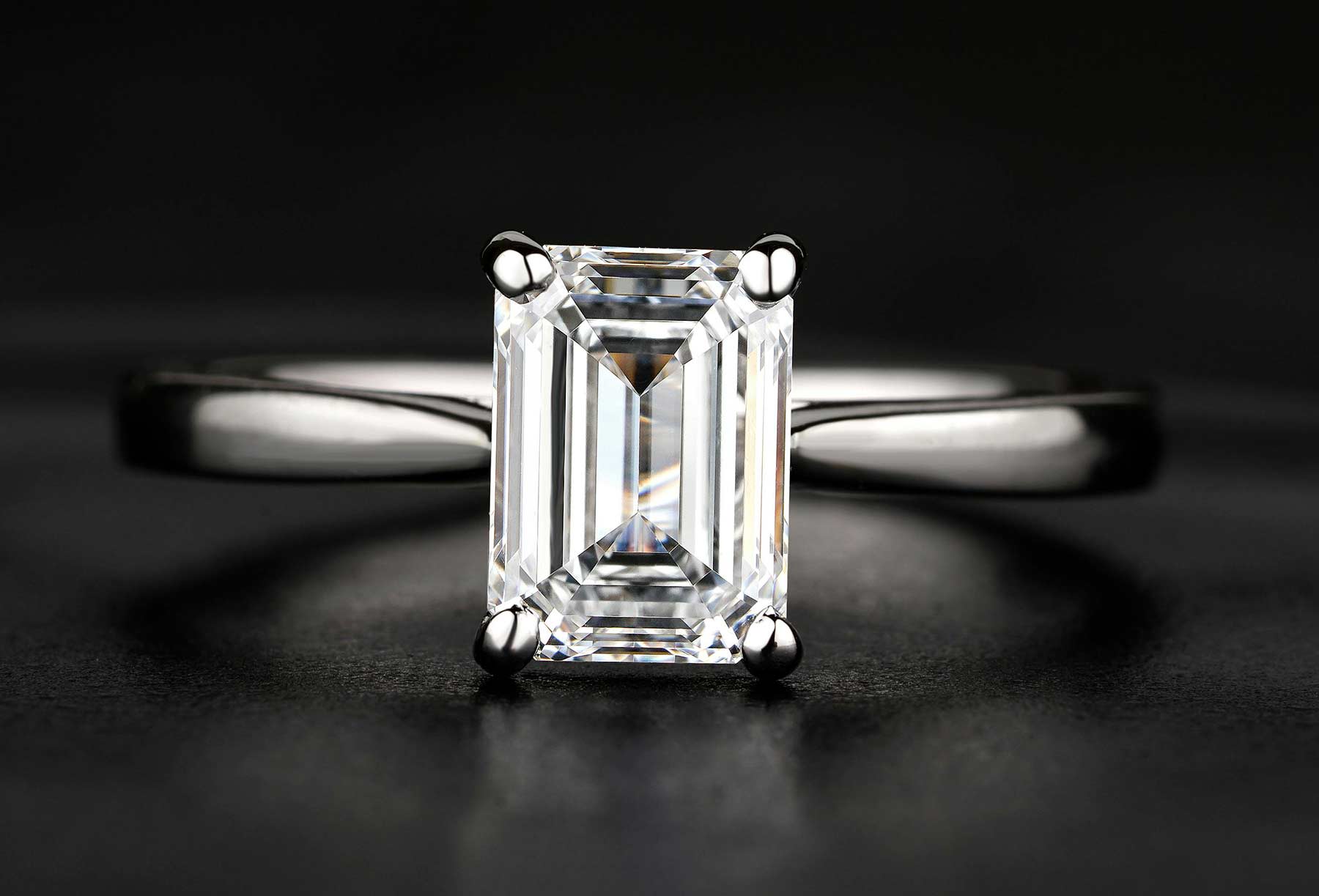


3.) Most Philippine collectors think colorless diamonds are always the most expensive ones?

While the vast majority of diamonds in the jewelry trade are indeed colorless to faint or light yellow, and obviously as many of you have noted- the colorless ones are more expensive, in reality there are also other vibrant colors of diamond out there that you may not have come across yet. Fancy colored pink, blue and red diamonds do exist, and these are sometimes more expensive per carat compared to a D-colored diamond. Many of these can often be seen at auction houses and prestigious jewelry boutiques. (Within the D-Z color scale, D is the most expensive color grade, however keep in mind that there are diamonds that exist outside of this scale that may exceed the valuations of stones within it.)

4.) The more facets on a diamond, the better the cut?

Diamond cut is a subject of taste and opinion. Currently the standard 57 to 58 facet round brilliant cut is still the most popular diamond cut around, even with many proprietary manufacturers creating diamond cuts that have up to 100 or even 200 tiny facet surfaces. There is a balance between white light reflection, spectral fire and proportion symmetry that has to be considered when evaluating a diamond's cut and not everyone will prefer the same range as being the utmost standard of beauty. Today though, the RBD currently goes for slightly higher prices that other basic fancy shapes like pears, hearts or ovals.
Read more »
Gemcamp Laboratories
0 Comments

You Might Also Like

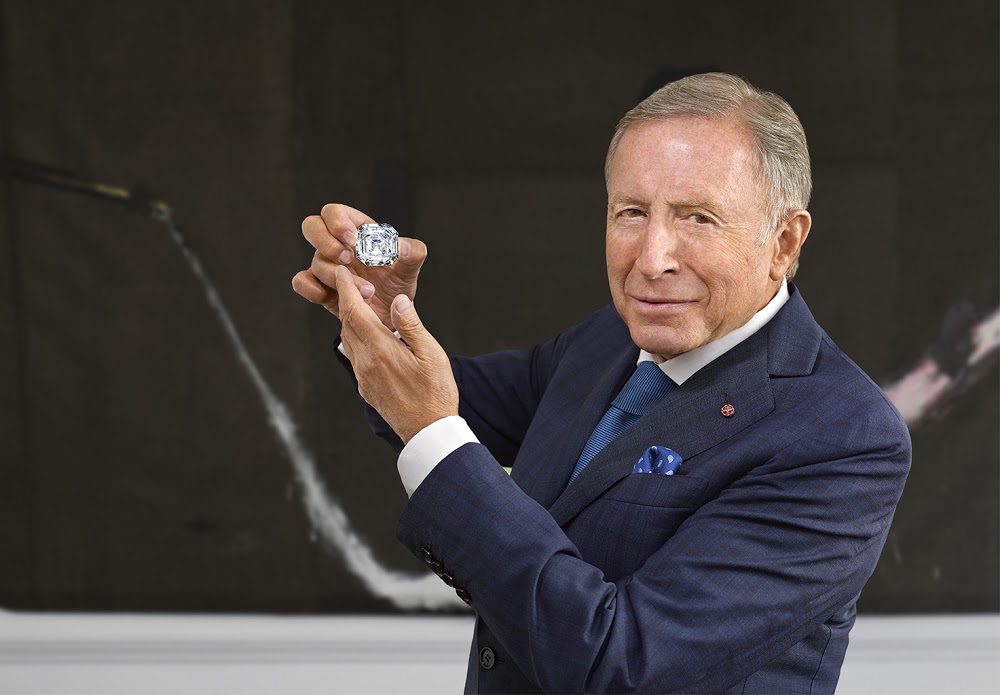
Meet the 20.69 carat 'Firebird' Diamond Recently Acquired by Graff

Meet the 20.69 carat 'Firebird' Diamond Recently Acquired by Graff


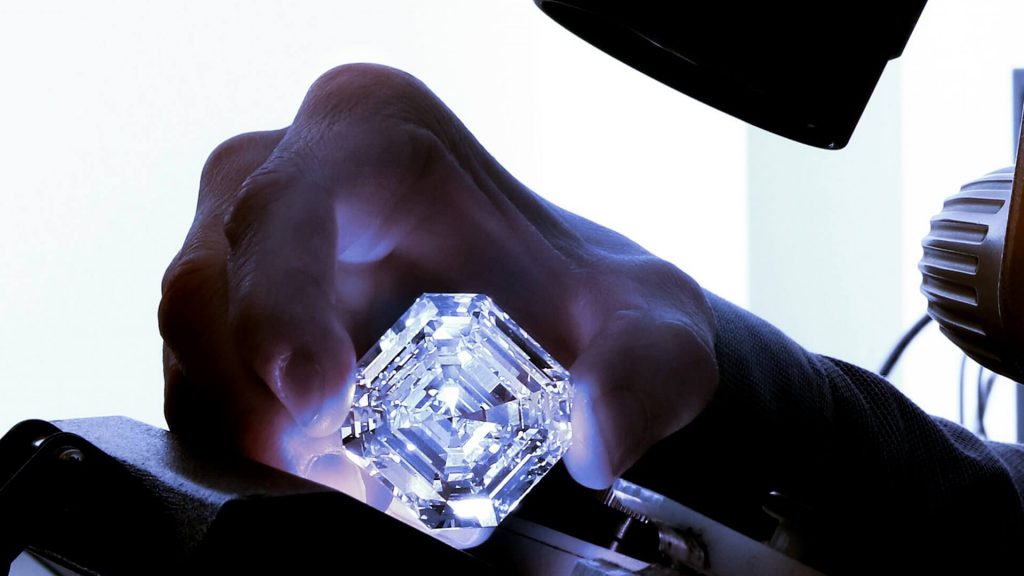
Taking its name from the legendary ballet "Firebird" (1910 - Grand Opera, Paris), this 20.69 carat asscher-cut diamond now makes its way into the possession of Lawrence Graff, who previously also obtained the 'Lesedi La Rona' diamond (302.37 carat D-color) and had it cut into the world's largest square emerald-cut diamond.


Fancy-colored diamonds have been making headway into the world's auction scene for the past couple of decades, with major color hues including pinks, blues and vivid reds. Yellow diamonds, although traditionally lower in the hierarchy of color values for the diamond species, boasts a widespread appreciation for their 'Canary yellow' saturations. Many of them are now receiving heightened reception from international collectors and connoisseurs.


The choice to create the finished piece in a square-shaped step cut helps to bring out its uniquely stark honey-yellow hues. Many deep bodied fancy-cut shapes are a strategic selection for the final form of such fancy-colored diamonds, as proportions allow for more material (carat weight) to be kept- meaning a greater amount of light can then be selectively absorbed by the diamond's mass. This consequentially results in a stronger color, which is the desired effect for this kind of gemstone (as opposed to the case of colorless-to-near-colorless diamonds).
Read more »
Gemcamp Laboratories
0 Comments

You Might Also Like

The Biggest D-Flawless Round Brilliant Diamond in the World

The Biggest D-Flawless Round Brilliant Diamond in the World


Round brilliant diamonds are the cornerstone of the fine jewellery industry today. Many collectors invest in stones that belong to the 'magic sizes' of 1, 2, 2.5 or even 5 carats. To those of you who've been to some of the most prestigious jewellery fairs across different continents, perhaps you may have even seen larger stones being exhibited by many of the international design houses.

Jewelry auctions however, tend to showcase those rare exceptional stones that come around once in a lifetime. Just a few years back, Sotheby's released such a stone that made headlines across nearly every jewelry news portal. The unveiling of a 102.34 carat natural round brilliant diamond.

The stone was a colorless gem with no clarity characteristics, and was touted to be the largest D-flawless round brilliant cut diamond in the world at the time. Its exceptional quality made it even more rare and sought after by thousands of luxury collectors.

The original rough came from Botswanna, a locality very well known for diamond production. It weighed about 425 carats, and master cutters took over half a year to correctly create the finished cut stone from its material.

More rough diamond materials of high carat weight have also been unearthed since then. One of which in particular was acquired by Graff, and contained the potential for a new record-holder in this classic category.


In 2019, the recently unveiled 102.79 carat Graff Constellation was said to beat the previous record by a very narrow margin.

This stone was cut from the 'Light of Letseng' rough diamond originally found in Lesotho mines. It is now considered as the largest D-flawless natural round brilliant cut diamond graded by the Gemological Institute of America at the date of this article.

The photo above depicts the said stone in the hand of Graff Chairman; Lawrence Graff- a pioneer in the global diamond retail trade, and an avid collector record-breaking precious gems.

Among all the fancy-cut shapes you'd normally hear about at auctions, it's sometimes quite interesting to see such a traditional or classic shape like the round brilliant, come in such large and elusive carat weights. One may wonder if any more will be unveiled at auctions in the years to come.
Read more »
Gemcamp Laboratories
0 Comments

You Might Also Like

Grading Diamond Clarity at 10x Magnification

Grading Diamond Clarity at 10x Magnification


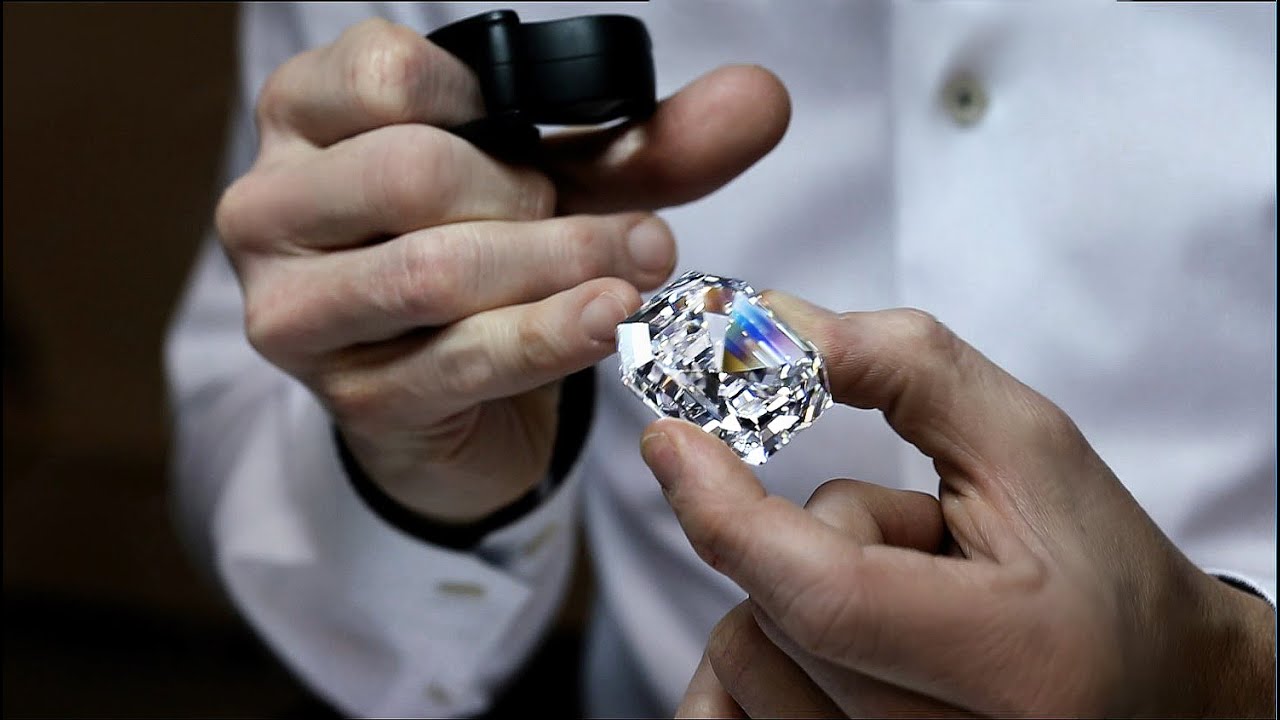
While some jewellers have their own proprietary ways of visually evaluating a diamond for clarity (the presence or absence of blemishes and inclusions), most gemological laboratories around the world employ a magnification standard of 10x when performing this task.


This can be done with a standard gemological triplet loupe, however a proper microscope aids in defining the types and traits of inclusions present within a stone. It's a common saying among many jewellers and collectors that stones of SI2 clarity and below more commonly show eye-visible inclusions that you can view with unaided vision, however this is just a general observation and there are always exceptions.

The stone above shows some prominent feather inclusions to the lower left side, which may be spotted by eye if careful or keen enough. The tiny inclusions at the center though would be thoroughly missed unless you were making proper use of a loupe or microscope. Certain inclusions weigh more heavily compared to others in the hierarchy of quality grading. Pinpoints for example, pose no durability threat, however feathers- which are essentially fractures or breaks in the stone, if large enough can compromise some areas of the stone's durability.
Read more »
Gemcamp Laboratories
0 Comments

You Might Also Like

This was Once the Most Expensive Jewel Ever Sold at Auction

This was Once the Most Expensive Jewel Ever Sold at Auction


Up until April of 2017, the famed Oppenheimer blue diamond was the most expensive jewel ever sold at auction. The rectangular cut 14.62 carat blue diamond was the coveted premier lot at the Christie's Magnificent Jewels event in Geneva (2016).


Named after its previous owner Philip Oppenheimer, it's considered as the largest fancy vivid blue diamond ever shown at auction. The stone sold for just a bit over 50 million dollars after two telephone-bidders ended a competitive bidding war for its ownership.

Today fancy blue diamonds are among some of the most trending luxury gemstones chosen for spotlight unveiling at many international auction events. They outrank equivalent-clarity graded colourless diamonds in price per carat many times over due to rarity and exclusivity even among aristocratic collectors.


The Oppenheimer family name is historically linked with the diamond trade's rise to popularity. At one point in time, their family controlled the De Beers Group and its mining operations, which pioneered large-scale South African diamond sourcing and coined the famous tagline- "A diamond is forever".


Photography Credits: Christie's - Magnificent Jewels Auction Event
Read more »
Gemcamp Laboratories
0 Comments

You Might Also Like

3.43ct Bubblegum Pink Diamond takes the Spotlight at Christie's Hong Kong Jewelry Auction

3.43ct Bubblegum Pink Diamond takes the Spotlight at Christie's Hong Kong Jewelry Auction


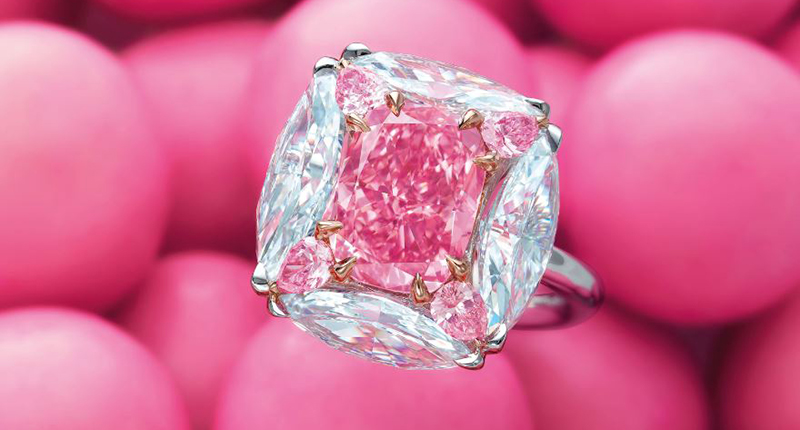
With the trend of coloured diamonds continuing its surge at international auction events, a 3.43 carat cushion cut diamond known for its bubblegum pink appearance has just sold for 7.5 million dollars at Christie's recent Hong Kong auction. The stone was mounted onto a ring designed by Moussaieff, alongside several more pink diamonds and some marquise shaped white diamonds as well.


Initially estimated between 6 million and 8 million US dollars, the beautiful ring did not disappoint when it came to the actual sale. The prominent piece was considered as one of the premier lots sold during the 'Magnificent Jewels' event held regularly by the famed auction house. The sale in its entirety encompassed purchases of over 40 million dollars, and showcased many other coloured gemstones- such as Colombian emeralds and brilliant blue diamonds.

Photography: Christie's Auction House | Magnificent Jewels

Read more »
Gemcamp Laboratories
0 Comments

You Might Also Like

After Cutting: The Second Largest Diamond in the World, Unveiled by Lawrence Graff

After Cutting: The Second Largest Diamond in the World, Unveiled by Lawrence Graff


A few years back (2015), the Lesedi La Rona diamond had just been uncovered as the world's 2nd largest gem-quality diamond. Its given name translates to 'Our Light' in the local Tswana language- the 1,109 carat stone was found in Botswanna, a source that has become famous for the production of many large diamonds throughout history.


Photography credit: Graff Jewellers

London-based jewelry icon Lawrence Graff purchased the diamond back in 2017 for about 53 million dollars. Since then, Graff has had 66 individually cut diamonds polished from the Lesedi La Rona, which initially close to the size of a tennis ball.


Last month, the largest cut stone was finally unveiled, weighing 302.37 carats. The faceted diamond was named the Graff Lesedi La Rona, maintaining the original stone's given name in part. The stone is now believed to be the largest 'square shaped emerald cut' diamond in existence. Mr. Graff commented in an article that their initial goal was to surpass the 300 carat mark for this stone, which was properly achieved by paying careful attention to the diamond as every procedure was being accomplished.


Prior to the release of this stone, many of the smaller diamonds cut from the original Lesedi La Rona had already been unveiled, possibly to give the public an impression into the diamond's slow journey towards the upper hierarchies of the jewelry world.
Read more »
Gemcamp Laboratories
0 Comments

You Might Also Like

The World's Most Beloved Gemstone- Diamond.

The World's Most Beloved Gemstone- Diamond.


Diamonds used to be marketed as many things, a girl's best friend, the stone that lasts forever, an ultimate symbol of enduring love. Whether or not you agree with the long-running sentiments surrounding the story of diamonds, you'll agree that among the world's many beautiful gemstones and treasures, it is by far the most famous.


This precious stone, known more for its brilliance and hardness rather than vibrant color, has been the center of our fine jewelry trade for many centuries now. Even in this day and age when mankind can atomically grow artificial diamonds, we still share in the marvel and desire for what a diamond can represent in our lives. You might be a collector, or maybe a jewelry design-creator, but the intrepid sparkle of diamonds draws you in to awe all the same.


Here in the Philippines, we evaluate and examine faceted diamonds this 2019. We check diamond jewelry as well, to help you understand more about your item's identity and quality, while also being fans of the stone ourselves. We do remain neutral when it comes to the appeal-debate between natural and lab-created diamonds. Our job is just to identify and separate the two kinds of diamonds so that you can properly know which category your stone belongs to, as they do have different price ranges in today's market.
Read more »
Gemcamp Laboratories
0 Comments

You Might Also Like

A Blue Diamond to Rival the Hope Diamond.

A Blue Diamond to Rival the Hope Diamond.


One of the largest blue diamonds, and possibly the highest ranking one in terms of clarity grade, has been discovered in Botswana this year. At 20.46ct, the 'Okavango Blue' was originally unveiled in Gaborone, Botswana by the Okavango Diamond Company.


The gemstone was originally unearthed from the Orapa mine, and is said to rival the rarity and beauty of the famed Hope Diamond. While the Hope is bigger at 45.52ct, it also has a clarity grade of VS1.

The Okavango Blue on the other hand, obtained a grade of VVS2, and its imperfections are reportedly only visible under 10x magnification (which is the standard setting for diamond clarity grading).


Cut out from a very large 41.11ct piece, the Okavango Blue is just one of many large diamonds that have recently been dug up. It seems that large fancy-colored diamonds are becoming one of the fastest-growing trends in the international auction world as well.

Marcus ter Haar, managing director of Okavango Diamond Company, said in a statement: "It is incredibly unusual for a stone of this color and nature to have come from Botswana -- a once-in-lifetime find, which is about as rare as a star in the Milky Way."


In other news, A 72 carat yellow diamond was recently also recovered from the Liqhobong mine in the Maluti mountains in Lesotho. That same mine also produced three more large diamonds, following the 910 ct 'Lesotho Legend' which was worth about 40 million U.S. dollars.
Read more »
Gemcamp Laboratories
0 Comments

You Might Also Like

This Egg Shaped Diamond Sold for 13.8 Million Dollars as Sotheby's Hong Kong Event.

This Egg Shaped Diamond Sold for 13.8 Million Dollars as Sotheby's Hong Kong Event.


Remember that auspicious 88 carat diamond that was scheduled for an April auction show with Sotheby's? The magnificent, oval-cut D-Flawless diamond eventually sold for 13.8 million dollars (or 156,150 USD per carat). This happened during the Magnificent Jewels and Jadeite Sale held by the esteemed auction house. The stone, now named the Manami Star, was acquired by a private Japanese collector who had named it after his eldest daughter.


The initial estimate price of the diamond was only somewhere between 11.2 to 12.7 million dollars, so the actual sale price actually exceeded many experts' expectations regarding the stone's worth and reception. Such large oval-cut brilliant diamonds are quite rare, even at auction events. Only three oval diamonds over 50 cts have ever been auctioned to date, including this one.

A quote from Sotheby's regarding the stone's illustrious sale reads, “We were thrilled to handle a diamond of such rarity, which now takes its place in the roster of top white diamonds to have come to the market here at Sotheby’s Asia,” said Patti Wong, chairman of Sotheby’s Asia, in a statement. “At 88.22 carats, this lucky stone now carries the name of the fortunate child whose father has chosen to give it her name. A happy moment in the journey of one of the earth’s greatest, oldest treasures.”
Read more »
Gemcamp Laboratories
0 Comments

You Might Also Like

An Auspicious 88ct. D-Flawless Diamond to be Sold at Sotheby's Hong Kong Auction

An Auspicious 88ct. D-Flawless Diamond to be Sold at Sotheby's Hong Kong Auction


April 2, 2019 marks the date of Sotheby's latest auction event, wherein the world's top jewelry audiences will arrive to bid for a D-flawless 88.2ct oval-brilliant diamond. Most estimates for the sale of this rare gemstone range from between 11.2 to 12.7 million dollars. A very small number of large oval cut diamonds have been released at auction houses during the recent years, but a previous 118 ct oval did sell for about 30.6 million dollars in 2013.


The current stone, weight at just a bit over the lucky number 88, is sure to please many collectors at the event's location in Hong Kong. The number represents a 'double infinity' for many cultural societies, and it's very rare to see such a large diamond in this exact carat weight. The rise of asia as a primary force in the jewelry-buying sector shows how its influence also affects the decision of high-end diamond cutters to tailor stones precisely for this growing market.

Patti Wong, chairman of Sotheby’s Asia, labeled the stone as a rare “treasure” in a statement made dates before the event. Sotheby's has always been a driving force in the auction world, most especially for jewelry and the arts. They've been able to publicise and sell some of the world's largest faceted diamonds, in all manners of shapes and color hues. Last year (2018), the sales totalled from their jewelry auctions is said to be somewhere slightly over 400 million dollars.
Read more »
Gemcamp Laboratories
0 Comments

You Might Also Like

Man-Made Diamonds are Growing in Popularity, and it's Caused Concern among Natural Diamond Investors.

Man-Made Diamonds are Growing in Popularity, and it's Caused Concern among Natural Diamond Investors.


We've recently noted that a lot of people who set appointments for diamond checking / evaluation, express heavy concerns regarding natural diamonds possibly losing a percentage of their current status or value in the trade. This fear seems to stem from the recently rising popularity of lab-grown / man-made diamonds both locally and abroad, based on what we're hearing from visitors.

As far as we've seen though, natural diamond sales across the globe are very stable and values at middle-to-commercial tiers are still routinely standardized. Values at the top tiers (D-E-F with F-IF or VVS clarities above 10cts) are also doing very well at auction events. At the retail level though, the most in-demand sizes remain especially strong- 1ct, 1.5ct and 2ct weights.

Pictured below is 102.34 ct. round brilliant natural diamond, image credit: Sotheby's auctions. Rare and astounding gemstones like this are reserved for only those willing to pay the required fortune for owning such an opulent symbol of exclusivity and luxury. Large, high end natural diamonds have been increasing in value-demand quite steadily over the recent years, even with the advent of lab-grown stones.


Lab-grown diamonds are cheaper than natural earth-mined stones by around 40-60% at the wholesale / dealer level (sometimes 30% at retail), and *normal diamond testers (or moissanite testers) are NOT able to separate these from natural diamonds at all. Remember that their essential chemical composition is the same as a natural diamond's, so advanced spectrometry-based laboratory equipment would be required to positively identify most earth-mined natural diamonds from potentially man-made counterparts.

Nevertheless, we're currently aiding the screening efforts for several jewelry stores in order to make sure their diamond inventory is more accurately identified. (As a third-party evaluator though, we do not buy or sell diamond jewelry. We also do not recommend or discourage sale from any specific store or brand, in order to remain completely objective for all our evaluations.)

In the U.S., some stores are already selling lab-grown stones under the label- real diamonds, and while some may agree and others may disagree, they are following the definition based on same chemistry and cubic crystal structure. Essentially lab-grown diamonds are still chemically diamonds, they were just created in a factory lab.

Whether you're into lab-grown stones or not, it's best to be sure of what you have. These two kinds of diamonds have very different market values this 2019.
Read more »
Gemcamp Laboratories
0 Comments

You Might Also Like

This Elegant 5.03 carat Fancy Pink Diamond Sold at the Bonhams London Auction, Topping off the Year

This Elegant 5.03 carat Fancy Pink Diamond Sold at the Bonhams London Auction, Topping off the Year


Bonhams' summary of 2018 reveals that its top selling item of the year was a 5.03ct square-shaped fancy pink diamond. The stone was graded at VS1 for clarity, which is quite rare for a pink colored diamond of this size. The sale happened in London last September 26, where another new price record was made (for a fancy pink diamond at auction).


The stone, worth just shy of three million dollars, topped the chart of 2018 sales, followed by other magnificent gemstones like a 24.31ct D-IF diamond (in a ring) that sold for 1,947,110 USD, and a Hennel Emerald pendant-necklace set which sold for over 1.3 million dollars. There was also another diamond-and-emerald jewelry set that beached the 1 million dollar mark.

Jean Ghika, Global Director for Bonhams, mentioned that “the market has remained strong for exceptional pieces of jewellery from famed eras and world class makers”. This can be seen also for many other jewelry and auction houses, which seem to be promoting larger fancy-colored diamonds and colored stones as of late.


Emeralds in particular seem to be topping a lot of auction rosters, as the demand for the world's most beautiful green gemstone soars into the spotlight. Meanwhile both jewelers and jewelry buyers alike still have to worry about the rising popularity of hydrothermally created synthetic emeralds as well. Synthetic green beryl (syn. emerald) can have a lot of beautifully rich inclusions that may confuse onlookers into assuming a natural origin. The presence of inclusions is not what determines natural VS synthetic emerald, however the specific kind or type of inclusions are indeed used by gemologists for these separations, as synthetic emeralds grow in different environments compared to earth-mined stones.

2018 also saw the rise in popularity of lab-grown diamonds (which are different from imitations like cubic zirconia or moissanite), however because of De Beers' move into selling its own line of lab-grown stones for much cheaper prices, we are not sure how the market for artificially created diamonds will change in 2019. Will this cheaper price rate lower the overall pricing standards of lab-grown diamonds, or will it make the product more popular due to better affordability?


Read more »
Gemcamp Laboratories
0 Comments

You Might Also Like

In 2012, More Than 600 Diamonds in a Single Parcel Submitted to IGI were Found Out to be Man-Made / Lab-Grown Stones.

In 2012, More Than 600 Diamonds in a Single Parcel Submitted to IGI were Found Out to be Man-Made / Lab-Grown Stones.


We're re-reading an interesting throwback article from JCK Magazine 12' (linked here) that details how according to an IGI Trade Alert, CVD grown man-made diamonds were sent or submitted to their facilities in Antwerp and Mumbai. The person who submitted the stones had no idea that the parcel contained over 600 artificially grown diamonds. He thought that they were natural, and mentioned that he had originally paid for them under the impression that they were natural, earth-mined diamonds.


Normal gemological tools like microscopes, loupes, refractometers and the like- are not solely enough to make the separation anymore. *Gemcamp Laboratories make use of these advance spectrometry-based detectors to identify natural diamonds that possess well-documented characteristic absorption and emission patterns that allow us determine their specific type group.

Here in the Philippines, most people we've come across, still believe that the pen-type diamond testers (diamond thermal testers and moissanite testers) are enough for their protection, but the fact remains that these two instrument types CANNOT differentiate between a man-made diamond and a natural diamond. This is clear, because of the fact that both natural and man-made diamonds are made up of carbon that crystalizes in the cubic crystal lattice system. Lab grown diamonds have the same thermal conductivity and electrical conductivity as natural diamonds. From the best that we can tell, our country's view towards protection against diamond fraud is unsurprisingly behind.

Lab-grown or man-made diamonds at the wholesale level (from what we personally observed during international jewelry trade fairs) are about 40 to 60% cheaper than natural counterparts. At the retail level, most seem to sell them about 30% cheaper than naturals. This big price difference alone should be a good enough reason for society to be cautious against mismatched stones.


Pictured above is a stunning CVD Lab-grown diamond. Despite the negative attachment that circulates around undisclosed stones, the trade applauds man-made stones that are sold honestly and ethically.
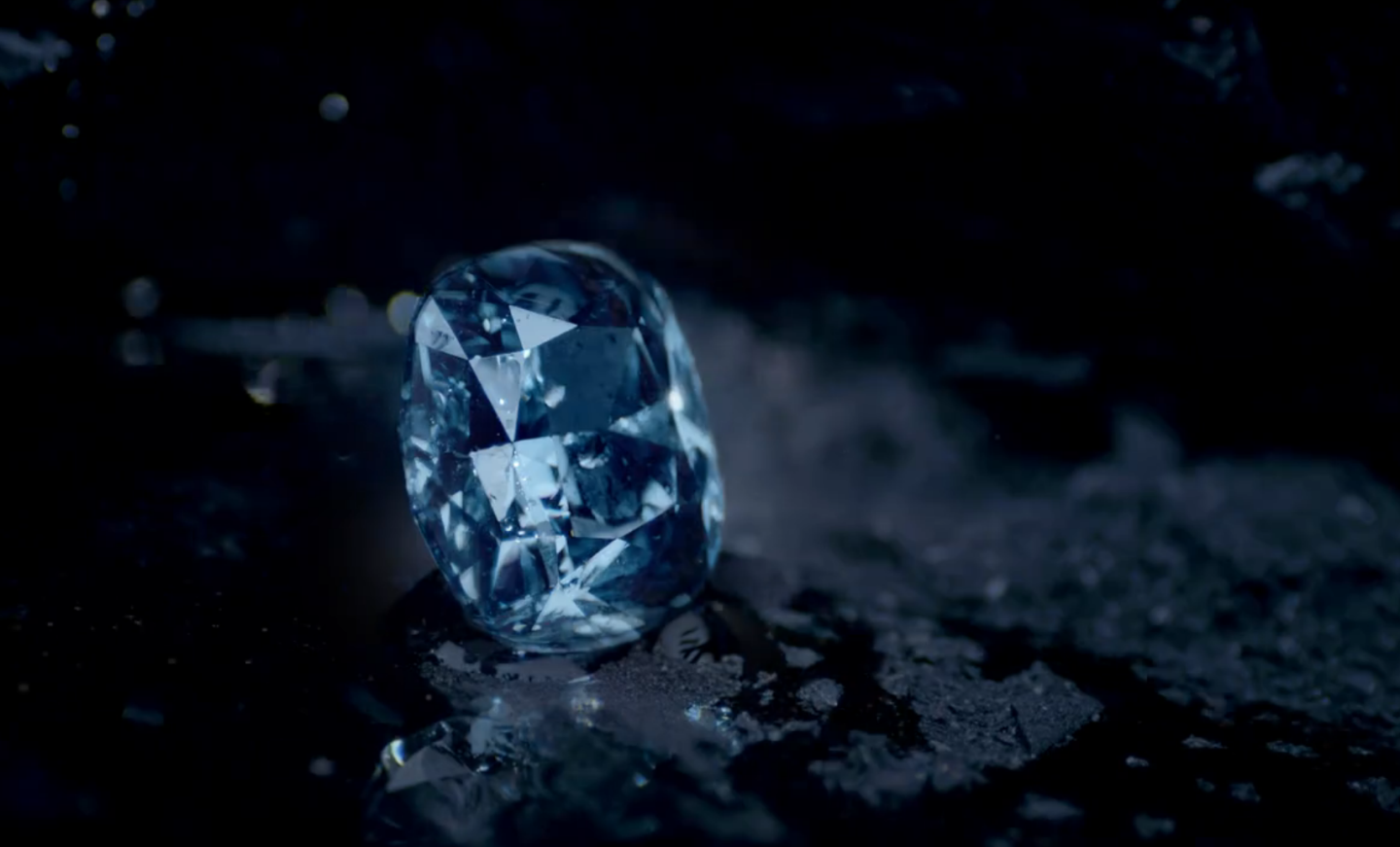
Lab-grown diamonds are beautiful products in their own rights, and chemically speaking they are in fact diamonds. The problem only lies when a lab-grown stone is fraudulently sold to someone under the representation of a natural stone.

Some people even try to sell man-made stones with original reports from many gemological laboratories. They have a natural stone checked properly with a lab, and then take that report and use it for advertising a similar-looking lab-grown diamond of the same carat weight or size. While gemological laboratories can verify if a stone matches a specific report if someone comes in to check it, they have no liability or control over the external actions of potentially fraudulent individuals with regards to what they do after acquiring a report document.

Here is a link to an article about a man-made stone fraudulently sold as a natural diamond, by trying to misrepresent it with GIA report information for a different stone.

The lab-grown stone was fraudulently inscribed with a falsified laser inscription that pointed to a GIA report for another stone (a natural diamond). This practice is often called stone swapping or stone switching, wherein people try to use an original lab report to fraudulently sell an item that is not the one described on the report. GIA's laboratory obviously did not play any part in this, as they cannot possibly monitor what each and every client does with the reports they have commissioned. We believe that they do however (like most laboratories) encourage verification of reports with their laboratory first before trusting a potential seller. Protect yourself from stone-swapping scandals by verifying your item with the corresponding laboratory listed on the report first. Make sure the report isn't fake or invalidated, and then lastly be sure that the item or stone on your report is exactly the one you're being sold by asking the issuing laboratory.
Read more »
Gemcamp Laboratories
0 Comments

You Might Also Like

Diamonds Do Good, First Video Gets About 11 Million Impressions on Youtube

Diamonds Do Good, First Video Gets About 11 Million Impressions on Youtube


The Diamond Empowerment Fund (or D.E.F. for short) is creating a series of videos themed towards showing millennials the good that diamonds and diamond mining can do. In the recent years, we know that unfortunately the diamond trade has sometimes been seen as an inadvertent cause for the funding for civil unrest in certain countries. Films like blood diamond, created the mindset that maybe all diamonds are involved with evil and violence, which is simply not the case.


The D.E.F's first video, which was very short but candidly created, showcased a man narrating about the love of his life, and their journey to the diamond mines of northern Canada. He recalls how the industry actually helped sustain the local wildlife and environment, creating an economy that could serve to protect the community, in contrast to the Hollywood films we often see today.


The video itself was just one minute long, but garnered about 5 million views (of the whole presentation) and 7 million views of at least 30 seconds. This shows that people, especially millennials are also open to seeing things in all possible perspectives. Diamonds are just like most products, they can be used for good or evil, but that is up to the people mining them, and the ones buying them.


This first video called 'Conservation', helps the public see the positive side of the diamond trade, in order to dilute away the very violent or selfish themes that Hollywood often associates with the subject of diamonds and jewelry (i.e., violence, heists, robberies).

The subject of the video may not be as flashy as the plots of blockbuster movies, but they show a real side to the diamond industry, and they somehow remind us that earth-mined diamonds also do good in the world, influencing a more positive impact not just for the environment but for many societies as well.

The video can actually be watched here, via their Youtube channel.
Read more »
Gemcamp Laboratories
0 Comments

You Might Also Like

Are Diamonds Really Unbreakable? Know Your Facts

Are Diamonds Really Unbreakable? Know Your Facts


Not everyone recognizes the gemological properties of diamond, for what they actually are. Due to an incredible marketing campaign spanning several decades, diamonds have sometimes been touted to be the everlasting, near-indestructible gemstone of the ages. Is this accurate though? What makes a diamond strong, and do they have any weaknesses? Today we'll discuss and debunk some physical traits of the world's most famous gemstone species.


Diamonds are hard, not tough. When someone says a diamond is the hardest natural mineral on the planet, they would be correct. Despite this, there is indeed a difference between a mineral being "hard" and being "tough". Hardness, measured on what we call the Moh's scale, represents a material's resistance to being scratched or scathed. If you rub two parallel surfaces together and one is harder than the other, the softer one gets scratched. Toughness on the other hand, refers to a material's resistance to splitting and breaking.

What most people don't know or remember- is that diamond is not the king of toughness. It actually has 4 directions of perfect cleavage. This means that the species possesses four directional planes of atomic weakness, that would make it prone to splitting into smaller pieces. In the early days of diamond cutting, manufacturers would make use of this property in order to quickly saw or half diamond rough, especially octahedral shaped specimens.


Gemstones like jadeite and corundum are actually tougher than diamond, and while the latter may be able to scratch them, both these gem species are more resistant in terms of avoiding breakage.

Hitting or strongly knocking a diamond at certain specific angles can cause it to chip, cleave or break. Take note also that many faceted or fully-cut diamonds have a very thin girdle area. This makes them susceptible to potential damage upon impact.

Another interesting fact to consider, when talking about diamond's durability- is its carbon composition. Sure, compared to its "cousin" graphite, diamond appears to be leaps and bounds ahead in terms of resistance to damage, but consider that carbon can burn up due to the presence of extreme heat.


Diamonds caught in very high temperature fires can become cloudy or damaged (be burned). There have been instances of some stones becoming partially vaporized by great amounts of heat. For this to occur though, the diamonds also have to be in contact with air, or more specifically oxygen. Most jewellers however should be quite familiar with the limits, and can remove a diamond from the path of a specifically over-heating flame tool.

Rubies and sapphires on the other hand, can actually withstand more heat than diamond (at our normal pressure levels). They often undergo heat-exposure treatments to improve their vibrant colors.

Diamonds that form in the earth's depths do undergo exposure to crazy levels of heat, however the reason they form or exist under these temperatures is because a very high environmental pressure is present. Without this pressure, the diamonds would not survive or even form properly.

Despite diamond's innate resistance to scratching and abrasion, we would still discourage certain tests, like purposely attempting to scratch a stone against abrasive material or against other stones. Remember that even if diamond is hard, thin parts like facet junctions are relatively still in danger of chipping against directional impact. Always take care of your stones. Just because they're the hardest natural mineral on the planet, doesn't meant that they can't be damaged.
Read more »
Gemcamp Laboratories
0 Comments

You Might Also Like

The Legend of the Marquise-Cut Diamond

The Legend of the Marquise-Cut Diamond


Many of you are more familiar with the typical round brilliant cut when it comes to diamonds. Some of you probably collect fancy cuts, with trade-popular names like the 'Princess' cut, 'Asscher' cut or 'emerald' cut. Well, today we'll take a look at the history of the diamond industry's most elongated fancy cut- the Marquise.


So what makes a marquise cut diamond? Basically this shape resembles an oval- in the sense that length and width are not with equal values. Unlike an oval however, the stone terminates into sharp, elegant points on opposing ends.

There is an old legend that's circulated through the gemstone industry for centuries regarding the origins of the marquise cut. It centers around a french monarch called King Louis the 15th, who ruled France during the 1700's. He had asked his royal jewelers to fashion a stunning diamond cut that would reflect upon the beautiful smile of his chief mistress, Jean Antoinette Poisson (the Marquise de Pompadour). They obliged his request, and went to work on it straight away.

Despite the curious relationship between the two characters, the royal jewelers were able to pioneer the creation of France's first marquise cut diamond based off of that commission. It was certainly a marvel to all who set their gaze upon it. The marquise soon became a symbolical shape for feminine beauty across the land. Many also call it the 'navette' cut, which is the french word for 'little boat' or 'little ship'.


Marquise cuts are indeed very beautiful, and can create an impactful visual aesthetic for many jewelry pieces, but their graceful slender often comes at a price. The two sharp points must be well-protected, usually by v-shaped prongs or similar holders. These are the areas most likely to acquire damage should you accidentally knock the stone on something hard.

Well-loved for center-stone purposes, the marquise cut is a favorite choice for large diamond rings and pendants. Many more modern couples also prefer it to the standard round-shaped diamonds on engagement rings, saying that the shape brings out more flair for the proposal's ambience.
Read more »
Gemcamp Laboratories
0 Comments

You Might Also Like

Don't Make Costly DIY Mistakes: Diamonds that Turn Up as Imitations

Don't Make Costly DIY Mistakes: Diamonds that Turn Up as Imitations


During the past year, we've observed a very common occurrence here from different visitors at the laboratory- public over confidence and a misinterpreted understanding of the results produced by some inexpensive, DIY diamond home testers. What we specifically mean, are those pen-hold type testers from unknown brands that for one reason or another, keep giving our visitors the initial idea that what they have is immediately a natural diamond.

This article is only based on the opinions of our gemologist, as he has been steadily observing the habits and results of Filipino visitors who make heavy use of these instruments, and then bring their items to the laboratory due to their own uncertainty. You are free to conclude your own opinions regarding these testers, but the record below constitutes our experience of these portable machines.

It should be said that these types of pen-hold testers are also often called thermal testers as they are created to measure the thermal conductivity of a gemstone. In our own experience, we have had some consistent performance when using certain brands of testers that were manufactured by well-established companies, to separate regular cubic zirconia from diamond- however even these products (which may cost upwards of 14,000 Php) still made mistakes on certain stones like diamond-coated CZ or some other species of non-diamond gemstones.


In the past, we have also conducted experiments using diamond thermal testers that cost about 2,000-4,000 Php that were being sold here in the country, and also being imported from China-based manufacturers- a number of these testers occasionally failed on items like quartz, glass and cubic zirconia, passing them off as diamond. In terms of consistency, they were not dependable for our laboratory purposes. We purchased them strictly for the experiment only, and never put them into daily operational use here at the laboratory. (No specific brands or names will be mentioned to preserve objectivity and neutrality)

No standard diamond tester based on thermal conductivity (or even electric conductivity / multi-test pen-hold tools) has been known to be capable of separating synthetic or man-made diamond from natural diamond. These grown diamonds are also made up of carbon, with the same structure as natural diamond- but are grown by people in a factory. Advanced photoluminescence spectrometric testing like the technology we use here at our laboratory, is routinely utilized by industry professionals abroad for positively identifying the vast majority of natural diamonds by their trace elements and absorption spectra. Some natural diamonds may show inclusion-evidence of their unearthed-origin, and many older versions of synthetic diamonds may also show visual evidence of their man-made origin, however technology is getting better at a rapid rate, which causes alarm for many in the jewelry trade.


We hope that the general public here in the Philippines will use whatever personal tester they have with care, and a cautious, skeptical mind. The lab has seen too many obvious imitations brought in, mentioned as diamond by their owners, all because something beeped or a light flashed on their personal gadget.

In the end, if you would like to use these instruments on your own, spend the extra money to buy the more (or most) expensive ones. Those aren't perfect by any means- and have also been known to provide some mixed / wrong results if used by inexperienced checkers, but if used properly in the right conditions, they can help you at least with separating some kinds of lower-tier / cheaper imitations from diamond. This is still much better than buying the cheaper DIY testers that seem to cause a lot of unnecessary confusion.

Read more »
Gemcamp Laboratories
0 Comments

You Might Also Like

Concern About Man-Made Diamond Detection Grows in India and Other Countries

Concern About Man-Made Diamond Detection Grows in India and Other Countries


Despite being one of the world's go-to cutting centers for diamond, India has also had some bad experiences with undisclosed man-made stones. In Chennai, a growing concern over the rise in usage of synthetic diamonds have caused some traders to worry. For most people who are familiar with artificially grown diamonds, they're aware that prices for these materials are not nearly the same as their natural counterparts. In an article by Firstpost, about awareness and cautions of jewellers regarding this matter, a Mr. Padmanaban from N.A.C. Jewellers has mentioned an interesting observation: "In overseas markets, jewellers declare it as synthetic diamond. Also, a synthetic diamond in itself is a separate market there. But, here they sell it for the price of an original diamond."


In countries with less specified regulations for the sale and description of a man-made stone versus a natural stone, it can be quite difficult to responsibly purchase such expensive items. A lot of small-time jewellers seem to rely on an old technology of testing diamonds- these small instruments held like pens are usually a bit smaller than a standard TV remote, but they're currently the most affordable tool that can be bought over-the-counter. These machines use thermal conductivity to rule out cubic zirconia and glass from diamond. Some other versions also make use of electrical conductivity to try and rule out moissanite as well. Regardless of whether or not you think these instruments show any consistency, the fact remains that because man-made diamonds share the essential atomic structure of natural diamonds, they can in fact, bypass these instruments with complete ease.

Diamond dealers should sell their items responsibly, disclosing to buyers if the diamond they're selling was grown in a factory or mined from the earth. This would be the case in an ideal business setting, but since the world isn't always full of ethics or honesty, buyers must take it upon themselves to gain awareness on the differences in price and status between these two very differently sourced products.


Gemologists now have to rely on spectrometers that study the luminescence patterns of gemstones in order to differentiate a man-made diamond from a natural one. Telling by eye is possible, especially for older types of synthetics, however the newer variants can sometimes come completely eye-clean due to better improvements in technology. Here at our laboratory we make use of spectrometric instrumentation imported from California to help the Filipino people gain more information about their stones. We function as a third-party assessor and give our opinion on the identities of gemstones after subjecting them to a number of non-destructive laboratory tests.

One study has shown that the market for synthetic or man-made diamond in the Asia-Pacific region has been estimated at about $7,496 million dollars. While this continues to grow in the east, the market in the west is still considerably higher, due closer proximity to technological pioneers.
Read more »
Gemcamp Laboratories
0 Comments

You Might Also Like

Only 1 in every 200,000 Natural Diamonds are Blue.

Only 1 in every 200,000 Natural Diamonds are Blue.


Have you ever wondered why some of the most illustrious diamonds in the world are blue? Gleaming, pristine colors as deep as the oceanic depths, give such an astounding ambience to many of these incredibly rare treasures of the earth.


It's estimated that just 1 in every 200,000 diamonds are blue. The 45 carat Hope Diamond at the Smithsonian, is probably the greatest example we have today of this incredibly scarce variety of diamond.

A scientist at the University of Hawaii, Dongzhou Zhang has studied the formation of natural blue diamond. Alongside his team of researchers, Zhang published an article in the journal 'Nature', that showed the world a little more about how blue diamonds form.


We already know that their vivid colors arise from trace percentages of boron. This element, aside from sharing some electro-conductive properties with the stone, also allows it to selectively absorb light differently from other diamonds. Portions of visible light enter the stone, but only some wavelengths are able to leave and return to our eyes, causing the blue color we see so clearly.

The article published newer information, that the impurities contained in most blue diamonds are actually found at a very deep level of the earth. It became clear that based on their findings, blue diamonds form at far greater depths than typical colorless diamonds- many at levels below 410 miles down into the earth.


Some of the researchers have suggested that boron, which absorbs red light (and makes diamonds show up blue) could have been originally present on areas of the ocean floor. When continental plates collided, there were forces that pushed these elements even further down, to levels where heat and pressure allowed for diamond formation occur.

Note that many blue diamonds sold today in jewelry, are a product of artificial enhancement. Color dyes, irradiation and many other modern-day processes create colors in otherwise near-colorless stones. The prices of treated diamonds are much lower than their natural-colored counterparts.
Read more »
Gemcamp Laboratories
0 Comments

You Might Also Like

[name=Gemcamp Laboratories] [img=http://www.gemcamp.org/img/gemcamp-black-badge-3.jpg] [description=A Philippine-based laboratory group headed by GIA graduate gemologists who share a collective passion for the sciences that support gemstone identification and evaluation.] (facebook=https://www.facebook.com/gemcamplab/) (twitter=https://twitter.com/gemcamplab) (instagram=https://www.instagram.com/gemcamplaboratories/) (pinterest=https://www.pinterest.ph/gemcamplaboratories/)

Follow @Gemcamp Instagram