Theme Layout

Boxed or Wide or Framed

Theme Translation

Display Featured Slider

Featured Slider Styles

Display Grid Slider

Grid Slider Styles

Display Trending Posts

Yes

Display Author Bio

Display Instagram Footer

Dark or Light Style

Showing posts with label Gemology. Show all posts
The Vanderbilt Sapphire Shines at the Phillips Geneva Jewels Auction: V

The Vanderbilt Sapphire Shines at the Phillips Geneva Jewels Auction: V


At this year's Phillips’ Geneva Jewels Auction: V on November 10, 2025, the spotlight center-focused on The Vanderbilt Sapphire, a stunning Belle Époque masterpiece epitomizing the grandeur and fine gem-setting artistry of the Gilded Age. Part of the Vanderbilt Family Jewels collection, the piece led a 100% sold group that realized CHF 3.42 million / US$ 4.25 million, achieving four times its low estimate.


Period jewels and signed creations demonstrated exceptional strength as a whole, with 90% of lots sold, many exceeding their high estimates. The sale featured iconic designs by historically renowned design houses like Tiffany & Co., Cartier, and Bulgari, including the celebrated Cartier “Panthère” jewels and Bulgari “Serpenti” belt, each representing distinct hallmarks of craftsmanship and design evolution in 20th century jewelry history.


Phillips’ Worldwide Head of Jewellery, Benoît Repellin, described the results as a testament to the “timeless power of exceptional jewels,” underscoring collectors’ continuing appreciation for artistry, provenance, and the refined aesthetics of historic gem-set works.


The auction drew over 1,600 visitors and bidders from 44 countries, reflecting sustained international enthusiasm for period jewels. Phillips’ Geneva Jewels Online Auction continues until 13 November, followed by the next live sale in New York on 8 December. Visit www.phillips.com for more information and news on this event and their other similar jewelry headliners.

Editorial Article Images and Photography: Phillips Auctioneers, LLC

Read more »
Gemcamp Laboratories
0 Comments

You Might Also Like

3 Myths about Lab-Grown Diamonds Debunked or Clarified

3 Myths about Lab-Grown Diamonds Debunked or Clarified


Myth 1: 'Lab grown diamonds hold their value over time.'

Lab-grown diamonds began populating jewelry retail spaces more frequently in 2015. At that time, a good ballpark figure was to say that a typical 1 carat lab-grown diamond would cost anywhere between 10-16% less than a natural diamond counterpart with similar color and clarity traits.


Fast-forward to 2020, and the production of lab-grown diamond products for the jewelry industry has reached substantially higher levels. It would be common to see lab-grown diamonds go for around 45-55% less than their natural diamond counterparts with the same grade. This substantial drop had dealt a heavy blow to early investors of CVD and HPHT lab-grown diamonds, although the trend merely followed laws of supply and demand wherein improving technologies (that had also gotten cheaper with their widespread adoption) created the opportunity for many newcomers to go into the manufacturing business of LGD. It was a lucrative space that was becoming more and more accessible to producers.


As we jump forward to late 2024 and early 2025, observant buyers will now notice that prices for lab-grown diamonds have gone down even further. It would not be uncommon to be able to acquire a lab-grown diamond at a price around 90% cheaper than a natural diamond with equivalent 4C traits. Depending on the source, reports of 92-95% cheaper price tags have also surfaced, giving rise to a divide in the jewelry collector market’s reception of LGD’s. More affordable prices can sometimes blur the gap between commercial jewelry and fine jewelry items, however fans of lab-grown diamonds hyperfixate on the fact that these items are still diamonds- in the sense that they have the same essential chemical composition, crystal structure, brilliance and even hardness. 


Myth 2: 'Lab grown diamonds are “certified” by major laboratories.'


Many of the world's leading laboratories, such as the Gemological Institute of America, issue gemological reports as their official document type (even for natural diamonds and other gemstones). This may be read on their website statement here. Most of the jewelry industry has adopted the trade term ‘cert’ or ‘certificate’ when referring to these kinds of reports, due to the fact that such words have more of an impact from a purely marketing standpoint. 


While many laboratories do accept testing requests for lab-grown diamonds, it’s important to note that there may often be very substantial differences to the way lab-grown diamonds are described on reports in contrast to how natural diamonds are described. GIA for example, at least as of this article’s publication, has announced changes to the format and content of reports for lab-grown diamonds. One important change would be that they “will start using descriptive terms to characterize the quality of laboratory-grown diamonds” and “will no longer use the color and clarity nomenclature that GIA developed for natural diamonds.” - both statements quoted from their website announcements. This will supposedly go into effect in October of this year.


What does this mean exactly? While laboratory policies and systems are ever changing (even quick paced in the recent months), for now at least they have clarified that lab-grown diamonds formerly graded in the D-Z color range will now be much more simply classified as: “premium” or “standard,” based on GIA’s own assessment of clarity, color, and cut. Likewise any LGD that does not meet the criteria even for “standard”, will not receive a grading. Interested readers may inquire directly with GIA on this, as we are only basing this information from their public announcements on different platforms. Such policies may also change or be further clarified at the discretion of GIA itself of course.


Myth 3: 'Lab-grown diamonds are the same as imitations like cubic zirconia and moissanite.'


While this may be easier to debunk for experienced jewelry buyers, not everyone knows about the technical differentiation between lab-grown diamonds versus other kinds of “diamond alternatives” out there on the market.


Lab-grown diamonds are man-made or artificially created diamonds with the same essential chemical composition and crystal structure as the diamond mineral we all know of. While some differences remain (such as crystal habit, which is influenced by the growth method and machinery involved), traits such as Moh’s hardness (10), refractive index and adamantine luster are the same for both natural and lab-grown diamonds.


Now in contrast to this, there are what we call diamond “simulants”, also known as diamond “imitations”. These are in simple terms- materials that look like diamond (to the point where visually they can be very hard to distinguish apart using the naked eye), but do not possess the same essential chemistry or atomic structure as diamond. The most popular diamond simulants used today are cubic zirconia and moissanite, both of which are currently very much cheaper to buy or manufacture compared to lab-grown diamonds.


Cubic zirconia was the earlier of the two imitation types to be invented and popularized. In response to this, a very simple technology was adapted using thermal conductivity detection, in the effort to aid jewelers with the separation of cubic zirconia from diamond. It should be noted however that these ‘thermal conductivity pen testers’ cannot distinguish between moissanite, natural diamond and lab-grown diamond. 


Today, advanced spectrometric tests are typically the go-to necessary screening method used for the separation of lab-grown diamonds from natural diamonds. One cannot rely on those old diamond pen testers that were once invented for the easy detection of cubic zirconia or other older simulants.


Electronic or multi-testers that sometimes make use of a combination of thermal and electrical conductivity are occasionally useful for detecting moissanite, however they are not black-and-white tests as most people may believe. Many HPHT lab-grown diamonds for example have boron impurities that increase the electrical conductivity of the stone. This can easily confuse a multi-tester into thinking that an HPHT lab-grown diamond is a moissanite by mistake. Such is only one of the issues that should be considered when using even the newer types of pen testers today.


When in doubt, especially with high value purchases, it is always best to counter-check the item with a gemological laboratory that does not buy or sell diamonds and gemstones commercially. An impartial, third-party assessment is usually the most ethical and accurate choice for transparency in the jewelry trade today, which is why most of the largest laboratories in the world such as GIA, SSEF, Gem-A and HRD do not buy and sell gemstone items.

Read more »
Gemcamp Laboratories
0 Comments

You Might Also Like

Meet the 20.69 carat 'Firebird' Diamond Recently Acquired by Graff

Meet the 20.69 carat 'Firebird' Diamond Recently Acquired by Graff


Taking its name from the legendary ballet "Firebird" (1910 - Grand Opera, Paris), this 20.69 carat asscher-cut diamond now makes its way into the possession of Lawrence Graff, who previously also obtained the 'Lesedi La Rona' diamond (302.37 carat D-color) and had it cut into the world's largest square emerald-cut diamond.


Fancy-colored diamonds have been making headway into the world's auction scene for the past couple of decades, with major color hues including pinks, blues and vivid reds. Yellow diamonds, although traditionally lower in the hierarchy of color values for the diamond species, boasts a widespread appreciation for their 'Canary yellow' saturations. Many of them are now receiving heightened reception from international collectors and connoisseurs.


The choice to create the finished piece in a square-shaped step cut helps to bring out its uniquely stark honey-yellow hues. Many deep bodied fancy-cut shapes are a strategic selection for the final form of such fancy-colored diamonds, as proportions allow for more material (carat weight) to be kept- meaning a greater amount of light can then be selectively absorbed by the diamond's mass. This consequentially results in a stronger color, which is the desired effect for this kind of gemstone (as opposed to the case of colorless-to-near-colorless diamonds).
Read more »
Gemcamp Laboratories
0 Comments

You Might Also Like

Are There Any Risks Involved When Asking Someone Else to Resize or Repair Diamond Jewellery??

Are There Any Risks Involved When Asking Someone Else to Resize or Repair Diamond Jewellery??


When re-setting, repairing or re-sizing diamond jewelry items, you should always consider several factors that involve the protection of your precious gemstone possessions. Always make sure that the bench jeweller performing the repair-work is credible and properly trained. Diamonds may be hard on the Moh's scale (10), but some areas like their girdles are incredibly thin. Chipping is more common than you think and girdle edges are some of the most vulnerable spots where a diamond can get damaged if not handled correctly by a jewelry repair shop.


Diamonds also have certain planes of atomic weakness called 'cleavage directions'. This means the bonds between atoms in these crystallographic directions are weaker. If a diamond is struct with the right amount of force along these directions, more severe damage like splitting can possibly occur.

Some professionals remove the stone before doing any work on the metal, while others opt to keep it in place. It would also depend on the specific area of the jewelry item to be repaired, as well as the type of work that's required. It's always best to go for the long-term experts in the industry, who have a reputation for taking good care of their customers items, rather than going to just any small shop for a quick DIY tightening of ring prongs or bending of metal settings.


*Ideally, if permitted and not too lengthly, you can request to watch as jewelry item is being worked on. This can also prevent the potential risk of stone-switching. Cases of diamonds being switched out for cheaper imitations like cubic zirconia or nowadays even with lab-grown diamonds, do occur although uncommonly documented. Many jewellers in our industry maintain good ethics and would rather keep their reputations solid- never engaging in such activities, but be aware of the risk as it's always better to land on the safe side when it comes to high-value items like diamonds and jewelry.

(** Our laboratory does not perform any kind of physical repair-work on jewelry, we are stictly a third-party evaluator that administers gemological procedures to identify and obtain a grading opinion on your gemstones. We do insist each and every time that items at our facility must be checked in the presence of their owner or at least a representative, just for good ethical practice. This way, our clients can also benefit the most from their appointments with our gemologist, learning a bit about their item's beauty, rarity and proper care.)
Read more »
Gemcamp Laboratories
0 Comments

You Might Also Like

The Biggest D-Flawless Round Brilliant Diamond in the World

The Biggest D-Flawless Round Brilliant Diamond in the World


Round brilliant diamonds are the cornerstone of the fine jewellery industry today. Many collectors invest in stones that belong to the 'magic sizes' of 1, 2, 2.5 or even 5 carats. To those of you who've been to some of the most prestigious jewellery fairs across different continents, perhaps you may have even seen larger stones being exhibited by many of the international design houses.

Jewelry auctions however, tend to showcase those rare exceptional stones that come around once in a lifetime. Just a few years back, Sotheby's released such a stone that made headlines across nearly every jewelry news portal. The unveiling of a 102.34 carat natural round brilliant diamond.

The stone was a colorless gem with no clarity characteristics, and was touted to be the largest D-flawless round brilliant cut diamond in the world at the time. Its exceptional quality made it even more rare and sought after by thousands of luxury collectors.

The original rough came from Botswanna, a locality very well known for diamond production. It weighed about 425 carats, and master cutters took over half a year to correctly create the finished cut stone from its material.

More rough diamond materials of high carat weight have also been unearthed since then. One of which in particular was acquired by Graff, and contained the potential for a new record-holder in this classic category.


In 2019, the recently unveiled 102.79 carat Graff Constellation was said to beat the previous record by a very narrow margin.

This stone was cut from the 'Light of Letseng' rough diamond originally found in Lesotho mines. It is now considered as the largest D-flawless natural round brilliant cut diamond graded by the Gemological Institute of America at the date of this article.

The photo above depicts the said stone in the hand of Graff Chairman; Lawrence Graff- a pioneer in the global diamond retail trade, and an avid collector record-breaking precious gems.

Among all the fancy-cut shapes you'd normally hear about at auctions, it's sometimes quite interesting to see such a traditional or classic shape like the round brilliant, come in such large and elusive carat weights. One may wonder if any more will be unveiled at auctions in the years to come.
Read more »
Gemcamp Laboratories
0 Comments

You Might Also Like

The De Beers Centenary Diamond, Once Insured for Over 100 Million Dollars in 1991

The De Beers Centenary Diamond, Once Insured for Over 100 Million Dollars in 1991


Among the most historically remarkable diamonds ever to be discovered, few among them match the grade and quality of the De Beers Centenary Diamond. This 273.85 carat gemstone was one of the legendary natural diamonds to be found at the famous Premier Mine (later renamed to the Cullinan Diamond Mine). Graded at a D color, due to the sheer absence of visible color in the stone, the Centenary also possesses a remarkably high clarity level, with no inclusions visible at 10x magnification.


Cut by noted diamond personality- Gabi Tolkowsky, and his team, the Centenary diamond was even given a special room specifically purposed for the contouring of its design and shape. This facility was located underground at the De Beers Diamond Research Laboratory (Johannesburg, South Africa), and the company brought in engineers, electricians and additional experts in the field of diamond cutting, in order to help sculpt out one of the most important diamonds of that time.


Over a period of 154 days, about 50 carats of unwanted or broken diamond material was removed from the stone. After going through 13 different designs, it was eventually decided that the Centenary would take on a modified version of the heart-shape cut (with the groove absent). In 1991, during the month of February, the diamond was finally finished with a total of 247 facets. The Centenary was once insured at over 100 million US dollars during the same year of its unveiling. Today it's recorded as one of mankind's most beautiful gemstones; a fine rarity that rivals the beauty and magnificence of other famous diamonds like the Cullinan I.

(The main article image thumbnail is actually a precise replica of the Centenary diamond cut by John Hatleberg and photographed by Tony Pettinato)
Read more »
Gemcamp Laboratories
0 Comments

You Might Also Like

Checking for Undisclosed Lab-Grown Diamonds in Metro Manila Society

Checking for Undisclosed Lab-Grown Diamonds in Metro Manila Society


Whether you're for or against the recent hype on lab-grown diamonds, the product's presence is undoubtedly increasing in many parts of the world. From our own experience, 2017's roster of visitors to the laboratory consisted mostly of people needing to separate moissanite from diamond. A handful of lab-grown diamonds were also seen as well as, but most of the year's requests centered on differentiating diamonds from their imitations.


Photoluminescence analysis and spectrometry-based testing instruments help our gemologists detect and separate a majority of natural diamonds from potentially man-made counterparts (HPHT, CVD), however not everyone is properly informed on what lab-grown diamonds are, and the means needed to detect them.

Note that standard 'DIY' diamond or jewelry testers (those that are thermal and electric conductivity based) cannot separate lab-grown diamonds from natural ones. This is because lab-grown diamonds are made up essentially of carbon atoms crystallised in the isometric / cubic crystal system, just like natural diamonds. They are essentially also diamonds by chemistry, the only difference is their artificial origination due to the efforts of human beings.


Lab-grown diamonds do have substantial value, way above the current prices of imitations like cubic zirconia or moissanite, but their values are typically well below those of natural diamonds at the current time. This is just what we've observed ourselves during visits to international trade fairs, and constitute our opinion only on the matter. From what we've seen, wholesale cost rates of lab-grown (CVD, HPHT) diamonds are about 40% to 60% lower than equivalently graded natural counterparts. Lab-grown diamonds, despite their name, should also not be confused with gemological labs (which only hold the purpose of evaluating third-party gemstones).

Lab-grown diamonds are beautiful products in their own right, as long as they are sold ethically with proper disclosure. They should never be sold as 'natural diamonds', because buyers would most definitely feel deceived regarding their origin.

Take note that many sellers on the market use the term 'real' in their marketing pitch for these diamond products. Buyers must be careful with this descriptor as it might have subjective interpretations by different people. If someone defines a 'real' diamond as simply crystallised carbon (cubic) or basically by essential chemical standards, he might advertise lab-grown diamonds under that notion of understanding. On the other hand, if an opposing person defines a 'real' diamond as needing to have come from natural geological processes, then he may not agree that a lab-grown diamond be called 'real'. It's a tricky situation, since terminologies like this are not universally understood by people exactly in the same way.


We ourselves here at the laboratory try to refrain from ambiguity, and use the two descriptive terms "natural" and "lab-grown" instead (as much as possible) when referring to diamonds. These words are much more clearly defined, so that people do not get confused about the origins of their diamond.

If the term 'real' is used, a statement of accompaniment- such as 'real diamond by chemical definition, but created artificially by man', should at least be present for better ethical transparency.

If you are purchasing a diamond or diamond jewelry and the vendor describes them only with the words real or genuine, it's always still advisable to further ask them if the diamond(s) are natural or lab-grown. This should be done respectfully of course, just to be certain that all parties understand the product on equal definitions without subjective interpretations.

Gemcamp Laboratories does not create, produce, buy, or sell lab-grown diamonds or natural diamonds. We also do not recommend or discourage sale from any specific seller, vendor or business.
Read more »
Gemcamp Laboratories
0 Comments

You Might Also Like

Moissanite, One of the Most Captivating Diamond Imitators Today

Moissanite, One of the Most Captivating Diamond Imitators Today


Throughout the past several decades, two man-made gemstones have been touted to be the most commonly traded diamond simulants in most parts of the world. Take note, the word simulant refers to an imitation or something that is chemically-unlike the gemstone it is imitating. Moissanite and cubic zirconia both resemble diamond to the naked eye, save for some small subtle factors, however studying gemological properties can help you separate the the two from diamond.

(Commercial testers that rely on thermal or electrical conductivity must be used with experience and caution, sometimes these do not exhibit consistency in their readings. We never use handheld or 'diy' machines as primary tests or on their own.)

Between the two imitator gems, moissanite is usually slightly more expensive. It also has some properties that even exceed those of diamond. Moissanite's 2.65 refractive index value for example, is even higher than diamond's 2.42 value. Refractive index governs the slowing and directional change of light as it enters a gemstone's more optically dense material from another material like air.

If your familiar with 'fire' the term used to describe those colourful flashes or sparks you would see while rocking or tilting a diamond, then you should know that moissanite usually showcases more of this as well. Dispersion is the proper term for this observation, and the dispersion rate of moissanite is 2.4 times higher than diamond's. Combine this with its high refractive index, and moissanite's physical appearance can look incredibly similar to diamond's in terms of light display, brilliance and beauty.


Moissanite is not as hard as diamond, but it comes close at around 9.25 on the Moh's scale. Proprietary brands and companies produce moissanite in their chemical laboratories and factories, sometimes calling it under a different trademarked name when it rolls out to retail.

Know though that moissanite is anisotropic (doubly refractive), and gemologists can easily separate it from diamond by keen observation with a gemological microscope. For us, this is a much more reliable separation test than electric conductivity (used by some diy testers), as the latter can often show mixed results due to some diamonds also having electric conductivity values close to moissanite's.

Moissanite makes for a very interesting alternative to the world's current most beloved gemstone. A lot of people here in the Philippines actually have duplicate or 'twin' versions of their jewelry made with moissanite or cubic zirconia. These are worn instead of the real thing for a sense of personal safety at times, with relation to the idea or possibility of theft. These imitations have been around for quite a long time and have since garnered a very large following in the trade. Some people purposely wear moissanite as a gem in its own right as well, due to its physical and optical traits being quite alluring to the eye.

The monetary value of moissanite however is still much lower or cheaper than even the wholesale values normally paid for either natural or lab-grown colorless diamonds.
Read more »
Gemcamp Laboratories
0 Comments

You Might Also Like

Hortus Deliciarum, Designer Alessandro Michele and Gucci Create an Vivid Garden of Fine Jewelry Pieces

Hortus Deliciarum, Designer Alessandro Michele and Gucci Create an Vivid Garden of Fine Jewelry Pieces


Gucci has long been famous for its aristocratic and chic fashion luxuries, from handbags to sunglasses, this titan of the trade has become a household name synonymous with expensive tastes and refined accessories. Many today though are expressing their curious interest in a relatively new venture from the company- fine jewelry from the artistic mind of designer Alessandro Michele. Aptly titled "Hortus Deliciarum", Michele has created a series of 200 unique jewelry pieces that center around the verdant natural wonder of a garden teeming with life.


A romantic take on the concept of eternal love inspired him to incorporate a pristine selection of coloured gemstones for many of his pieces. Themes that centralise on the emotion exuded by both flora and fauna, manifest themselves well in this exuberant collection of wearable artworks. Gemstones such as tourmaline, diamonds and topaz scintillate and glitter against the bold metals and convoluting designs, depicting his subjects in an ambience of tantalising mystic and true novelty.


Gucci's pioneer fine jewelry boutique will be at the famed Place Vendôme, a locality known for its series of high end luxury galleries and shops, with brands like Van Cleef & Arpels and Cartier showing prominent collections of their own in the area.

(Photography Credit: Gucci, Hortus Deliciarum)


Read more »
Gemcamp Laboratories
0 Comments

You Might Also Like

The Jewelry of Black Panther & Marvel's First Licensed Jewelry Maker

The Jewelry of Black Panther & Marvel's First Licensed Jewelry Maker


Jewelry isn't the first thought that comes to mind after watching a superhero movie, but the motion picture production of Black Panther actually employs aesthetic creations from Marve's first licensed jewelry makre, Douriean Fletcher. The designer makes use of her unique and powerful creative tastes to help paint a world where one's ability and skill define one's role more in society.


African themed jewelry was an integral creative focus for her pieces, but she also wanted to show the manifestation of both bold strength and graceful spirituality- two traits that the women of Wakanda held proudly in their technologically advanced society. Fletcher mentions that the goal of her jewelry pieces is to remind wearers of an inner strength that they possess.


Her beautiful work was also shown for a brief period at the end of 'Avengers', another movie in the marvel cinematic universe. The usage of gold in feminine, yet strong motifs governed a large portion of the collection used by Marvel. The gemstone amethyst was also incorporated into some designs, possibly pointing to its historical connection with royalty and nobility.


Jewelry does not simply exist to be shown off as bauble or fashion statements. Throughout our existence on this planet, the wearing of precious metals and gemstones signified importance, wisdom, expression and culture. The passing down of mementos and heirlooms was something seen across every nation, with the intent of the older generations to leave behind a guiding emblem of their love and learnings to the children of the future.

(Photography: Marvel Studios & Press)
Read more »
Gemcamp Laboratories
0 Comments

You Might Also Like

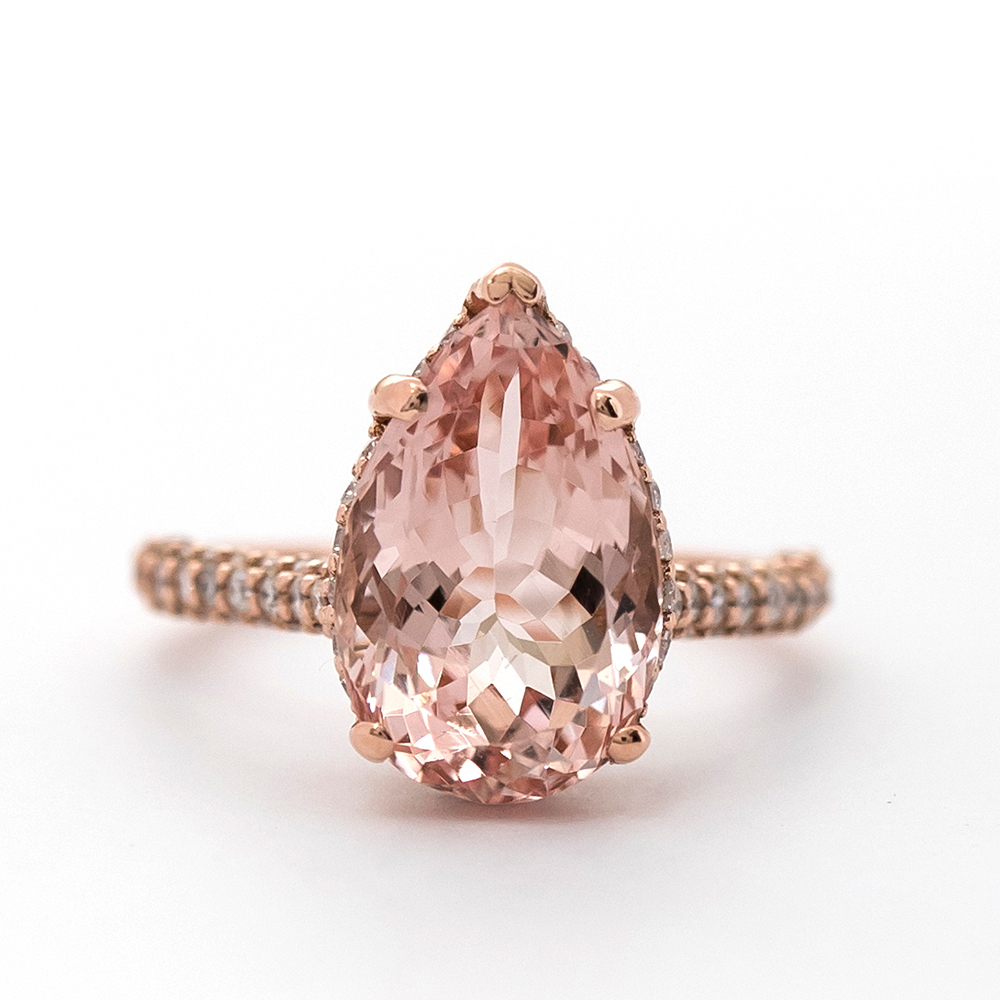
The Pastel Shades of Morganite, the Pink Beryl Cousin of Emerald

The Pastel Shades of Morganite, the Pink Beryl Cousin of Emerald


Most of you have heard about two very famous beryl colours that have captivated the hearts of jewelry buyers around the world; the oceanic blues of aquamarine and the forest greens of emerald. The science of gemology classifies beryl as an individual gemstone species, with both aquamarine and emerald belonging to this species, but existing as different varieties.


Photography Credit: BBBGem (above) and Christine K. Jewelry (below)

Today let's take a look at possibly the next most famous beryl variety used in jewelry- Morganite. This pastel peach-pink stone was named after J.P. Morgan, who himself was a notable gemstone enthusiast. Morganite was discovered in California and Madagascar sometime in the early 20th century, and has been circulating around many demure and elegant coloured-stone jewelry themes ever since.

It's no surprise that morganite's specific hue is a favorite of brides, debutantes and socialites. Many tout its color as a graceful accent for modern day women. Although morganite cabochon rings are also popular among men, especially when embellished with the warmer tones of yellow or reddish gold.

For those on a mid-market budget, morganite also makes a great alternative to padparadscha sapphire, the pinkish-orange corundum color that's been trending nowadays on the colored stone markets. Padparadscha can sometimes out-value blue sapphire colors even at fine jewelry auctions, so despite popularity, these stones can feel quite expensive for many collectors.


Morganite can be found in many parts of the world, like Brazil, Russia, Mozambique and Namibia among other places, but the best qualities are still quite sporadic in distribution. The supply and demand of gemstones plays an integral part in its popularity within the trade. Morganite currently sits behind aquamarine and emerald in terms of both public reception and price, however it has enough of a following for jewelers to actively use it as a main center-stone in rings, pendants and many other types of personal jewelry wear.

Sometimes called pink beryl, morganite's colour can range from a lightly toned brownish peach to salmon pinks with good saturation, although most material is typically orangey pink in a subtle pastel shade. Fashion trends love to make use of morganite along with light blues, and rose gold colours.
Read more »
Gemcamp Laboratories
0 Comments

You Might Also Like

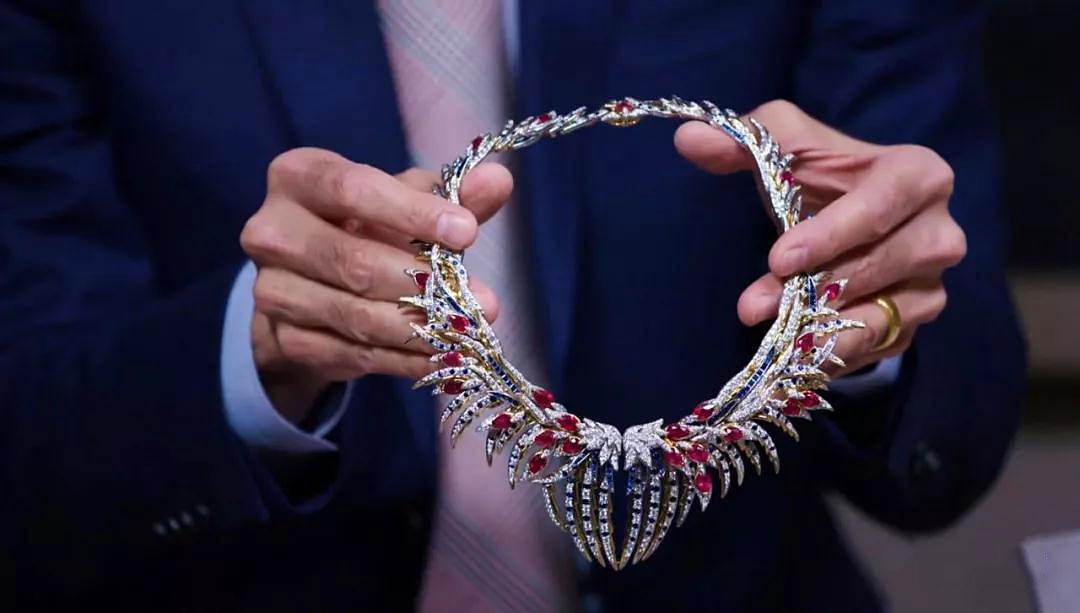
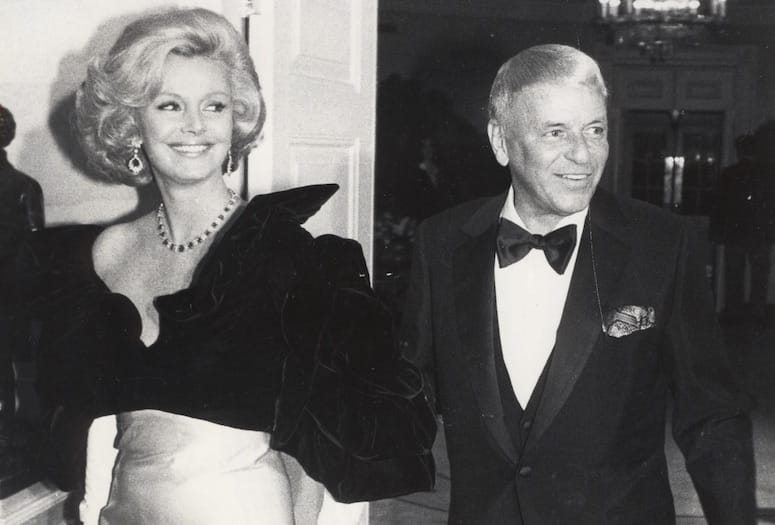
Watching Frank Everett's Narration on The Magnificent Jewels of Barbara Sinatra

Watching Frank Everett's Narration on The Magnificent Jewels of Barbara Sinatra


Many connoisseurs in the jewellery trade are familiar with the annual auction events held internationally. From Geneva to New York, greatly anticipated events led by the duopoly of Christie's and Sotheby's auction houses, have shown us some of the world's most tantalising jewellery from human history's most well known brands and designers.


Photography: Sotheby's Auction House, Plume necklace by Jean Schlumberger (Tiffany & Co.)

One particular storyteller we often like watching (just for his charismatic narration of significant pieces) is Frank Everett, who spotlights his own section called Frank's Files, on Sotheby's online platform. Here's an episode link where he timelessly describes a couple of novelty pieces from the collections of Barbara Sinatra (wife of Frank Sinatra) and Happy Rockefeller.


Some of the oldest jewellery design houses in the western world are often featured on his segments, including pieces by Cartier, Van Cleef & Arpels and Tiffany & Co. Both diamonds and rare coloured stones are often incorporated within the same piece, creating a mysterious allure unbound by a single hue or theme. Rubies, emeralds and sapphires are among the world's highest priced gemstones, and they're often found in the collections of society's most well regarded socialites and personalities.


Read more »
Gemcamp Laboratories
0 Comments

You Might Also Like

This was Once the Most Expensive Jewel Ever Sold at Auction

This was Once the Most Expensive Jewel Ever Sold at Auction


Up until April of 2017, the famed Oppenheimer blue diamond was the most expensive jewel ever sold at auction. The rectangular cut 14.62 carat blue diamond was the coveted premier lot at the Christie's Magnificent Jewels event in Geneva (2016).


Named after its previous owner Philip Oppenheimer, it's considered as the largest fancy vivid blue diamond ever shown at auction. The stone sold for just a bit over 50 million dollars after two telephone-bidders ended a competitive bidding war for its ownership.

Today fancy blue diamonds are among some of the most trending luxury gemstones chosen for spotlight unveiling at many international auction events. They outrank equivalent-clarity graded colourless diamonds in price per carat many times over due to rarity and exclusivity even among aristocratic collectors.


The Oppenheimer family name is historically linked with the diamond trade's rise to popularity. At one point in time, their family controlled the De Beers Group and its mining operations, which pioneered large-scale South African diamond sourcing and coined the famous tagline- "A diamond is forever".


Photography Credits: Christie's - Magnificent Jewels Auction Event
Read more »
Gemcamp Laboratories
0 Comments

You Might Also Like

3.43ct Bubblegum Pink Diamond takes the Spotlight at Christie's Hong Kong Jewelry Auction

3.43ct Bubblegum Pink Diamond takes the Spotlight at Christie's Hong Kong Jewelry Auction


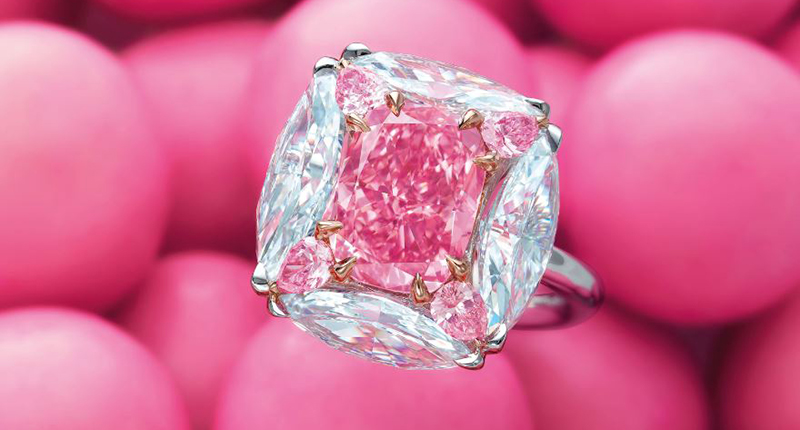
With the trend of coloured diamonds continuing its surge at international auction events, a 3.43 carat cushion cut diamond known for its bubblegum pink appearance has just sold for 7.5 million dollars at Christie's recent Hong Kong auction. The stone was mounted onto a ring designed by Moussaieff, alongside several more pink diamonds and some marquise shaped white diamonds as well.


Initially estimated between 6 million and 8 million US dollars, the beautiful ring did not disappoint when it came to the actual sale. The prominent piece was considered as one of the premier lots sold during the 'Magnificent Jewels' event held regularly by the famed auction house. The sale in its entirety encompassed purchases of over 40 million dollars, and showcased many other coloured gemstones- such as Colombian emeralds and brilliant blue diamonds.

Photography: Christie's Auction House | Magnificent Jewels

Read more »
Gemcamp Laboratories
0 Comments

You Might Also Like

Did You Know? Rubies and Sapphires Both Belong to the Same Gemstone Species

Did You Know? Rubies and Sapphires Both Belong to the Same Gemstone Species


When we talk about gemstone identity, there is a difference in terminology definition if using the words "species" or "variety". A gemstone species has a specific chemical composition and crystal structure that the members of that species would all have. In contrast, some species have members that differ from one another in certain ways. A variety is defined by the visual color or optical phenomena of a member within a gem species.


What some people don't know, is that rubies and sapphires actually belong to the same gem species called corundum. Corundum is basically aluminium oxide that has crystallised in the trigonal crystal lattice system. It's pretty hard at a 9 on the Moh's scale, and at its most basic composition- is actually colorless. What makes rubies red and sapphires blue though?

Rubies get their red color from the presence of a trace element called Chromium. The percentage of chromium is very small, just a few parts per million actually, but this interacts with light and the surrounding atoms to produce various degrees of red and pink in corundum. Pink sapphire is also often primarily colored by chromium.

Sapphire on the other hand, usually refers to blue sapphire when used as a standalone term. Blue sapphire mostly gets its color from the presence of iron and titanium. Despite this, some people don't know that there are actually many different colors of sapphire- such as green, pink, purple, and orange. These are often called 'fancy sapphires' or are preceded by their respective color hues.


Corundum represents one of the most commonly used colored gemstones in the jewelry trade today. Rubies are traditionally the most expensive colored gemstone actually. Sometimes though there is debate over where the line holds clear in the definition between rubies and pink sapphires, as the only difference is in the strength and presence of the red color component. If a stone's color is too light, traders usually term it as pink sapphire instead of ruby.
Read more »
Gemcamp Laboratories
0 Comments

You Might Also Like

A Blue Diamond to Rival the Hope Diamond.

A Blue Diamond to Rival the Hope Diamond.


One of the largest blue diamonds, and possibly the highest ranking one in terms of clarity grade, has been discovered in Botswana this year. At 20.46ct, the 'Okavango Blue' was originally unveiled in Gaborone, Botswana by the Okavango Diamond Company.


The gemstone was originally unearthed from the Orapa mine, and is said to rival the rarity and beauty of the famed Hope Diamond. While the Hope is bigger at 45.52ct, it also has a clarity grade of VS1.

The Okavango Blue on the other hand, obtained a grade of VVS2, and its imperfections are reportedly only visible under 10x magnification (which is the standard setting for diamond clarity grading).


Cut out from a very large 41.11ct piece, the Okavango Blue is just one of many large diamonds that have recently been dug up. It seems that large fancy-colored diamonds are becoming one of the fastest-growing trends in the international auction world as well.

Marcus ter Haar, managing director of Okavango Diamond Company, said in a statement: "It is incredibly unusual for a stone of this color and nature to have come from Botswana -- a once-in-lifetime find, which is about as rare as a star in the Milky Way."


In other news, A 72 carat yellow diamond was recently also recovered from the Liqhobong mine in the Maluti mountains in Lesotho. That same mine also produced three more large diamonds, following the 910 ct 'Lesotho Legend' which was worth about 40 million U.S. dollars.
Read more »
Gemcamp Laboratories
0 Comments

You Might Also Like

This Egg Shaped Diamond Sold for 13.8 Million Dollars as Sotheby's Hong Kong Event.

This Egg Shaped Diamond Sold for 13.8 Million Dollars as Sotheby's Hong Kong Event.


Remember that auspicious 88 carat diamond that was scheduled for an April auction show with Sotheby's? The magnificent, oval-cut D-Flawless diamond eventually sold for 13.8 million dollars (or 156,150 USD per carat). This happened during the Magnificent Jewels and Jadeite Sale held by the esteemed auction house. The stone, now named the Manami Star, was acquired by a private Japanese collector who had named it after his eldest daughter.


The initial estimate price of the diamond was only somewhere between 11.2 to 12.7 million dollars, so the actual sale price actually exceeded many experts' expectations regarding the stone's worth and reception. Such large oval-cut brilliant diamonds are quite rare, even at auction events. Only three oval diamonds over 50 cts have ever been auctioned to date, including this one.

A quote from Sotheby's regarding the stone's illustrious sale reads, “We were thrilled to handle a diamond of such rarity, which now takes its place in the roster of top white diamonds to have come to the market here at Sotheby’s Asia,” said Patti Wong, chairman of Sotheby’s Asia, in a statement. “At 88.22 carats, this lucky stone now carries the name of the fortunate child whose father has chosen to give it her name. A happy moment in the journey of one of the earth’s greatest, oldest treasures.”
Read more »
Gemcamp Laboratories
0 Comments

You Might Also Like

What is an Oiled Emerald?

What is an Oiled Emerald?


People familiar with emerald jewelry may already also be familiar with the common treatment processes that emeralds often go through. In the gemstone trade, many different species and vareties of gemstones undergo treatment procedures to improve aspects of their beauty and / or duarbility. For rubies and sapphires it's usually exposure to heat treatment. For emeralds on the other hand, a treatment called fracture-filling is the most commonly done procedure.


What is fracture filling? Well, some gemstones tend to be found with more inclusions or fractures compared to other kinds. Emerald is one of these gemstones, and it is usually very highly included with cracks, minerals, internal debris and all sorts of things. Many traders, in the efforts to improve emerald's transparency, subject the stone to some sort of filling- usually the material used is either oil, natural resins, artificial resins or proprietary polymers. Oil is the oldest and one of the most common substances used, therefore many in the jewelry business readily recognise the term- oiled emerald.

If your emerald is oiled, and you're not quite familiar with what this means, don't fret. Oiling is a very common practice for emerald, as a type of fracture-filling procedure. Over 90% of gem-quality emeralds are estimated to undergo some form of filling procedure in today's markets. A premium price point does exist for emeralds that are untreated though.


Oils and other filling substances have a refractive index closer to that of the surrounding emerald's, and this makes fractures less visible to the eye, nearly concealing them at times, and making a stone look more clear and beautiful than it originally was. In the above-image you can see the before-and-after shots of an emerald that underwent a fracture-filling treatment (although a proprietary filler was used for this stone, oiled emeralds would essentially look similar in terms of the general effect that improves apparent clarity).

Oils can gradually seep or 'sweat' out of emeralds over long periods of time (years usually). Heat or excessive light exposure can also hasten the oil leaving an emerald's fractures. The process can be re-done again though, by an experienced gem treater. Some substances, especially proprietary fillers made by branded companies, have a warranty that fillers can be removed without any damage to the stone, and then re-done easily. Not all though allow for this, and occasionally you will see some emeralds with residue of stuck-fillers nestled between cracks and fissures in the stone.

Depending on the degree of fracture-filling, many emeralds may require special care in cleaning. Ultrasonic or steam cleaners may not be advisable for heavily fractured emeralds or for stones that were treated in significant areas.
Read more »
Gemcamp Laboratories
0 Comments

You Might Also Like

An Auspicious 88ct. D-Flawless Diamond to be Sold at Sotheby's Hong Kong Auction

An Auspicious 88ct. D-Flawless Diamond to be Sold at Sotheby's Hong Kong Auction


April 2, 2019 marks the date of Sotheby's latest auction event, wherein the world's top jewelry audiences will arrive to bid for a D-flawless 88.2ct oval-brilliant diamond. Most estimates for the sale of this rare gemstone range from between 11.2 to 12.7 million dollars. A very small number of large oval cut diamonds have been released at auction houses during the recent years, but a previous 118 ct oval did sell for about 30.6 million dollars in 2013.


The current stone, weight at just a bit over the lucky number 88, is sure to please many collectors at the event's location in Hong Kong. The number represents a 'double infinity' for many cultural societies, and it's very rare to see such a large diamond in this exact carat weight. The rise of asia as a primary force in the jewelry-buying sector shows how its influence also affects the decision of high-end diamond cutters to tailor stones precisely for this growing market.

Patti Wong, chairman of Sotheby’s Asia, labeled the stone as a rare “treasure” in a statement made dates before the event. Sotheby's has always been a driving force in the auction world, most especially for jewelry and the arts. They've been able to publicise and sell some of the world's largest faceted diamonds, in all manners of shapes and color hues. Last year (2018), the sales totalled from their jewelry auctions is said to be somewhere slightly over 400 million dollars.
Read more »
Gemcamp Laboratories
0 Comments

You Might Also Like

Sphene, The Jewelry Collector's Spectral Fire Gemstone

Sphene, The Jewelry Collector's Spectral Fire Gemstone


In the world of colored gemstones, there are certain species and varieties that people consider to be collector's gems. This may have different meanings for some (possibly referring to high-end auctioned gems in some cases), but for many enthusiasts- a collector's gem is a species that has its own unique optical beauty, despite not always being used in main stream jewelry stores.


Today we'll look at one of these uncommon, yet beautiful collector's gems that you may or may not have seen in the Philippine jewelry circles. It's frequently seen by our gemological team during visits to international gemstone fairs in Hong Kong or Switzerland, but locally only very few brands seem to carry it in their jewelry designs.

Sphene, which is sometimes also called Titanite, is a stone with a dispersion rate greater than that of diamonds. What is dispersion you might ask? Well, dispersion rate actually governs the amount and intensity of the spectral color flashes you see when rocking and tilting your gemstone. Those sharp, crisp sparks of red, blue and green that a lot of people usually associate with diamond- this in layman's terms is called 'fire', but we refer to it as the dispersion of light.


This gem can be found in many colors, but its most popular hues are yellowish green and orangey brown. It's quite easy to recognise due to its strong fire display. Couple that with another interesting property; a very high birefringence. This specific trait splits incoming light rays into two, visibly observable by looking into the stone and seeing its inclusions or back-facets double. Sphene is considered a doubly refractive stone, and while many other stones also show visible doubling of interior characteristics, sphene's birefringence value of ‎0.100-0.192, makes its doubling one of the strongest in the realm of gemstones.

When buying sphene, always look for a good balance between fire, bodycolor and clarity. Sphene tends to have a lot of inclusions, which may seem larger or more plentiful than they actually are due to the effects of its strong birefringence. This stone, while not as popular as ruby or emerald, has its own indescribable appeal. You'd have to see it in person to really appreciate the elegant combination of traits that it possesses. Here at the laboratory, we have seen a few high-end jewellers and gem enthusiasts bring in specimens of faceted (fully cut) sphene for checking.
Read more »
Gemcamp Laboratories
0 Comments

You Might Also Like

[name=Gemcamp Laboratories] [img=http://www.gemcamp.org/img/gemcamp-black-badge-3.jpg] [description=A Philippine-based laboratory group headed by GIA graduate gemologists who share a collective passion for the sciences that support gemstone identification and evaluation.] (facebook=https://www.facebook.com/gemcamplab/) (twitter=https://twitter.com/gemcamplab) (instagram=https://www.instagram.com/gemcamplaboratories/) (pinterest=https://www.pinterest.ph/gemcamplaboratories/)

Follow @Gemcamp Instagram