Theme Layout

Boxed or Wide or Framed

Theme Translation

Display Featured Slider

Featured Slider Styles

Display Grid Slider

Grid Slider Styles

Display Trending Posts

Yes

Display Author Bio

Display Instagram Footer

Dark or Light Style

Showing posts with label Diamonds. Show all posts
Two Major March Hong Kong Jewelry & Gem Fairs Postponed to May 2020

Two Major March Hong Kong Jewelry & Gem Fairs Postponed to May 2020


Diamond and gemstone traders will have to wait a little longer this year for the world’s largest jewelry fair to take place. The Hong Kong International Diamond, Gem & Pearl Show, supposedly scheduled for March 2 to 6, has now been moved to May 18 to 21 by the event’s organisers due to the recent events related to the corona virus. 


The traditional-tandem fair; the Hong Kong International Jewellery Show, which was supposed to be held on March 4 to 8 at the Wan Chai Convention center has been postponed and relocated this year as well. It will be held at the Asiaworld Expo area, on the same dates as the Hong Kong International Diamond, Gem & Pearl Show.


* This blog article is dated February, 2020, and we recommend for you to check updated information from the Hong Kong Trade Development Council's (HKTDC) website directly in case of any future changes or updates to these initially shared details.


Some are worried about the two fairs’ announced postponement, as the new dates are now nearer to other traditionally scheduled international jewelry fairs, such as the 'Baselworld' show (held in Switzerland | Messe, Basel) and also the next running June Show (to be held in Hong Kong as well).

The past two years have been a little rough for the world’s largest diamond and jewelry shows, from typhoon limitations in 2018, to a lower attendance due to protest fears last September. 

Read more »
Gemcamp Laboratories
0 Comments

You Might Also Like

The Biggest D-Flawless Round Brilliant Diamond in the World

The Biggest D-Flawless Round Brilliant Diamond in the World


Round brilliant diamonds are the cornerstone of the fine jewellery industry today. Many collectors invest in stones that belong to the 'magic sizes' of 1, 2, 2.5 or even 5 carats. To those of you who've been to some of the most prestigious jewellery fairs across different continents, perhaps you may have even seen larger stones being exhibited by many of the international design houses.

Jewelry auctions however, tend to showcase those rare exceptional stones that come around once in a lifetime. Just a few years back, Sotheby's released such a stone that made headlines across nearly every jewelry news portal. The unveiling of a 102.34 carat natural round brilliant diamond.

The stone was a colorless gem with no clarity characteristics, and was touted to be the largest D-flawless round brilliant cut diamond in the world at the time. Its exceptional quality made it even more rare and sought after by thousands of luxury collectors.

The original rough came from Botswanna, a locality very well known for diamond production. It weighed about 425 carats, and master cutters took over half a year to correctly create the finished cut stone from its material.

More rough diamond materials of high carat weight have also been unearthed since then. One of which in particular was acquired by Graff, and contained the potential for a new record-holder in this classic category.


In 2019, the recently unveiled 102.79 carat Graff Constellation was said to beat the previous record by a very narrow margin.

This stone was cut from the 'Light of Letseng' rough diamond originally found in Lesotho mines. It is now considered as the largest D-flawless natural round brilliant cut diamond graded by the Gemological Institute of America at the date of this article.

The photo above depicts the said stone in the hand of Graff Chairman; Lawrence Graff- a pioneer in the global diamond retail trade, and an avid collector record-breaking precious gems.

Among all the fancy-cut shapes you'd normally hear about at auctions, it's sometimes quite interesting to see such a traditional or classic shape like the round brilliant, come in such large and elusive carat weights. One may wonder if any more will be unveiled at auctions in the years to come.
Read more »
Gemcamp Laboratories
0 Comments

You Might Also Like

Watching Frank Everett's Narration on The Magnificent Jewels of Barbara Sinatra

Watching Frank Everett's Narration on The Magnificent Jewels of Barbara Sinatra


Many connoisseurs in the jewellery trade are familiar with the annual auction events held internationally. From Geneva to New York, greatly anticipated events led by the duopoly of Christie's and Sotheby's auction houses, have shown us some of the world's most tantalising jewellery from human history's most well known brands and designers.


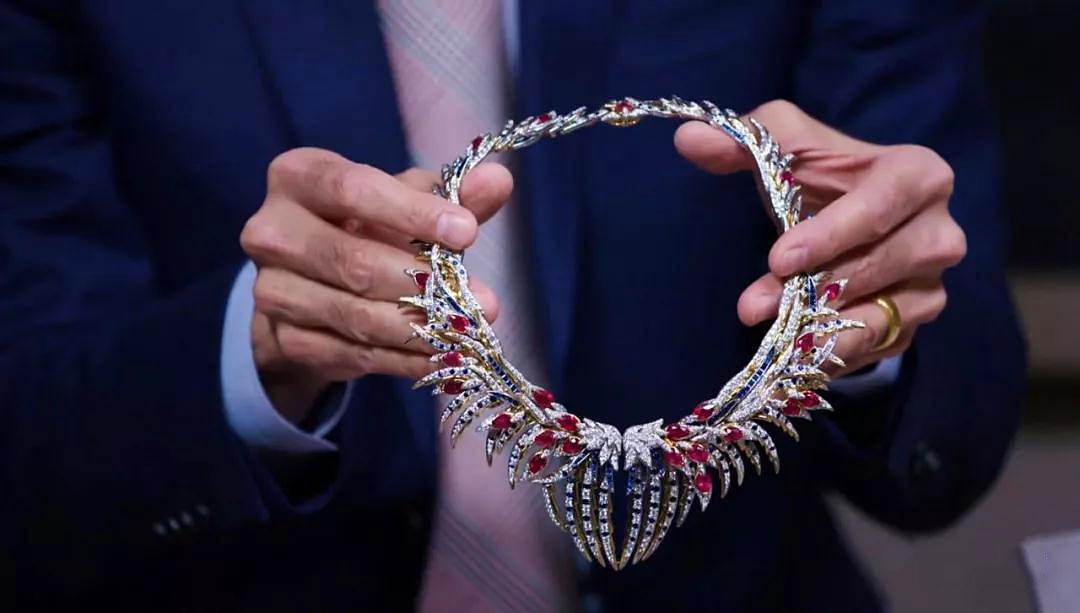
Photography: Sotheby's Auction House, Plume necklace by Jean Schlumberger (Tiffany & Co.)

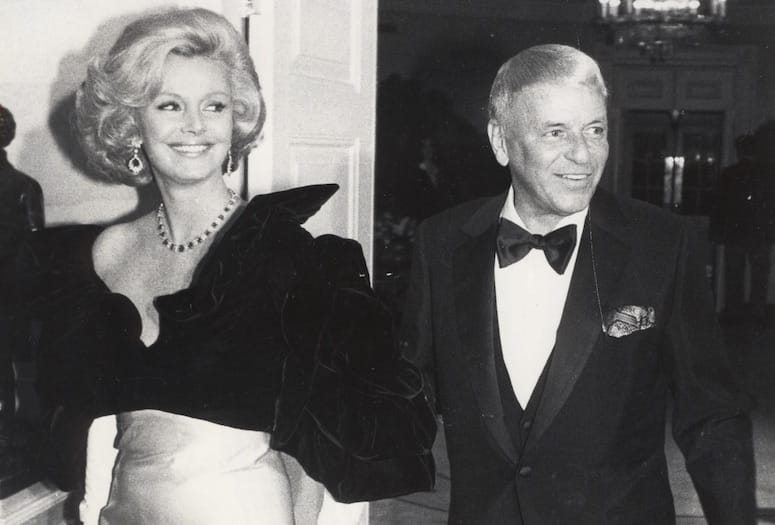
One particular storyteller we often like watching (just for his charismatic narration of significant pieces) is Frank Everett, who spotlights his own section called Frank's Files, on Sotheby's online platform. Here's an episode link where he timelessly describes a couple of novelty pieces from the collections of Barbara Sinatra (wife of Frank Sinatra) and Happy Rockefeller.


Some of the oldest jewellery design houses in the western world are often featured on his segments, including pieces by Cartier, Van Cleef & Arpels and Tiffany & Co. Both diamonds and rare coloured stones are often incorporated within the same piece, creating a mysterious allure unbound by a single hue or theme. Rubies, emeralds and sapphires are among the world's highest priced gemstones, and they're often found in the collections of society's most well regarded socialites and personalities.


Read more »
Gemcamp Laboratories
0 Comments

You Might Also Like

Three of The Most Popular Cuts for Colored Gemstones

Three of The Most Popular Cuts for Colored Gemstones


We all know that diamonds are most often polished and cut into round brilliant formats. The standard 57 to 58 facet design pioneered by Marcel Tolkowsky in 1919 took hold of the diamond industry and influenced how we want our diamonds to be cut today. This is common knowledge already, but what about the cutting preferences for the rest of the colored gemstone varieties?


Well today let's take a look at a handful of faceting styles and shapes that have captured the market's attention for best displaying the appeal and beauty of a gemstone. First off, probably the most utilized cut for rubies and sapphires (non-melee) would be the oval mixed-cut. The mixed faceting style simply refers to a gem that has both the brilliant-cut faceting style (triangular & kite shaped facets) and the step-cut faceting style (four sided facets). One might be on the crown, the other may be on the pavilion, or the reverse can also be true. This particular cutting style allows gem cutters to save weight from the original crystal, by cutting with a bit more bulge, especially if cutting the pavilion as a step-cut. Unlike diamond, the focus for colored gemstones is more about the intensity of color, and adding more material intensifies the selective absorption process that expresses a stone's color to our eyes. (Image credits to Sotheby's Auction House)

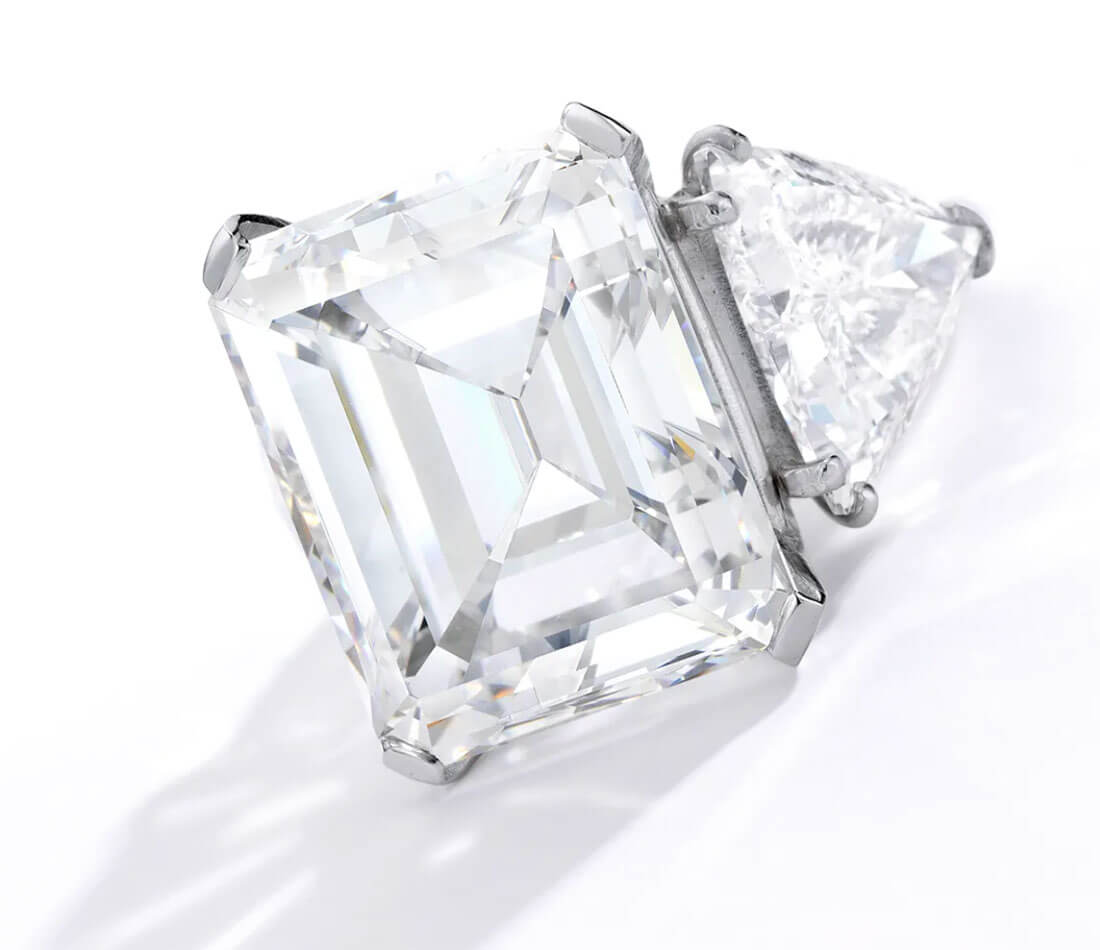
While rubies and sapphires are very often cut as mixed cuts, another very popular cutting orientation would be what the industry calls the 'Emerald Cut', which as you might have guessed, is very popularly used with emeralds. This is mainly because of how emerald crystals grow. Compared to the common tabular shapes of rough ruby, emerald crystals tend to grow as hexagonal prisms, or at least in elongated formats. The Emerald cut is a rectangular step-cut style that makes use of bevelled edges, and it's been the number one choice for emerald gemstones for a long time now. Even diamonds have adopted the appeal of this cut, because it accentuates their transparency and clarity, while presenting a very bold elegance and feel.


While the two styles above are probably the most popular choices for colored stone cuts today, another forerunner would be the cushion cut. Now the cushion cut is a little less defined than the previous two we mentioned. There are square cushions and rectangular cushions, as well as other shapes and varieties. The main difference between the cushion cut and other cuts, lies in the fact that cushion cuts have curving edges on all sides when seen face-up. It sort of resembles a pillow, or a cushion in shape outline- hence the name. This cutting preference allows a good amount of weight to be saved, and just like the standard oval mixed-cut, this appeals well for gem-cutters due to the fact that color can be better shown with more material.

Colored diamonds are also often cut into cushion shapes. The 'oval' or 'stadard' cushion cut pink diamond, pictured below, is a prime example of this. Color will always be one of the defining factors in gemstone valuation- whether it be the presence of it or the absence of it.


Each gemstone can be cut in a huge variety of choices. Emeralds can also be cut as mixed-cuts, and star rubies & sapphires can be polished into cabochon cuts. There are so many choices for gemstone appearances in today's trade, that the main factor to consider is your own personal preference. Brilliant faceting styles create sharper, more crisp brilliance patterns, while step-cut faceting styles can save more weight, and deepen color. Proportions and angles are also equally important so as not to create areas of windowing or extinction, where light can leak out of the stone rather than bounce back to the viewer's eye.
Read more »
Gemcamp Laboratories
0 Comments

You Might Also Like

Strong Color in Diamonds, Is it Bad or Good?

Strong Color in Diamonds, Is it Bad or Good?


The diamond industry consists of two market sectors when it comes to the presence or absence of color. A majority of the trade is focused on the buying and selling of colorless or near-colorless stones. This portion of the industry puts more value on the absence of color, rating diamonds using many proprietary systems- the most famous system being the one pioneered by the GIA, called the D-Z color scale, where D represents a diamond with no color at all, and Z represents the lowest tier (most presence of color admissible by the scale.) You may have heard jewelers advertising their best stones as D-Flawless, with D referring to the color quality and flawless referring to the top grade for clarity.


The minority focuses on the saturation or intensity of colors present. They favor diamonds that have color beyond the “z” graded stones of the previously discussed scale. Colored diamonds with enough color are called as fancy-colored diamonds, and a phrase-based grading system also governs the value hierarchy of these stones. The very best make their way to the halls of international auction events, representing the very top brackets of diamond value.

Intensely saturated yellow diamonds can compete with colorless diamonds, but highly vivid pinks, blues, reds and greens almost always command much higher prices than their colorless counterparts. This observance is due to a great disparity in rarity. Fancy deep and fancy vivid grades of colored diamonds are a tiny fraction of 1% of the diamond trade today. Be careful though to make sure that the diamond’s color is natural. Many highly included diamonds are often artificially irradiated and annealed to produce fancy colors for the trade.


The Argyle mine in Australia is famous for producing fancy-colored diamonds. Most of these are brown in color, earning the term 'chocolate diamonds', however a small percentage of their yield consists of pink colors- the finest of which go into their highly anticipated auction event; the Argyle Tender, which is usually held in Geneva. The world's most expensive diamonds sold at auction houses are typically fancy vivid grades rather than colorless grades.
Read more »
Gemcamp Laboratories
0 Comments

You Might Also Like

Examining Diamond Jewelry at Our Metro Manila Laboratory

Examining Diamond Jewelry at Our Metro Manila Laboratory


Pavé-set diamonds are often a target for 'mixing', especially with all the talk of synthetic and imitation diamonds circulating around today. The laboratory makes use of luminescence spectroscopy technology to identify and separate the vast majority of natural diamonds (type 1aAB) from man-made diamonds (lab-grown CVD, HPHT diamonds), simulants (moissanite, cubic zirconia), and other rarer types of diamond (2a). We were granted permission by a visiting client, to photograph her ring atop a pre-fold report. She noted that the piece had been bought from hong kong, and she was worried of laboratory grown stones being mixed into the original parcel.


In the past, she had brought a previous suite of channel-set earrings and a ring, that were sold as natural (earth-mined) diamonds. Upon spectrometric testing, Short-wave UV evaluation, microscopy testing under crossed polars and other applicable tests at the time, these were all distinguished to be man-made diamonds grown via the HPHT process. A few of the stones possessed very characteristic globular metallic flux as well, which are known remnants of the HPHT growth procedure.


Thankfully, this time around, her pavé set ring (purchased from another seller) had been thoroughly checked, with all stones passing as Type 1aAB natural diamonds. The past two months has seen an increase in visitors who bring in potentially lab-grown diamonds for testing, under the assumption that these items were natural. Both lab-grown diamonds and natural diamonds currently have a high price rate, but valuations of each are not the same. Man-made diamonds have been observed to cost about 30% cheaper at the retail level compared with natural diamonds. At the loose-stone, wholesale and dealer levels, we have met with people pricing their lab-grown diamonds at 40-60% lower than natural counterparts.


Gemcamp neither buys nor sells gemstones or gem-set jewelry. We merely check stones and give our opinion on the current markets. Lab-grown diamonds are very elegant gemstones in their own right, and are appreciated by millions of jewelry collectors around the world as well. Because though of different valuations, it is important to ethically disclose the sale of a lab-grown diamond as such, and not as a natural stone (which would be fraudulent).


Our visitor expressed her concern that future purchases abroad may also contain lab-grown stones, as these are almost always impossible to distinguish with a loupe alone.

The reception of lab-grown diamonds here in the Philippines, is still quite mixed at the current time. Laboratories like Gemcamp neutrally test all faceted stones brought to us (loose or mounted into jewelry) in front of their owners, for better peace of mind.
Read more »
Gemcamp Laboratories
0 Comments

You Might Also Like

A Bit of Jewelry Trivia for Beginning Filipino Jewelry Collectors

A Bit of Jewelry Trivia for Beginning Filipino Jewelry Collectors


Here we'll just briefly discuss some of the commonly misunderstood concepts observed in the local trade. Now, certain people may already be aware of these, but it seems that every now and then some people express confusion regarding what many terms mean, and what they don't mean. This short article should give you a bit of insight (and trivia) about gemstones and jewelry.


1. 'Emerald Cut' refers to a specific cutting style and shape, not necessarily or specifically to the emerald gemstone itself. Most diamond collectors may be familiar with the popular term 'emerald cut', but some people are not aware that this term refers to how a gemstone (diamond or any other) is fashioned and polished into a rectangular shape with step-cut (four sided) facets on its body. Emeralds themselves, are very often cut in this rectangular style, because of the way their crystals grow, and the intention of gem cutters to save the most weight. Today, many other gemstones, such as aquamarine, diamond, amethyst and quartz are frequently fashioned as 'emerald cuts'. This specific cutting style is well suited for stones of high clarity, or stones that tend to form elongated or columnar in nature.


2. Rubellite is not ruby. We've come across a few parties that previously believed rubellite to be a form or type of ruby. This is simply not true. Rubellite is a trade named color variety for red to pinkish red tourmaline. Both tourmaline and ruby maintain very differnet gemological properties, and prices. Ruby is traditionally much more expensive than rubellite tourmaline, given a situation where color intensity and clarity levels are generally equal.


3. The term 'synthetic' is different from the term 'imitation' or 'simulant'. A synthetic gem refers to a man-made counterpart of that gem, with the same essential crystal structure and chemistry. A synthetic diamond, is still made of carbon, crystallized in the cubic crystal system for example. This is in stark contrast to an imitation gem (also called a simulant gem). An imitation gem merely looks like the gem it is trying to copy. Moissanite for example, is an imitation of diamond, as it is made of silicon carbide instead of pure carbon. It also grows in a different crystal system.


4. Cultured Pearls, not wild pearls, comprise a majority of all middle to high-end pearl jewelry collections in the country. Some people are not aware that over 99% of all pearls used in the jewelry industry today (especially the mid-to-high ranges) are actually cultured pearls. Cultured south sea pearls for example, are among the most expensive pearl items you can procure, with some necklaces costing hundreds of thousands of dollars. For pearls there are three categories you have to be familiar with. Imitation pearls, cultured pearls and wild-caught pearls. Imitation pearls are simply simulant items usually made of plastic or glass coated with iridescent substances. Cultured pearls and wild-caught pearls both come from actual live animals (mollusks, oysters etc), but a cultured pearl means that man has assisted the developmental stage by putting either a piece of mantle tissue or a shell-bead nucleus inside the mollusk in order for it to coat with nacre over long periods of time- to eventually form a pearl. The nacre layers are still organically produced by the same animal. Wild-caught pearls statistically speaking, are rare coincidences in nature today, and almost never come in large enough symmetrical shapes (round, oval etc.). The vast majority of fine pearl jewelry makes use of cultured pearls. (This statement does not apply for giant clam pearls, which we do not currently test at the laboratory).


5. Diamonds are not indestructible. We would not suggest that people perform any possibly-destructive test to find out if their stone is actually a diamond. Stories of sandpaper-scratching or hardness testing using rocks or other materials seem to be very prevalent among Filipinos. While diamond is the hardest mineral to 'scratch', it does maintain multiple planes of atomic weakness (cleavage). When struck in specific directions, a diamond can chip, fracture or even split in two. Thin areas of a diamond, like its girdle or culet, are also very prone to breakage. This can still happen even if it impacts with something with a generally lower hardness, if done in certain ways. Additionally, diamonds can also burn if subjected to high enough fire temperatures and sufficient levels of oxygen (because they're still carbon).


6. Proper heat treatment in rubies and sapphires is okay and an accepted part of the trade. There are those out there who detest the thought of their rubies being treated, but the vast majority (over 95%) of rubies and sapphires today are actually subjected to some form of heat treatment. It's a normal practice in the industry, and can bring out a stone's potential when done in the correct conditions using appropriate methods. While premium prices do exist for unheated stones, it's just as likely that an originally duller stone's value can eventually be heightened by subjecting it to heat treatment and increasing the overall color quality.


7. Glass-filled rubies are not nearly as expensive as natural or heated-only rubies. These items can be filled with glass in up to 50% of their composition. If someone tells you that their value is basically the same as rubies that aren't filled, you should probably do a bit of research first. Most likely you'll find that glass-filled rubies were originally very opaque-looking low-quality stones. Their durability post-treatment is also not that stable, according to many of our visitors and our own observations.


8. DIY Handheld Diamond Thermal Testers cannot differentiate between natural diamonds and lab-grown / man-made diamonds. These instruments make use of a technology that measures thermal conductivity, a property that is essentially the same for both natural and synthetic diamonds. Other testers like duo or multi testers that also check for moissanite, make use of electrical conductivity. These also cannot separate CVD or HPHT lab grown diamonds from natural diamonds. Advanced spectrometric testing is more suitable for this differentiation, which we make use of here at Gemcamp Laboratories.
Read more »
Gemcamp Laboratories
0 Comments

You Might Also Like

Are Diamonds Really Unbreakable? Know Your Facts

Are Diamonds Really Unbreakable? Know Your Facts


Not everyone recognizes the gemological properties of diamond, for what they actually are. Due to an incredible marketing campaign spanning several decades, diamonds have sometimes been touted to be the everlasting, near-indestructible gemstone of the ages. Is this accurate though? What makes a diamond strong, and do they have any weaknesses? Today we'll discuss and debunk some physical traits of the world's most famous gemstone species.


Diamonds are hard, not tough. When someone says a diamond is the hardest natural mineral on the planet, they would be correct. Despite this, there is indeed a difference between a mineral being "hard" and being "tough". Hardness, measured on what we call the Moh's scale, represents a material's resistance to being scratched or scathed. If you rub two parallel surfaces together and one is harder than the other, the softer one gets scratched. Toughness on the other hand, refers to a material's resistance to splitting and breaking.

What most people don't know or remember- is that diamond is not the king of toughness. It actually has 4 directions of perfect cleavage. This means that the species possesses four directional planes of atomic weakness, that would make it prone to splitting into smaller pieces. In the early days of diamond cutting, manufacturers would make use of this property in order to quickly saw or half diamond rough, especially octahedral shaped specimens.


Gemstones like jadeite and corundum are actually tougher than diamond, and while the latter may be able to scratch them, both these gem species are more resistant in terms of avoiding breakage.

Hitting or strongly knocking a diamond at certain specific angles can cause it to chip, cleave or break. Take note also that many faceted or fully-cut diamonds have a very thin girdle area. This makes them susceptible to potential damage upon impact.

Another interesting fact to consider, when talking about diamond's durability- is its carbon composition. Sure, compared to its "cousin" graphite, diamond appears to be leaps and bounds ahead in terms of resistance to damage, but consider that carbon can burn up due to the presence of extreme heat.


Diamonds caught in very high temperature fires can become cloudy or damaged (be burned). There have been instances of some stones becoming partially vaporized by great amounts of heat. For this to occur though, the diamonds also have to be in contact with air, or more specifically oxygen. Most jewellers however should be quite familiar with the limits, and can remove a diamond from the path of a specifically over-heating flame tool.

Rubies and sapphires on the other hand, can actually withstand more heat than diamond (at our normal pressure levels). They often undergo heat-exposure treatments to improve their vibrant colors.

Diamonds that form in the earth's depths do undergo exposure to crazy levels of heat, however the reason they form or exist under these temperatures is because a very high environmental pressure is present. Without this pressure, the diamonds would not survive or even form properly.

Despite diamond's innate resistance to scratching and abrasion, we would still discourage certain tests, like purposely attempting to scratch a stone against abrasive material or against other stones. Remember that even if diamond is hard, thin parts like facet junctions are relatively still in danger of chipping against directional impact. Always take care of your stones. Just because they're the hardest natural mineral on the planet, doesn't meant that they can't be damaged.
Read more »
Gemcamp Laboratories
0 Comments

You Might Also Like

This Curious Ant Tried to Steal a Diamond, and was Caught on Camera.

This Curious Ant Tried to Steal a Diamond, and was Caught on Camera.


We all need to take a breather from work every now and then, but it seems that some jewellers can't even sit down to have a relaxing cup of coffee without worrying about theft- from all directions.


This tiny ant was caught on camera attempting to 'steal' a large diamond that was probably about 5 times its size. Luckilly for the ant, the owners have not reported it to the local authorities (or decided not to pummel it).

The viral video of this small insect is quickly spreading through the internet, making both jewellers and jewelry collectors laugh out loud at the curiosity of the situation. Once in a while we have to take a step back and enjoy the small moments in life.


Although numerous videos have surfaced on youtube about this little guy, here's one from the New York Post, as we're not too sure who the original jewelers who filmed it were. They might be thinking about pest-control now at their offices. Either that or this could have possibly been one really interesting marketing stunt!

In Arizona (US), there are ants out in the wild that have been known to "push out" red pyrope garnets from their hill mounds. The ants hate these gems because they can't break them apart with their mandibles. Sometimes prospectors find these red pebbles on the arid ground, and end up calling them anthill garnets.

Anyway, if an ant can do this- maybe your own pets and creepy crawlies could be considered as potential culprits for gem and jewelry disappearances at home! I's possible, as far as we saw through the video anyway (although incredibly unlikely).


It's somewhat interesting to note that occasionally certain gems can also "carry" ants, judging from this piece of baltic amber. Fossilized plant resins millions of years old have been known to harbor insect inclusions, especially in their collector-qualities.

Cheers everyone, have a good week ahead.
Read more »
Gemcamp Laboratories
0 Comments

You Might Also Like

Are People in Southeast Asia Re-selling Their Diamonds in Favor of the Simple Life?

Are People in Southeast Asia Re-selling Their Diamonds in Favor of the Simple Life?


2018, Japan-- It's been observed that the local jewelry-owner population has been selling off unwanted jewels for cash at an all time high. Re-selling their old items to buyers in China and India, and seeking a much more simple lifestyle. This coincides with the Japanese practice of danshari, and can be observed right now in a large section of the country's older generations. Shedding the jewel-encrusted accessories in favor of vacations abroad with the family, or delicious dinners with friends, seems to be a popular notion nowadays in cities like Tokyo and some other vastly populated areas.

China has been one of the biggest international markets for jewelry this decade, and this statistic seems to be growing by the year, as most of the country's newly-rich generations seem to be acquiring a taste for luxury-as-an-investment.


In order to re-sell their diamonds and jewelry however (many of which are inherited from their grandparents or parents), people normally have to seek out the help of gemological laboratories in order to accurately identify and appraise their items. Once this is taken into account, they often liquidate their gemstone assets through friends, word-of-mouth, or through online exchange sites that even allow trade overseas.

Despite this trend, it is not uncommon for the owners to sell off their items for less than what they had originally paid for. Selling your gemstones to pawnshops or even jewelry shops will usually entail low prices, as business people who purchase them only do so for profit. Be prepared to wait a long while, if you are wishing to get your original monetary amount back. Although diamond does appreciate, so loose diamonds (unset) are particularly fast-moving in some countries like the Philippines and India. It is still possible to sell them for a profit, if you are able to get accurate information on price valuations from a reputable gemologist appraiser.


The two biggest trends causing the re-sale of old jewelry these days are: The utilization of money gained for more practical purposes- such as paying for housing, or diversifying assets, and also for diminishing luxury clutter- or basically creating a minimalist way of living. Most Filipinos these days actually engage in the luxury-purchasing of tech-related products. It's been shown that these are sometimes bought by younger generations (even for gift-giving) rather than fine jewelry items. Millennials have also been documented to sell-off heirloom jewelry to people who would appreciate them more, and instead just use the cash to buy iPhones, tablets or new laptops which they could use for both work and leisure.

Diamonds and gemstones are sold and resold according to their identities and grades. People looking to re-sell their jewelry items should consult with a proper gemologist so as not to undervalue or overvalue their possessions, as well as to avoid getting cheated or swindled.


Gemstones and diamonds are some of the most stable hard assets, so selling them for a high price is still very much a viable option, even for the private sector. Just make sure that you know what it is you're selling. Seek out gemological support from experts in the field. Our laboratory has helped Filipinos save hundreds of thousands of pesos by simply giving them information on their gems that could help them better price their items for the market in fair and realistic conditions.

Apart from Japan and the Philippines, other countries in Asia seem to be continuing their purchases of diamond and diamond related jewelry at a steady pace, with some highs and lows peaking throughout this past 2017. China in particular has been consuming a great percentage of the jewelry market, growing its luxury sector by exponentially higher rates compared to previous years.
Read more »
Gemcamp Laboratories
0 Comments

You Might Also Like

The World's 5th Largest Diamond has Just Been Found in the Country of Lesotho

The World's 5th Largest Diamond has Just Been Found in the Country of Lesotho


The world's 5th largest diamond to-date has just been uncovered at Lesotho's famous Letšeng mine. The rough piece, weighing in at 910 carats was said to be about the same size as two golf balls put together. Experts on call had determined the newly unearthed diamond to be worth around 40 million dollars. Its quality evaluation showed a D-color grade following the D-Z color scale that was originally standardized by the Gemological Institute of America.


The rare find was also labelled to be a Type II diamond (containing no measurable impurities like trace percentages of nitrogen atoms). Only 1 to 2 percent of all natural diamonds found are Type II stones.

The Letšeng mine is owned by Gem Diamonds which is a British-based diamond mining business that operates on an international trade scale. Since the company's acquisition of the mine back in 2006, the operation has found some of the world's largest diamond specimens, including the 603 carat Lesotho Promise.

This new diamond is the largest that the mine has ever produced, and will most likely be on its way to an auction house event or high visibility sale within the year. Stocks in the company have risen as an immediate result of the event, and just after news of 100+ carat stones also being found during the previous week.

It's landmark addition to the world's gemological record book, follows other giants like the 1,109-carat Lucara diamond, the 995-carat Excelsior, and the 969-carat Sierra Leone.


Pictured above is one of the other record-holders1109 carat Lesedi La Rona diamond, on view at a Sotheby's event in New York.
Read more »
Gemcamp Laboratories
0 Comments

You Might Also Like

 The Largest Gemstones Ever Found, A Look Into the Gem Trade's World Record Holders.

The Largest Gemstones Ever Found, A Look Into the Gem Trade's World Record Holders.


There's often much debate about world records, especially when they come with the prize of bragging rights and branding opportunities. The gemstone world is filled with majestic specimens that can dazzle and bewilder the mind. Some gigantic stones are larger in fact than most people, just like the 'Pearl', a semi-precious gemstone weighing in at 6 tons and measuring 1.6 meters in diameter. It's actually not a pearl though, but rather the mineral known as fluorite. Estimated to be worth over 300 million dollars, the 'Pearl' took three years to be shaped into its current spherical orientation.


When we talk about precious stones however, that's an entirely different ballgame. There was this one piece of rough emerald, known as the 'Bahia Emerald', which was said to weigh short of 2 million carats. It's estimated worth was said to be about 400 million dollars, and yet some observers have noted that the stone was once placed on eBay for a mere 75 million. The 'Bahia Emerald'

Just this year, another large emerald rough, weighing around 360 kg was dug up from the Carnaiba mine in Bahia, Brazil. This piece is estimated to be worth around £242 million. Currently under lock and key at a hidden location, its owner is being very protective of its whereabouts due to security threats in the area.


The world's biggest gemstones, while valued at near-impossible figures, are also historical treasures unearthed from the mysterious depths of our planet.


Large rough stones, no matter how astounding in stature, still exude a sense of raw presence. Being mined straight from the earth, they often contain a multitude of mineral impurities or inclusions, showcasing a very speckled appearance. This isn't always the image that people think of when they hear the word gemstone. Faceted, transparent gems like diamonds are the more commonly associated thought when referencing the word 'gem'.


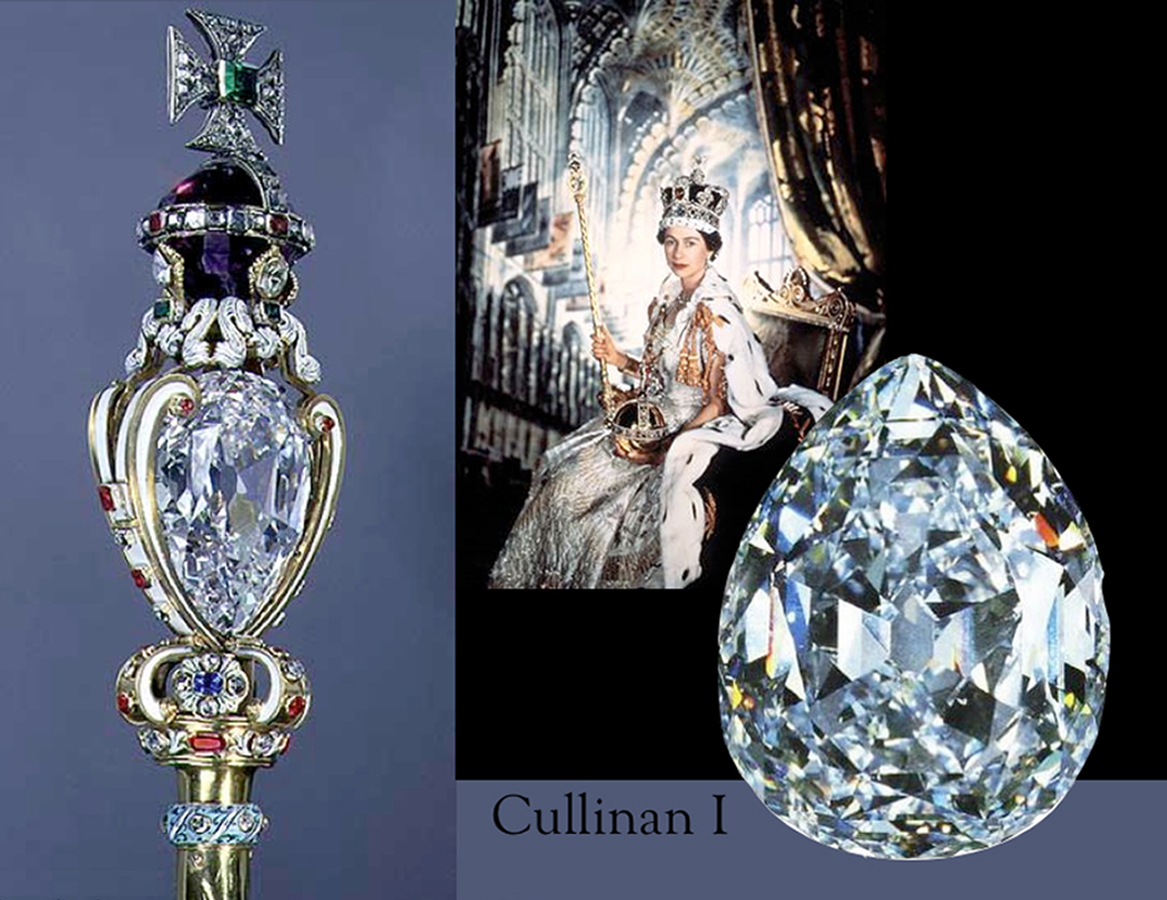
The Golden Jubilee Diamond, a yellow faceted gemstone weighing about 545.67 carats, is currently the largest faceted diamond in the world. It's followed closely by the famed Cullinan 1 diamond, outweighing it by a little over 15 carats. The latter however is a colorless diamond, which holds more value in the current market.

Discovered in the Premier mine, the Golden Jubilee is valued at 4 to 12 million dollars and was cut by Gabriel Tolkowsky whose ancestor was the father of the modern round brilliant cut used for a majority of gem-quality diamonds.


Other large stones have been found and faceted into historical pieces of jewelry, making their way into the crowns and scepters of monarchs all across the world. Records are broken almost every year, and the contest for who's got the biggest gemstone continues to this day. It's often played by the owners of mining companies or large monopolies that want to further cement their foothold in the industry. Some collectors, seeing these magnificent gems at auction, also make a bid to take them home, paying hundreds of millions of dollars just to do so.
Read more »
Gemcamp Laboratories
0 Comments

You Might Also Like

Discussing Moissanite Against Genuine Diamond in the Context of Today's Evolving Jewelry Societies

Discussing Moissanite Against Genuine Diamond in the Context of Today's Evolving Jewelry Societies


Moissanite is affordable to many, however other diamond simulants like cubic zirconia, synthetic spinel or man-made colorless sapphires are usually a little less costly in comparison. The traits of moissanite that differentiate it visually from these other gemstones are usually the selling points to which people find themselves drawn to.


One noticeable characteristic of moissanite is its high level of dispersion. This allows it to showcase more "fire" or the spectral flashes of color you would see when rocking and tilting the stone under light. moissanite possesses a dispersion rate of 0.104, compared to diamond's lesser dispersion rate of 0.044. We can see through these numbers alone that moissanite's fire would most likely show up stronger than an equivalent quality of diamond. Now, to some this is a good thing, but there are also many jewelry lovers who describe moissanite's fire to have a "disco ball" effect, which might mean that its fiery appearance is too flashy for their taste. Personal preference has a major hand in the present moissanite demand on the market.


Moissanite is a Diamond Simulant / Imitation. It is Very Different from Natural OR Man-Made Diamond, Because it Possesses an Entirely Different Chemical Structure and Composition.


The stone's refractive index is also higher than diamond's, being at 2.65 to 2.69. Moissanite is actually a doubly refractive stone, unlike diamond or Cubic Zirconia. This means that once light enters its interior, it bends and changes direction slightly.


Moissanite can sometimes show "doubling", especially when viewed under a microscope. This can be observed by looking through the stone in magnification, and staring at either the back-facets or inclusions. Be careful though when testing this way, as the stone will have certain directions that will not showcase the doubling effect. This would be called an optic axis direction, and all doubly refractive gems (anisotropic gemstones) have at least one, depending on their crystal symmetry.

Hardness is another trait that moissanite scores well in. It belongs to the rate of 9.25 on the Moh's scale, which is even higher than ruby or sapphire. Diamond still reigns as the hardest mineral though at a Moh's rate of 10.

Virtually all moissanite you would see in the jewelry trade is man-made. The natural counterpart was discovered by a man named Henry Moissan back in 1893. These crystals are usually quite small and incredibly rare, so their usage in the jewelry trade would not merit much following. The stone's brilliance and optical properties though, gave scientists the motive to create synthetic versions using a process called sublimation.

Despite moissanite's diamond-like qualities, many specimens also tend to look a little greenish or grayish, depending on the quality of their production. This is one of the more negative observations regarding moissanite as a diamond simulant, however the best batches of man-made moissanite do not possess such a degree of color overcast, and instead can look very much similar to traditional colorless diamonds.

Today, the industry often uses "moissanite testers" to scan for these gems, as the standard electronic diamond testers can miss them (due to moissanite's high thermal conductivity).


Read more »
Gemcamp Laboratories
0 Comments

You Might Also Like

Diamond Color, Fluorescence and Precious Metal Alloys

Diamond Color, Fluorescence and Precious Metal Alloys


Buyers who are familiar with diamonds and the way that they are color-graded, may have noticed slight visual differences in some stones of similar letter grades. Many factors can influence how a diamond appears after it is set into metal by an experienced jeweller.

For one thing, a diamond that is set into a piece of yellow gold jewellery will appear to be of a higher (less color) grade than it actually is. This is because the stone is seen in stark comparison to the bright yellow of the metal next to it. Many people appreciate this when buying stones that range in the K,L and M colors.


Whiter stones like those that belong to the D,E, and F colors can also be set into yellow gold jewellery as well, although they might fare equally well when mounted against the cold whiteness of platinum metal. The other yellowish stones (K,L,M) may look even more yellow when set into platinum or white gold mounts, purely because of the nearby visual comparison between the stone's color and the metal's absence of it.

Diamond Color Can be Sometimes Seem Affected by Factors Outside of its Color-Causing Trace Elements. The Presence of Fluorescence and the Chosen Jewelry Metal Type Can Also Change How We Evaluate a Stone's Color, Especially at First Glance.


Metals aren't the only thing that can make a diamond seem to possess more color than it actually has. Another property called fluorescence can also affect how we evaluate diamond color with our eyes. The presence of fluorescence in a stone means that it will also emit some amount of visible light when exposed to a source of radiation (including daylight). Most diamonds that possess fluorescence showcase it in a bluish tinge, which can sometimes make yellowish stones look less yellow, but can also allow whiter stones to look as if they possess a greater amount of color.


While fluorescence can make some stones look less colored, and others more colored, the general majority seems to side more with the absence of fluorescence as a better trait in diamonds today. Dealers may sometimes give a percentage discount for stones that have very strong fluorescence, and likewise put pricing priorities on those with a total absence of it.

The percentage can vary, we've seen many that range from about 3 to 6% off of industry price sheets (without yet factoring in dealer discount), but it's different from a case to case basis.

Many people also prefer the colored glow that fluorescence provides. Some diamonds with a very strong bluish fluorescence can have a slight ethereal feel to their appeal.

Read more »
Gemcamp Laboratories
0 Comments

You Might Also Like

Sliced Diamonds, An Introductory Look

Sliced Diamonds, An Introductory Look


A new trend in the jewellery + fashion world today is the usage of "sliced" a.k.a. "ice" diamonds. These are diamonds that exhibit a natural looking appeal with hints of warm color and the presence of inclusions. Their reception is quite divided in the market. To some, they represent diamond qualities that don't belong in traditional grading scales. They are often just below the fancy colored diamond scale's saturation level requirement, or sometimes just too included to consider making a grade in the clarity scale used by the classic diamond trade.


Others however, believe that they show a charming and rustic appeal- exemplifying the earthy colors of a natural environment. Some jewellery houses and fashion labels market these diamonds as fashion-forward and "true to their origin".

Many stones are often left uncut or partially cut. A certain percentage of them might also be faceted in many older or non-classical styles such as the rose-cut or the freeform cut.


Heavily Included Diamonds are Often Fashioned Into Designer Cuts and Termed as Sliced Stones.


Debates about the investment potential of these diamonds are a hot topic in today's gem trade. Many "purists" believe that these stones just classify as I3 graded low-color stones by the current grade level standards set by gemological institutions. The opposition believes that they should be seen and evaluated using a different set of criteria, similar to how raw uncut minerals are often valued for their unique inclusions or contours.


In the end, a diamond's value is both concrete and perceived to be honest, just like most items of luxury. The world considers it concrete because a large portion of the global jewellery trade would pay a certain specific amount for availability of possession, but logic also considers it as a perceived value due to the fact that diamonds do not really serve a true utility-based purpose.

So all in all, if you are looking to purchase these 'sliced' or 'ice' diamonds, our own personal opinion would be to do so with the purpose of taste over value. Buy them if you connect with what they represent visually, rather than for any long-term investment chance. Most investment mechanisms in the diamond trade tend to follow the GIA grading scale for color and clarity, and these stones seem to exist in a world apart from the traditional views.
Read more »
Gemcamp Laboratories
0 Comments

You Might Also Like

Let's Talk About Black Diamonds

Let's Talk About Black Diamonds


Everyone is familiar with diamonds. They're sparkle, brilliance and fire are among the most beautiful visual effects in the gemstone world. Most people think of the perfect diamond like a miniature chandelier, glistening with a clear yet breathtaking transparency.

Sometimes though, we do find beauty in the exact opposite of a classical ideal. The same can be seen in the recent appreciation trend for black diamonds. These dark, almost bewitching stones have added their own appeal to the talents of many fashion forward designer brands and jewellery houses. Their sharp, ebony luster seems to cut through the usual conventions of how diamonds are normally seen.


Most Black Diamonds in Today's Jewelry Markets are Safely Irradiation Enhanced to Create the Darkened Color.


Though despite their reception, a lot of people don't seem to understand what black diamonds are from a gemological stand point. Many don't even think that they're real diamonds at all. Others assume they're some kind of glass or obsidian gem that was faceted in the round brilliant cutting style.

Here we'll take a quick look at the black diamonds currently circulating around the trade.

Yes, there are many imitations, but let's define the legitimate black diamonds that reputable dealers supply to the general public today. They are indeed diamonds, but what causes them to appear as jet black as they are?

A majority of black diamonds that are available today are actually the products of treatment. They are diamonds that have undergone irradiation procedures (and possibly annealing processes), to change their color into a very dark and deep green. This resulting color is so dark in fact, that it appears nearly pitch black to the human eye.

Treatments can also create very dark brownish orange colors in the same notion, so dark in tone that people label them as black diamonds.

There are also other ways to induce a black color in diamonds. Applications of high pressure and high temperatures (HPHT treatment) can be used on lower quality diamonds for several hours to induce graphite residues. Graphite is grayish black and is also composed purely of carbon. This instance will make the diamond appear to be black, but also compromises its durability to some extent.

There are also other ways of producing a very dark color within a stone so that it appears to be black, but these two methods are by far the most common techniques used in today's trade.

Natural black diamonds are present in the trade, but they're also quite rare. These have been observed to sometimes acquire their color from the presence of graphite microcrystallites that are so small, they can form along the natural growth planes of the diamond itself.

Almost all the black diamonds used in our current jewellery industry are products of some form of treatment.

Synthetic diamonds can also be treated to appear dark or black, and these cost less than the treated naturals.

Black diamonds that have had their colors caused by irradiation and annealing are not as high priced as colorless diamonds in general. Most people might say that a black diamond usually fetches about an eighth to a tenth of the price rate on an equivalently sized, middle-grade colorless diamond.

Nevertheless, these stones are a modern favorite of jewellery designers looking to play with the aspects of contrast and brilliance in their pieces. Black diamonds add an exemplary edge to the contemporary styles brought forward by newer fashions and trends.
Read more »
Gemcamp Laboratories
0 Comments

You Might Also Like

The Gemologist's Toolkit Part 2

The Gemologist's Toolkit Part 2


Continuing our short introduction of the gemologist's basic laboratory tools, let us try to delve deeper into the other traits of a gemstone- such as the presence or absence of pleochroism and the measurable property of specific gravity. Observing these unique traits can help you get one step closer to finding out the identity of any gemstone material.

6. Hydrostatic Scale or SG Heavy Liquids - Either of these tools can be used to measure the specific gravity of a gem material. This refers to the density of a gemstone compared to an equal volume of water. Some stones with a higher specific gravity will look smaller than others of a lower specific gravity, even when both may have the same carat weight value. Most laboratory set ups these days seem to prefer the hydrostatic scale. This useful instrument is actually an attachment system set-up composed of an electronic scale, beaker of water and thin wire basket.


7. Spectroscope - If you are familiar with how the human eye can see color, then the spectroscope is actually quite easy to understand. For the basic idea, any object that light touches may "selectively absorb" some certain wavelengths of the white light. Each wavelength range corresponds to a color, and so when light gets reflected off of the object and travels into our eyes, we see that object possessing a certain hue of color. Now, what a spectroscope does, is it allows you to see which wavelengths (or color ranges) are absorbed by a gemstone or mineral when light travels through it. This valuable information can sometimes even tell us the source element that creates the color in a gemstone (with more gemological knowledge of course).

8. Dichroscope - Some gemstones that are doubly refractive, can also show pleochroism. This means that they can appear to simultaneously show multiple hues of color when viewed. These stones can either be classified as dichromatic (2 colors) or trichromatic (3 colors). We use an instrument called the dichroscope to view two of these colors side by side and assess them individually. This can help separate some species that are known to be pleochroic from other non-pleochroic gems of the same color.

9. Masterstones or Color Grading Set - We know that the value of a gem is often tied to the presence or absence of vibrant color. For colorless and near-colorless diamonds, gemologists use a masterstone set to compare and judge the intensity of any color present. This set is usually composed of at least 3-5 stones that have been specifically calibrated / chosen to showcase certain levels of color that correspond to standard 'letter grades' that are frequently used in the industry by gemological laboratories.

10. Colored Filters - Some gemologists use colored filters such as the "chelsea filter" to different certain species of gems that look alike (such as aquamarine and blue topaz), however these are often used only as supportive or secondary tests, as the others are usually more consistent and dependable.

Gemological Equipment Should Always Be Used By Professionals in the Field, to Avoid Misinterpreting Results, Item Damage, and Confusions.


There are other laboratory instruments that are used in the industry today, such as spectrometers, x-ray machines, ultraviolet lamps and electronic scales. Each of these can significantly aid in the detective-work of gemologists as they help jewellers and traders to identify and/or separate the different products in their inventory.

2015 - Photography from the Gemological Institute of America

Read more »
Gemcamp Laboratories
0 Comments

You Might Also Like

The Gemologist's Toolkit - Part 1

The Gemologist's Toolkit - Part 1


In their day-to-day careers, gemologists all over the world have to rely on a suite of precision-based instruments to help them identify and separate different varieties of gemstones. Here, we'll be introduced to the foremost essential equipment that every gemologist needs to adequately perform his tasks in the industry.

1. Gem Tweezers - Depending on your gemstone, you may want to use either titanium, stainless steel or bamboo tweezers for handling and sorting. This is because each gemstone possesses a 'hardness' property which can be described as a material's resistance to scathing or scratching. Some stones like diamond have a very high hardness (10), while other gems like pearls possess a much lower hardness (3 to 4). These numbers belong to a range called the Moh's scale, which is used in many other industries as well. It is very important to use the proper tweezer material so as not to damage your items.

2. A Fully Corrected 10x Triplet Loupe - This very essential tool is especially important in the diamond industry, because most 'colorless' diamonds are graded for clarity levels using ten times magnification only. Be sure that the loupe you purchase is corrected for chromatic and spherical aberration. If not, you may see color distortions and linear anomalies in some viewing areas.

3. Microscope - If a loupe doesn't allow you to properly view some interior areas of a gem, this next instrument will do the job much better. Gemologists' microscopes are quite different from the ones used in other fields of science (like microbiology). The gemological version is usually a binocular type (or trinocular for those with photomicrography needs) with a rolling zoom capability of somewhere between 10 times to 64 times magnification. Most laboratory setups require the microscope to view and assess inclusions within a specimen. The nature of an inclusion can help differentiate a gemstone from others that imitate it. These little bits of evidence also help to distinguish if a stone is treated, synthetic or natural.

4. Refractometer - The gemological refractometer is a small instrument that shoots light through a gemstone material in order to eventually show you the value of its refractive index. This trait is the measure of how much light bends and/or slows when it travels from one material (air in this case) into another (your specimen). Different mineral species possess specific ranges or values of refractive index, and so it is definitely a property that can help identify a certain stone's identity.

5. Polariscope - Each gemstone is classified as being either singly refractive, doubly refractive, aggregate material or amorphous material. The polariscope helps determine which by directing polarized light through your gem material as you rotate it 360 degrees atop a platform. Now, depending on the gemstone's identity, it can blink from light to dark, remain light or dark, display snake-like bands, or even show evidence of interior strain. This essential piece of equipment helps gemologists to narrow down the possible list of identities a gem could fall under.

Multiple Tests Often Need to Be Performed in Gem Identification, So As to Avoid Quick Assumptions and Mistakes.


In part 2 of this article, we'll introduce you to five more instruments that many gemologists keep in their laboratories or offices. These essential tools might also be able to help you acquire a better understanding of the gemstones and minerals you deal with everyday.
Read more »
Gemcamp Laboratories
0 Comments

You Might Also Like

What are Fancy Colored Diamonds?

What are Fancy Colored Diamonds?


Sometimes in the Philippines, when we hear the words 'fancy' and 'diamond', we think of an imitation or simulant stone. Though, if we look at the international terminologies, the term 'fancy' is actually often used to describe natural diamond in terms of its outward appearances.

Fancy cuts refer to diamonds with any shape or cut other than a round brilliant one. Examples of this could be the emerald or trilliant cut. Many dealers are familiar with this term, and so when shopping at international venues like the September Jewellery Fair in Hong Kong, or the Baselworld Fair in Switzerland, be sure not to confuse our local lingo for how people normally use these terms.

Fancy colored diamonds are another thing. When the industry refers to a fancy colored diamond, it simply means any diamond that possesses color. In the case of diamonds that are yellow, gray or brown, they must also possess a slightly higher amount of saturation compared to the other hues in order to qualify for a fancy color grade.

Speaking about price, the general trend shows us that fancy colored diamonds can in fact cost more than colorless diamonds. The top tier of these can be seen at famous auction house events like the ones hosted by Christie's in Geneva.

A single 59.6 ct pink diamond called the Pink Star (renamed to the Pink Dream) is actually being valued at about 72 million dollars today. This particular stone was once being marketed by Sotheby's (another big name in jewellery auctions) and participated at one of its own renowned auctions. Its valuation and reception is a prime example of how fancy colored diamonds in the highest grade range can outshine even a D-flawless colorless stone.

Fancy colored diamonds cost a lot because they lack a consistent supply to satisfy their rising demand. They do however have a 'strong enough' supply to stir up fans in several international markets. Couple that with the news and marketing from different jewellery houses, and you have a rare segment of the diamond industry that connoisseurs all over the world want to share in.

Certain Natural Hues of Fancy Colored Diamonds Can Command Much Higher Prices Than Equivalently Sized Colorless Counterparts, Due Rarity Factors and An Increasing Demand From the Trade.


The Argyle mine in Australia is probably the only currently known major source of fancy pink diamonds. Its operation is run by the Rio Tinto group, which also hosts the Argyle Pink Tender auctions in Geneva for many of the stone's illustrious clientele.


Grades for fancy colored diamonds are as follows:
Faint, Very Light, Light, Fancy Light, Fancy, Fancy Intense, Fancy Dark,
Fancy Deep,
and Fancy Vivid

(This scale goes from most affordable to most expensive via left to right fashion.)

Terminology would dictate that the grade modifier be mentioned before the specific diamond's color. For example: 'Fancy Light Purplish Pink'

This phrase would constitute the color grade of a stone instead of the usual 'letter grade' you would normally see used on colorless diamonds.

One more thing to note, is that the saturation level requirement for each grade is differently evaluated per color of diamond. This means that a fancy intense red diamond may not necessarily possess the exact same color intensity level as a fancy intense yellow diamond.

This is because the specific rarity scale is actually different per fancy diamond color group.

These exotic and scarce diamonds are certainly marvels of nature, and they can be a wonderful addition to any jewellery suite if one is willing to pay the price for their beauty.
Read more »
Gemcamp Laboratories
0 Comments

You Might Also Like

[name=Gemcamp Laboratories] [img=http://www.gemcamp.org/img/gemcamp-black-badge-3.jpg] [description=A Philippine-based laboratory group headed by GIA graduate gemologists who share a collective passion for the sciences that support gemstone identification and evaluation.] (facebook=https://www.facebook.com/gemcamplab/) (twitter=https://twitter.com/gemcamplab) (instagram=https://www.instagram.com/gemcamplaboratories/) (pinterest=https://www.pinterest.ph/gemcamplaboratories/)

Follow @Gemcamp Instagram