Theme Layout

Boxed or Wide or Framed

Theme Translation

Display Featured Slider

Featured Slider Styles

Display Grid Slider

Grid Slider Styles

Display Trending Posts

Yes

Display Author Bio

Display Instagram Footer

Dark or Light Style

Showing posts with label Emerald. Show all posts
 The Evolving Art of Colored Gemstone Grading

The Evolving Art of Colored Gemstone Grading


While many of you are familiar with the way most diamonds are graded for color, not a lot of people know much about how precious gemstone varieties like ruby, sapphire and emerald are graded for their most important attribute. The visual aspect of color has governed the values of most gemstones throughout history, even during a time period when the big three colored gems were valued much more highly that colorless diamond. Entire societies would covet the rare, vermillion greens of scarce Colombian emeralds, as well as the infamous 'pigeon blood' shades of highly vivid rubies from Burma (Myanmar).


The trade has often used very descriptive terms to somehow paint a picture of a gemstone's colorful beauty. For sapphires, the term 'cornflower blue' would often be touted as the finest color shade available on the high end market. Such a term was first applied to products from the Kashmir region, back when the original sapphire mines in that area were operational.

Most trade names for gem colors were created for marketing purposes, and as you might expect- there was a degree of inconsistency between different people when trying to imagine or evaluate stones based on such descriptive names. Today, the colored stone industry still holds multiple systems for conveying the color of most precious stones. There exists a much larger degree of subjectivity when dealing with this topic, and so it is always advisable to physically view a colored gemstone of any species before making a purchase. Simply assuming a color profile based on a trade term (or even a description) may be hard to depend on. Likewise images on the internet can be easily enhanced using most modern computer programs today.


At our laboratory, while we recognize the subjectivity of grading colored gemstones, we make use of a coded color-component system popularized by the GIA back when our gemological staff were taking their classes at their campus. In this system, color could be divided into three sections- hue, tone and saturation. Hue pertains to the basic bodycolor of a gemstone. This could be a single main color such as red or blue, or it could be comprised of a dominant color and a modifying color, such as bluish green, purplish red or orangey red. For some gemstones, the hue is also what determines the gem's variety. Take the mineral species corundum for instance. Corundum is defined by its chemical composition of Al2O3, crystalized in the trigonal lattice system, however its two most famous varieties- ruby and sapphire, are defined by their true dominant hue. A gem-quality corundum specimen must have a dominant red hue to belong to the ruby gem variety for example.

This system makes use of 31 different hues, each having its own abbreviated form. Purplish red for instance, would simply be coded as pR. The modifying hue would be marked as a lowercase letter, while the dominant hue would follow as a capital letter. 


Apart from hue, the next component of color would be tone. Tone governs the lightness or darkness of a gemstone's color. Rated as a number from 0 (colorless or white) to 10 (black), a stone's tone plays an important factor in the overall beauty and appeal of its color. The ideal tone values can differ between many separate gem species and varieties. The vast majority of gems maintain a general tone range from 1 (extremely light) to 9 (extremely dark) and typically have their best tier somewhere in the middle of said range- i.e. 5 (medium) or 6 (medium dark). Again, it still depends on the kind of gem though, with regards to the specific ideal tone that the market tends to receive better. 

The third color component would be saturation. Now saturation is the aspect of color that governs its intensity. It is also frequently described as a number that corresponds to a descriptive adjective. Most top color gems would often get a saturation level of 5 (strong) or 6 (vivid). Such would be the way that our lab (and many others) systematically describe the saturation level of a colored gem. Many also use saturation to distinguish variety differences within a species. A green beryl of low saturation for example, would simply be called 'green beryl' and not 'emerald'. A reddish corundum with low saturation or light tone might be classified as pink sapphire rather than ruby. Such topics can be highly debated issues for many gem traders, with the subjectivity of different opinions sometimes causing clashes on where the dividing line exists between two varieties.


This is just one of the many existing color systems currently being used in the jewelry trade, and while it is likely the most comprehensive one, there is no one-single universally accepted system that absolutely everyone will recognize unanimously. Likewise two people using the same system can also have their own differences of opinion, as even the human eye can read color slightly differently (across different individuals).

Color is highly subjective with most precious gemstones, and submitting your gem to a gemological laboratory will allow you to get their unbiased opinion on the specific hue, tone and saturation profile of your gem. This may help you in formulating your own opinion about its color, or aid in counterchecking how far apart your seller's opinion was from that of a third-party assessor's.


In the latter part of the year, our laboratory has procured a very rare set of color grading reference-paddles created by collaborative efforts between the Gemological Institute of America and the Pantone color company. The three dimensional color-calibrated plastic paddles mimic the visuals of a gem, while allowing you to see color differences in much greater depth and appreciation. The 324 GIA Gemset system is widely known to be the most specialized instrumental aid in determining the color of non-diamond gemstones across the history of the jewelry industry. Unfortunately due to a combination of its very high price and the acquisition of Pantone by X-Rite, the set is no longer in production for new customers to acquire today. Laboratories would either have to make use of 'flat' reference images such as computer software created pictures or relatively inexpensive transparent comparison sheets. Both of these work well enough, but do not give the same level of comparative support for color grading when pit against a full three dimensional system such as the GIA Gemset. Whenever comparative aid is necessary, our gemological staff and graders make use of this system to help evaluate gemstones graded with our laboratory since July of this year and onwards. 



Read more »
Gemcamp Laboratories
0 Comments

You Might Also Like

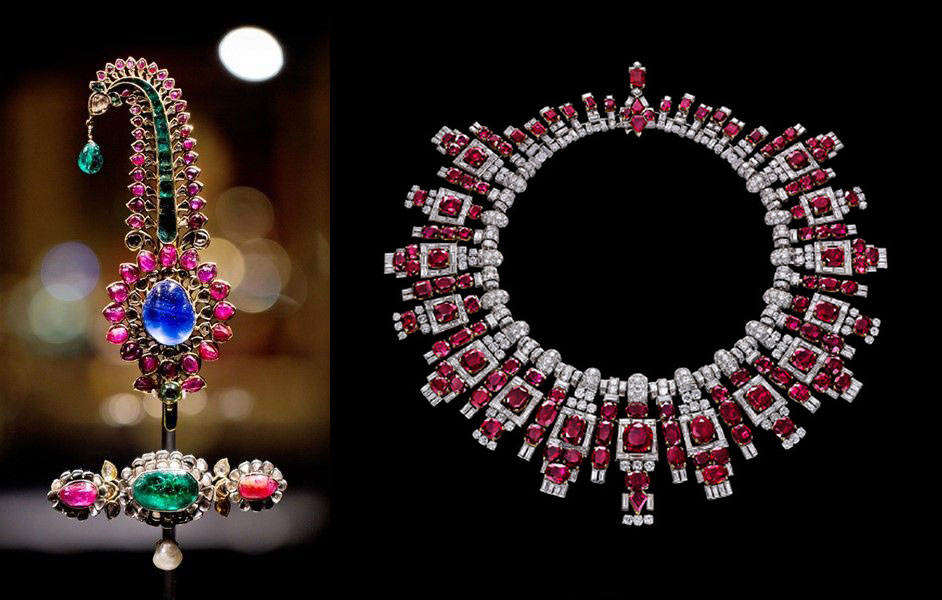
 Christie's Maharajas & Mughal Magnificence Auction Garnered $109.2 Million. The Second Highest Auction Total for a Private Jewelry Collection

Christie's Maharajas & Mughal Magnificence Auction Garnered $109.2 Million. The Second Highest Auction Total for a Private Jewelry Collection


On June 19th of 2019, Sheikh Hamad Bin Abdullah Al Thani through Christie's auction house put together a ground-breaking collection of almost 400 gemstones and jewel-encrusted objects for public offer. This esteemed sale may prove to be one of the highest in value of all time, in tier with the Elizabeth Taylor collection- which itself garnered around 115.9 million dollars back in 2011.


Many of the breathtaking artifacts and jewelry have a historical significance factor added to their appeal. Certain items span centuries-worth of stories, and many lots are comprised of Mughal royal objects, such as a dagger with precious jade affixed to its hilt design.

Other slightly more modern items come from the notable design houses of Bulgari, Linzeler, Lacloche and Cartier among others. Different kinds of rare and illustrious colored stones will take to the spotlight, as emeralds, rubies, sapphires and of course diamonds get showcased through the prestigious sale.


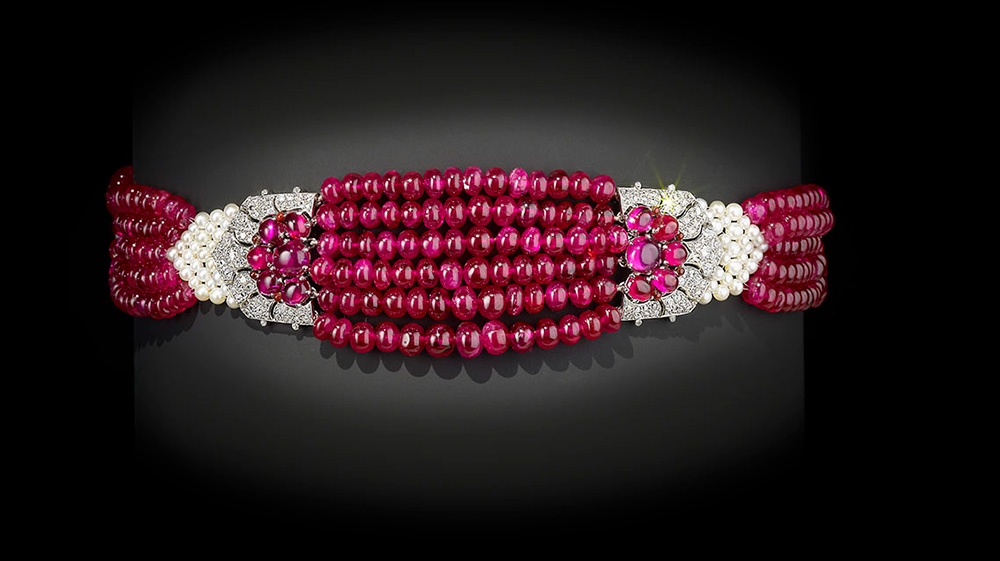
High-visibility items like the Patiala Ruby Choker- commissioned by Maharaja Bhupinder Singh of Patiala to Cartier in the early 1900's, will undoubtedly be some of the center-stage highlights. This item in particular has an estimate pegged at around 1.2 million US dollars.

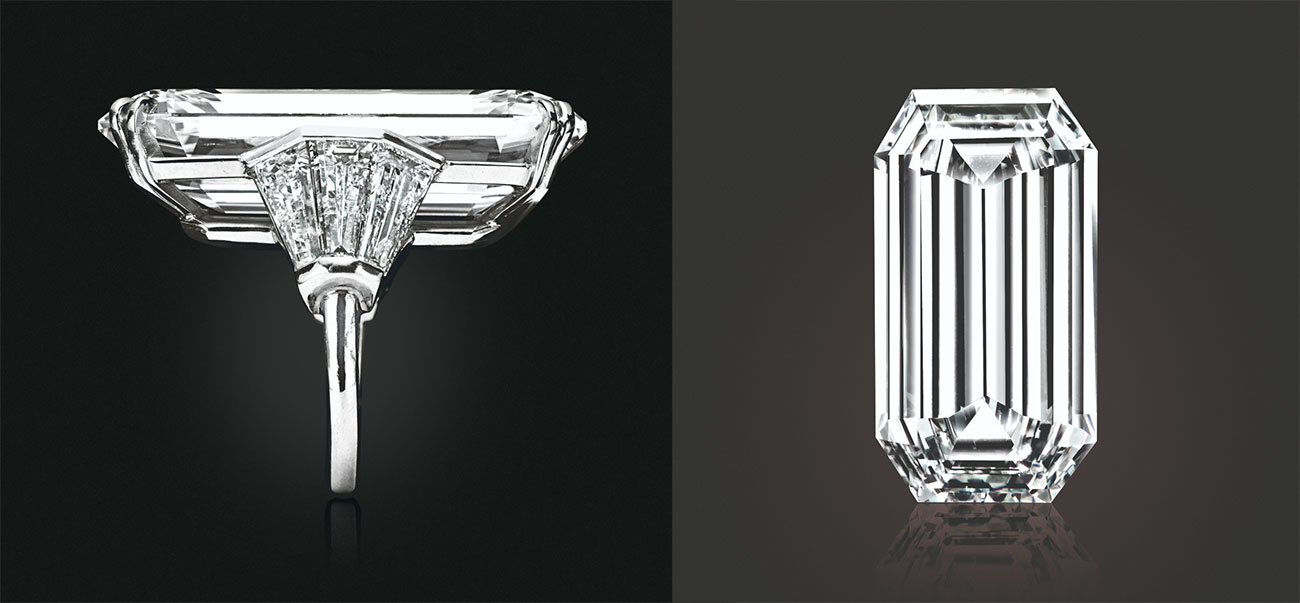
Another included item that has garnered recent fame, is the elegantly named 'Mirror of Paradise' diamond, which is graded at D for color and IF (Internally Flawless) for clarity. This 52.58ct rectangular cut diamond has an estimate range of around 7 to 10 million dollars.


The collection's highlight pieces will be travelling around the world, to displays in Hong Kong, London and Geneva, as is expected of featured lots managed by Christie's. The full suite of the auction items will also be shown at the Christie’s Rockefeller Center galleries located in Manhattan.  The Al Thani Collection still holds around 5,600 individual items, some of which will be shown in Paris starting next year, at a new museum location.

Photography Credit: Christie's Auctions, The Al Thani Collection
Read more »
Gemcamp Laboratories
0 Comments

You Might Also Like

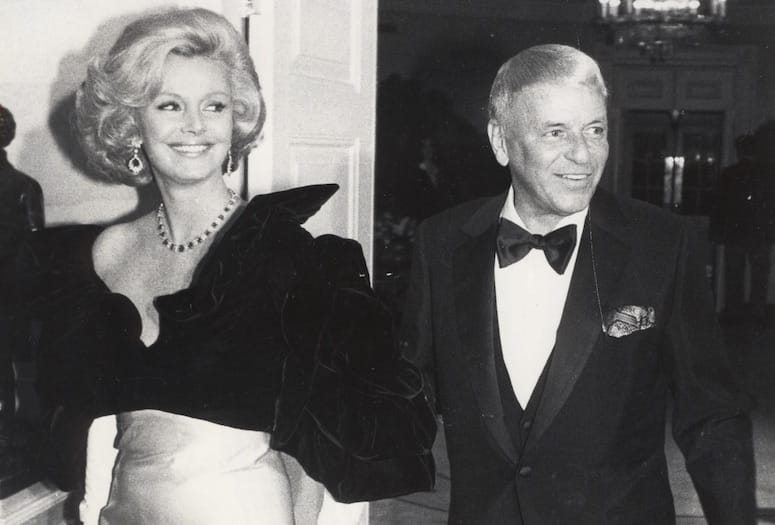
Watching Frank Everett's Narration on The Magnificent Jewels of Barbara Sinatra

Watching Frank Everett's Narration on The Magnificent Jewels of Barbara Sinatra


Many connoisseurs in the jewellery trade are familiar with the annual auction events held internationally. From Geneva to New York, greatly anticipated events led by the duopoly of Christie's and Sotheby's auction houses, have shown us some of the world's most tantalising jewellery from human history's most well known brands and designers.


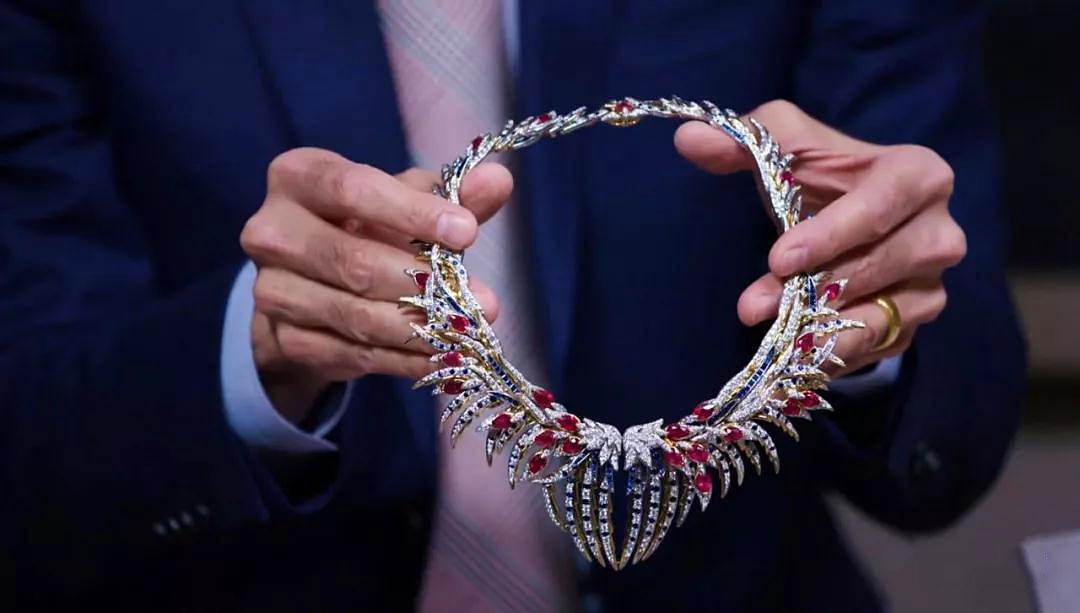
Photography: Sotheby's Auction House, Plume necklace by Jean Schlumberger (Tiffany & Co.)

One particular storyteller we often like watching (just for his charismatic narration of significant pieces) is Frank Everett, who spotlights his own section called Frank's Files, on Sotheby's online platform. Here's an episode link where he timelessly describes a couple of novelty pieces from the collections of Barbara Sinatra (wife of Frank Sinatra) and Happy Rockefeller.


Some of the oldest jewellery design houses in the western world are often featured on his segments, including pieces by Cartier, Van Cleef & Arpels and Tiffany & Co. Both diamonds and rare coloured stones are often incorporated within the same piece, creating a mysterious allure unbound by a single hue or theme. Rubies, emeralds and sapphires are among the world's highest priced gemstones, and they're often found in the collections of society's most well regarded socialites and personalities.


Read more »
Gemcamp Laboratories
0 Comments

You Might Also Like

Why Are Man-Made Emeralds Harder to Distinguish for Most People in Metro Manila?

Why Are Man-Made Emeralds Harder to Distinguish for Most People in Metro Manila?


There is a very common mentality here in the Philippines, that assumes all synthetic or imitation gemstones are eye-clean, with no inclusions or spots in their interiors. A lot of people mistakenly think that just because a gemstone is very clear inside, that means it's not natural or genuine. This statement is very dangerous for people to believe, since lots of natural gemstone species can appear eye-clean as well (i.e. aquamarine, amethyst, diamond among others). More importantly, lots of man-made gemstones can indeed have inclusions. So take careful note of this: just because a gemstone shows internal characteristics or inclusions does not necessarily mean that it's a natural gemstone. Again, if you see dark spots, fractures or other things inside a gem, please do not assume that it's natural, this assumption can lead to costly mistakes in jewelry or gemstone buying.


For emeralds this poses a particular problem. Emeralds are one of those gemstone species that tends to have a lot of inclusions. The thing is, while most imitations are eye-clean, many Filipinos are not aware of 'synthetic emerald' or 'man-made emerald'. These emeralds are grown artificially using either a hydrothermal-growth manufacturing process or a flux-growth process. Both of these procedures are well documented in the global industry and have multiple variations on technique, however the emeralds they produce are often very much filled with inclusions.


Man-made emeralds can range from heavily included to slightly included, with many possessing inclusions that can easily trick local buyers into believing that they are naturally mined gemstones. Gemologists are trained to recognise and detect the specific types of inclusions that are created by the hydrothermal and flux-growth processes, so that by use of microscope- they can properly separate natural emeralds from man-made ones. Do not mistakenly buy a green stone as natural emerald just because you see inclusions inside it when looking through a loupe- this does not automatically mean it's natural. Detection of artificially-created inclusions should be left to trained professionals, as some of them are very difficult to see (only visible in certain angles and directional lighting), and distinguishing the specific types of inclusions is not something most people in the Philippines are familiar with.

Stay alert, and remember that the price differences between natural emerald and man-made or synthetic emerald is very high. Both these items are essentially composed of the same elements ordered in the same crystal structure. Careful consideration should be made before every purchase, even for local jewellers buying from their own suppliers abroad.
Read more »
Gemcamp Laboratories
0 Comments

You Might Also Like

This Elegant 5.03 carat Fancy Pink Diamond Sold at the Bonhams London Auction, Topping off the Year

This Elegant 5.03 carat Fancy Pink Diamond Sold at the Bonhams London Auction, Topping off the Year


Bonhams' summary of 2018 reveals that its top selling item of the year was a 5.03ct square-shaped fancy pink diamond. The stone was graded at VS1 for clarity, which is quite rare for a pink colored diamond of this size. The sale happened in London last September 26, where another new price record was made (for a fancy pink diamond at auction).


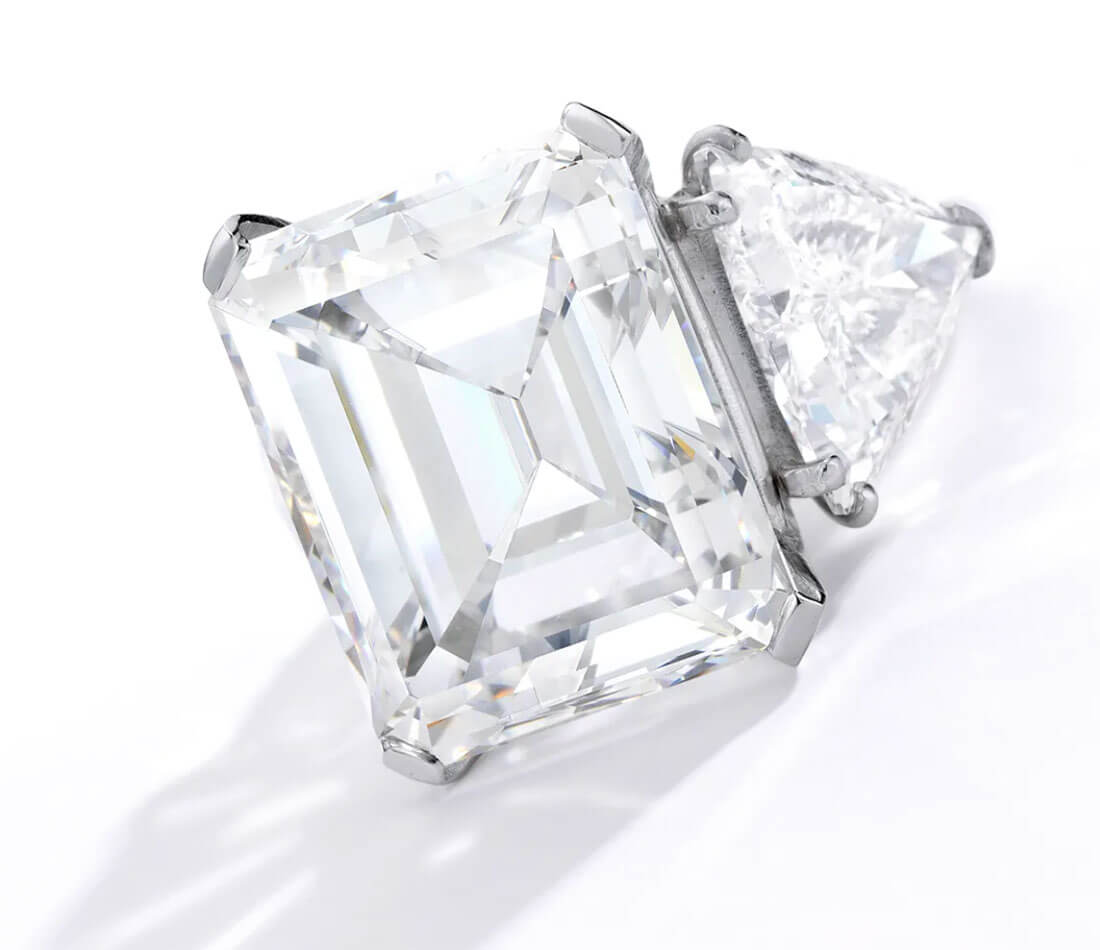
The stone, worth just shy of three million dollars, topped the chart of 2018 sales, followed by other magnificent gemstones like a 24.31ct D-IF diamond (in a ring) that sold for 1,947,110 USD, and a Hennel Emerald pendant-necklace set which sold for over 1.3 million dollars. There was also another diamond-and-emerald jewelry set that beached the 1 million dollar mark.

Jean Ghika, Global Director for Bonhams, mentioned that “the market has remained strong for exceptional pieces of jewellery from famed eras and world class makers”. This can be seen also for many other jewelry and auction houses, which seem to be promoting larger fancy-colored diamonds and colored stones as of late.


Emeralds in particular seem to be topping a lot of auction rosters, as the demand for the world's most beautiful green gemstone soars into the spotlight. Meanwhile both jewelers and jewelry buyers alike still have to worry about the rising popularity of hydrothermally created synthetic emeralds as well. Synthetic green beryl (syn. emerald) can have a lot of beautifully rich inclusions that may confuse onlookers into assuming a natural origin. The presence of inclusions is not what determines natural VS synthetic emerald, however the specific kind or type of inclusions are indeed used by gemologists for these separations, as synthetic emeralds grow in different environments compared to earth-mined stones.

2018 also saw the rise in popularity of lab-grown diamonds (which are different from imitations like cubic zirconia or moissanite), however because of De Beers' move into selling its own line of lab-grown stones for much cheaper prices, we are not sure how the market for artificially created diamonds will change in 2019. Will this cheaper price rate lower the overall pricing standards of lab-grown diamonds, or will it make the product more popular due to better affordability?


Read more »
Gemcamp Laboratories
0 Comments

You Might Also Like

The Greville Emerald and Diamond Kokoshnik Tiara, Chosen by Princess Eugenie

The Greville Emerald and Diamond Kokoshnik Tiara, Chosen by Princess Eugenie


For her illustrious wedding day headpiece, Princess Eugenie chose to borrow an emerald and diamond tiara from her grandmother; the Queen. Though many speculated that she would opt to wear the 'New York Diamond Tiara', which was initially worn by her mother Sarah Ferguson at her wedding to Prince Andrew, Eugenie's choice was instead, the Greville Emerald Kokoshnik Tiara, commonly referred to as the Boucheron Tiara.


The dazzling jewelry piece was made by the famed French jeweler Boucheron back in 1919. It has belonged to the royal family for over seventy years now.

Its original owner was Margaret Greville, who was a very famous society hostess. Madame Greville passed her jewels to the queen after her death, who eventually also passed it (along with her other jewelry collections) to Queen Elizabeth in the year 2002.


The "Kokoshnik” style was popularized in the Russian Imperial Court back when this piece was originally made. It features brilliant, rose cut diamonds that were set in platinum, housing six emeralds on each side as well. The tiara went well with Eugenie's open-back, long-sleeve Peter Pilotto gown for the event.


Emeralds and diamonds have been a well-established luxury pair for as long as anyone can remember. Being one of the 'Big Three' colored gemstones, the vivid green beryl can come in many qualities, with its most famous locality source being the Muzo region of Colombia.

Large emerald specimens, like the one on Eugenie's Tiara, have become even more exceedingly rare in modern markets. With the popularity of hydrothermal lab-grown emeralds, people have also now grown cautious when selecting extra-fine emeralds that are nearly-free of inclusions.

(Editorial photography credit to the corresponding media representatives of the royal wedding event.)
Read more »
Gemcamp Laboratories
0 Comments

You Might Also Like

The Elusive Emeralds of Colombia

The Elusive Emeralds of Colombia


There exists no green gemstone more well-known than precious emerald. This viridian variety of beryl is showcased around the world for its magnificently intense saturations, exciting inclusion gardens and lush depth of color.


Emerald's most famous locality for mining is set in the wilderness of Colombia. The city of Bogota has become a trade-spot for international buyers and sellers to do business revolving around this green stone. Much of the emerald production that arises from the country's efforts however, are from the regions of Muzo and Chivor. The former is known for producing some of the world's most expensive emerald specimens.

Emeralds from Colombia, in fine qualities, tend to be colored with an almost pure primary green. A hint of iron-colored blue modifies the color ever so slightly, adding a cool tone to the palette of a stone.


The element most responsible for emerald's green hue is none other than chromium, however vanadium can also cause greens in some emeralds, like a majority of specimens unearthed from Zambia (another prominent source, but lesser known for fine qualities).

The name emerald stemmed out from the word "smaragdos" from ancient Greek, meaning 'green gem'. Today, aside from the mines of Colombia, emerald can also be found in many countries around the world- such as Brazil, Zambia, Egypt, Russia, Zimbabwe, Switzerland and Nigeria among others.

Traditionally, it is better to find an emerald with a bluish tinge rather than one with a yellow-green color composition. The latter usually commands a much lower price, as it's seen as more commercial and common on the markets.

Most commercial quality emeralds are lighter in tone. It's much rarer to find dark or deep toned emeralds within the lower brackets of the trade, however the best qualities of emerald possess a medium to medium-dark tone with vivid saturations.

It's much more normal for emerald to have a lot of inclusions compared to other gems like aquamarine or topaz. This is due to the environment that it grows in. You'll see that even the most expensive museum quality stones will have a little bit of natural crystals or liquid inclusions within their bodies. This also aids in determining a stone's authenticity and source.


Emerald, as precious as it is, can also be synthesized or created in a laboratory. Hydrothermal enclaves and flux crucibles can grow crystals of green beryl using mineral-rich solutions over long periods of time. These synthetic man-made gems are very beautiful in their own right, but do not come close to the value of naturally mined emerald. You can learn more about how to tell synthetic emeralds apart from natural emeralds when you take part in our workshop classes coming later in the year.

Be aware that other imitations, like green-dyed quench crackled quartz can also distinctly resemble emerald. People heat artificially colored quartz to high temperatures, causing internal fractures that can be mistaken for emerald's characteristic inclusions.


A vast majority of natural emeralds also undergo enhancement procedures before being released into the jewelry trade. The most common treatment is that of fracture-filling, using a variety of oils and resins to simulate better apparent clarity levels.

Gemcamp laboratories does routine checking for emerald authenticity, and can differentiate synthetics and imitations from natural green beryls using a variety of gemological tests and procedures. We also evaluate for the presence of treatments and oiling.

Contact us via facebook today, in order to schedule an appointment for the gemological assessment of your emerald jewelry.
Read more »
Gemcamp Laboratories
0 Comments

You Might Also Like

Alexandrite: Emerald by Day, Ruby by Nightfall.

Alexandrite: Emerald by Day, Ruby by Nightfall.


Both ruby and emerald are among the most popular colored gemstones widely traded in today's society. Both have an allure that deeply connects with buyers, through the vibrancy of their corresponding colors; a crimson red and a vermillion green. Many who collect gemstones have at least a few specimens of each in their prized jewelry boxes, but not all know of a stone that can change from fiery reds in the evening, to verdant greens in the morning.


Alexandrite is the color-changing variety of chrysoberyl. It's remarkable composition and structure allows it to display a fascinating phenomenon that merges the appeal of two different hues. The presence of light plays a big part in alexandrite's transformative elegance. Incandescent light- such as the warm orange glow of burning candles, can make alexandrite's color turn a fiery red. It is often called the evening ruby, a nickname that has stuck for several decades since its popularity took flight.


In the morning, or much more specifically, under the cooler glow of natural sunlight or fluorescent light, most alexandrite specimens display a fine green that possesses just a touch of blue. The best samples of the stone show a stark, contrast between their two hues, creating the dual appeal of having both a ruby and an emerald (although chemically speaking, these belong to entirely different species).


Very fine stones are sold at auction for tens of thousands of dollars, and connoisseurs who are familiar with its name, offer to pay quite the hefty fee for a beautiful alexandrite.

It's accepted knowledge though that, no matter how rare or fine the alexandrite specimen, even the best ones will not completely match the saturation and purity of either ruby's reds or emerald's greens. Though despite this, some stones come pretty close, displaying colors convincing enough to fool onlookers into thinking the stone was actually something else.


Chrysoberyl, the gem species housing alexandrite, is also famous for having a cat's eye variety. These stones display chatoyancy, where a thin, sharp band gracefully moves across a domed surface, created by multitudes of parallel needles. Sometimes, color-changing alexandrite can also be fashioned with a cat's eye, displaying two beautiful visual phenomena at the same time.
Read more »
Gemcamp Laboratories
0 Comments

You Might Also Like

[name=Gemcamp Laboratories] [img=http://www.gemcamp.org/img/gemcamp-black-badge-3.jpg] [description=A Philippine-based laboratory group headed by GIA graduate gemologists who share a collective passion for the sciences that support gemstone identification and evaluation.] (facebook=https://www.facebook.com/gemcamplab/) (twitter=https://twitter.com/gemcamplab) (instagram=https://www.instagram.com/gemcamplaboratories/) (pinterest=https://www.pinterest.ph/gemcamplaboratories/)

Follow @Gemcamp Instagram