Theme Layout

Boxed or Wide or Framed

Theme Translation

Display Featured Slider

Featured Slider Styles

Display Grid Slider

Grid Slider Styles

Display Trending Posts

Yes

Display Author Bio

Display Instagram Footer

Dark or Light Style

Showing posts with label Sapphire. Show all posts
The Vanderbilt Sapphire Shines at the Phillips Geneva Jewels Auction: V

The Vanderbilt Sapphire Shines at the Phillips Geneva Jewels Auction: V


At this year's Phillips’ Geneva Jewels Auction: V on November 10, 2025, the spotlight center-focused on The Vanderbilt Sapphire, a stunning Belle Époque masterpiece epitomizing the grandeur and fine gem-setting artistry of the Gilded Age. Part of the Vanderbilt Family Jewels collection, the piece led a 100% sold group that realized CHF 3.42 million / US$ 4.25 million, achieving four times its low estimate.


Period jewels and signed creations demonstrated exceptional strength as a whole, with 90% of lots sold, many exceeding their high estimates. The sale featured iconic designs by historically renowned design houses like Tiffany & Co., Cartier, and Bulgari, including the celebrated Cartier “Panthère” jewels and Bulgari “Serpenti” belt, each representing distinct hallmarks of craftsmanship and design evolution in 20th century jewelry history.


Phillips’ Worldwide Head of Jewellery, Benoît Repellin, described the results as a testament to the “timeless power of exceptional jewels,” underscoring collectors’ continuing appreciation for artistry, provenance, and the refined aesthetics of historic gem-set works.


The auction drew over 1,600 visitors and bidders from 44 countries, reflecting sustained international enthusiasm for period jewels. Phillips’ Geneva Jewels Online Auction continues until 13 November, followed by the next live sale in New York on 8 December. Visit www.phillips.com for more information and news on this event and their other similar jewelry headliners.

Editorial Article Images and Photography: Phillips Auctioneers, LLC

Read more »
Gemcamp Laboratories
0 Comments

You Might Also Like

 The Evolving Art of Colored Gemstone Grading

The Evolving Art of Colored Gemstone Grading


While many of you are familiar with the way most diamonds are graded for color, not a lot of people know much about how precious gemstone varieties like ruby, sapphire and emerald are graded for their most important attribute. The visual aspect of color has governed the values of most gemstones throughout history, even during a time period when the big three colored gems were valued much more highly that colorless diamond. Entire societies would covet the rare, vermillion greens of scarce Colombian emeralds, as well as the infamous 'pigeon blood' shades of highly vivid rubies from Burma (Myanmar).


The trade has often used very descriptive terms to somehow paint a picture of a gemstone's colorful beauty. For sapphires, the term 'cornflower blue' would often be touted as the finest color shade available on the high end market. Such a term was first applied to products from the Kashmir region, back when the original sapphire mines in that area were operational.

Most trade names for gem colors were created for marketing purposes, and as you might expect- there was a degree of inconsistency between different people when trying to imagine or evaluate stones based on such descriptive names. Today, the colored stone industry still holds multiple systems for conveying the color of most precious stones. There exists a much larger degree of subjectivity when dealing with this topic, and so it is always advisable to physically view a colored gemstone of any species before making a purchase. Simply assuming a color profile based on a trade term (or even a description) may be hard to depend on. Likewise images on the internet can be easily enhanced using most modern computer programs today.


At our laboratory, while we recognize the subjectivity of grading colored gemstones, we make use of a coded color-component system popularized by the GIA back when our gemological staff were taking their classes at their campus. In this system, color could be divided into three sections- hue, tone and saturation. Hue pertains to the basic bodycolor of a gemstone. This could be a single main color such as red or blue, or it could be comprised of a dominant color and a modifying color, such as bluish green, purplish red or orangey red. For some gemstones, the hue is also what determines the gem's variety. Take the mineral species corundum for instance. Corundum is defined by its chemical composition of Al2O3, crystalized in the trigonal lattice system, however its two most famous varieties- ruby and sapphire, are defined by their true dominant hue. A gem-quality corundum specimen must have a dominant red hue to belong to the ruby gem variety for example.

This system makes use of 31 different hues, each having its own abbreviated form. Purplish red for instance, would simply be coded as pR. The modifying hue would be marked as a lowercase letter, while the dominant hue would follow as a capital letter. 


Apart from hue, the next component of color would be tone. Tone governs the lightness or darkness of a gemstone's color. Rated as a number from 0 (colorless or white) to 10 (black), a stone's tone plays an important factor in the overall beauty and appeal of its color. The ideal tone values can differ between many separate gem species and varieties. The vast majority of gems maintain a general tone range from 1 (extremely light) to 9 (extremely dark) and typically have their best tier somewhere in the middle of said range- i.e. 5 (medium) or 6 (medium dark). Again, it still depends on the kind of gem though, with regards to the specific ideal tone that the market tends to receive better. 

The third color component would be saturation. Now saturation is the aspect of color that governs its intensity. It is also frequently described as a number that corresponds to a descriptive adjective. Most top color gems would often get a saturation level of 5 (strong) or 6 (vivid). Such would be the way that our lab (and many others) systematically describe the saturation level of a colored gem. Many also use saturation to distinguish variety differences within a species. A green beryl of low saturation for example, would simply be called 'green beryl' and not 'emerald'. A reddish corundum with low saturation or light tone might be classified as pink sapphire rather than ruby. Such topics can be highly debated issues for many gem traders, with the subjectivity of different opinions sometimes causing clashes on where the dividing line exists between two varieties.


This is just one of the many existing color systems currently being used in the jewelry trade, and while it is likely the most comprehensive one, there is no one-single universally accepted system that absolutely everyone will recognize unanimously. Likewise two people using the same system can also have their own differences of opinion, as even the human eye can read color slightly differently (across different individuals).

Color is highly subjective with most precious gemstones, and submitting your gem to a gemological laboratory will allow you to get their unbiased opinion on the specific hue, tone and saturation profile of your gem. This may help you in formulating your own opinion about its color, or aid in counterchecking how far apart your seller's opinion was from that of a third-party assessor's.


In the latter part of the year, our laboratory has procured a very rare set of color grading reference-paddles created by collaborative efforts between the Gemological Institute of America and the Pantone color company. The three dimensional color-calibrated plastic paddles mimic the visuals of a gem, while allowing you to see color differences in much greater depth and appreciation. The 324 GIA Gemset system is widely known to be the most specialized instrumental aid in determining the color of non-diamond gemstones across the history of the jewelry industry. Unfortunately due to a combination of its very high price and the acquisition of Pantone by X-Rite, the set is no longer in production for new customers to acquire today. Laboratories would either have to make use of 'flat' reference images such as computer software created pictures or relatively inexpensive transparent comparison sheets. Both of these work well enough, but do not give the same level of comparative support for color grading when pit against a full three dimensional system such as the GIA Gemset. Whenever comparative aid is necessary, our gemological staff and graders make use of this system to help evaluate gemstones graded with our laboratory since July of this year and onwards. 


Read more »
Gemcamp Laboratories
0 Comments

You Might Also Like

Did You Know That Not All Sapphires are Blue?

Did You Know That Not All Sapphires are Blue?


While most likely known by a large population of jewelry collectors, not everyone is familiar with the fact that sapphires can actually come in a wide variety of colors. Let's start first with a little bit of basic chemistry- Aluminium oxide (Al2O3) that naturally crystallises in the trigonal atomic lattice system forms as a gem species properly called corundum. Now, corundum is not a word you would often hear while talking shop with socialites at parties, but within this gem species rests two of the most famous gem varieties in the world of colored gemstones- ruby and sapphire.


Ruby is actually red corundum, drawing its color from the presence of a trace element called Chromium. A few parts-per-million is enough to interact with the gemstone's chemistry to produce the red color widely coveted in the fine jewelry trade. Meanwhile, trace elements like iron and titanium can be responsible for producing a violetish-blue color, which results in the corundum specimen being designated to the blue sapphire variety.

Ruby and sapphire have very similar chemistry, with minuscule differences in the trace elements that create their differences in color. Sapphire though, is not always blue. While its bluish variety is indeed the most popular, sapphires can also come yellow, pink, green, purple, black, colorless and many other hues of the rainbow. Some of these hues may commonly occur in higher saturations than others. For example, violet-purple and green colored sapphires can appear grayish or muted in intensity, at least when compared to other gemstones of similar color (such as amethyst or emerald). All color of sapphire other than blue are grouped up and called 'fancy colored sapphires'.


The global gem market for sapphires is very diverse today. The biggest or most popular demand surges usually target blue sapphires, Padparadscha sapphires (pinkish-orange) and pink sapphires. Vivid yellowish sapphires are also commonly used, especially in seasonal tandem with the trendy color palettes governed by the fashion industry. Colorless sapphires (especially the lab-grown or synthetic versions) are sometimes utilised as diamond imitations as well, although their dispersion and brilliance are noticeably different from those of diamond.

Many sapphire colors are also produced by heating, or other more complicated enhancement procedures- like diffusing beryllium as a coloring agent into the stone's crystal lattice.

Also do keep in mind that synthetic corundum (lab-grown ruby and lab-grown sapphire) is a very common sight in today's jewelry marketplace. The flame-fusion process of creating man-made sapphire / synthetic sapphire is very widespread across many international manufacturers. Synthetic product can be created and sold at very low prices, as the creation technology (pioneered in the late 1800's) has grown accessible and affordable for many mid-scale entrepreneurs to get into.


Other similar creation methods, like the Czochralski process of growing crystal, are also being used today- not solely just for the jewelry industry, but also for military and industrial purposes as well. This is mainly due to corundum's high hardness (9) and general durability, as well as some of its other properties.
Read more »
Gemcamp Laboratories
0 Comments

You Might Also Like

The 392.52 carat Blue Belle of Asia, An Extraordinary Sapphire (4th Largest in the World)

The 392.52 carat Blue Belle of Asia, An Extraordinary Sapphire (4th Largest in the World)


While many notable fancy colored blue diamonds grace the halls of auction houses around the world, colored stones like blue sapphire can also achieve a level of quality and prominence worthy of high distinction and exclusivity. One of the largest pristine blue sapphires ever to arrive at the international jewelry scene is aptly named the Blue Belle of Asia.


This 392.52ct vivid blue gemstone was recorded as the fourth largest sapphire in history, following the likes of the Queen of Romania Sapphire, the Blue Giant of the Orient, and the Logan Sapphire. It was mentioned that this particular gem was unearthed from the gem-rich mines of Sri Lanka, previously referred to as Ceylon. Many blue sapphires of bright saturation and medium to medium-light color are still called 'Ceylon Sapphires' due to the notable production of fine blues associated with the area.

The Blue Belle of Asia has a long history of ownership. After its discovery in the 1920's, it was soon obtained by Macan Markar in Colombo. Then in 1937, Lord Nuffield, the founder of Morris Motors Limited bought the sapphire for his estate. There were some indications that the stone had meant to be presented to Queen Elizabeth for her coronation in May of 1937, however this did not happen as the Blue Belle instead vanished from the public eye for the next several decades.


In 2014, Christie's auction house held a Geneva auction wherein the Blue Belle of Asia was seen again. The stone at the time was listed by a private persona, and it eventually sold for just over 17 million dollars, which at the time broke all records for the most expensive colored gemstone to be sold at auction. There are not many sapphires of this quality and size, even in national museum displays and exhibitions.

Its historical significance and rarity shows collectors that sapphire's place as part of the 'Big Three' colored gemstones (along with ruby and emerald) is well earned in the jewelry trade, and that fine blue sapphires are truly some of the rarest treasures of nature.
Read more »
Gemcamp Laboratories
0 Comments

You Might Also Like

 Christie's Maharajas & Mughal Magnificence Auction Garnered $109.2 Million. The Second Highest Auction Total for a Private Jewelry Collection

Christie's Maharajas & Mughal Magnificence Auction Garnered $109.2 Million. The Second Highest Auction Total for a Private Jewelry Collection


On June 19th of 2019, Sheikh Hamad Bin Abdullah Al Thani through Christie's auction house put together a ground-breaking collection of almost 400 gemstones and jewel-encrusted objects for public offer. This esteemed sale may prove to be one of the highest in value of all time, in tier with the Elizabeth Taylor collection- which itself garnered around 115.9 million dollars back in 2011.


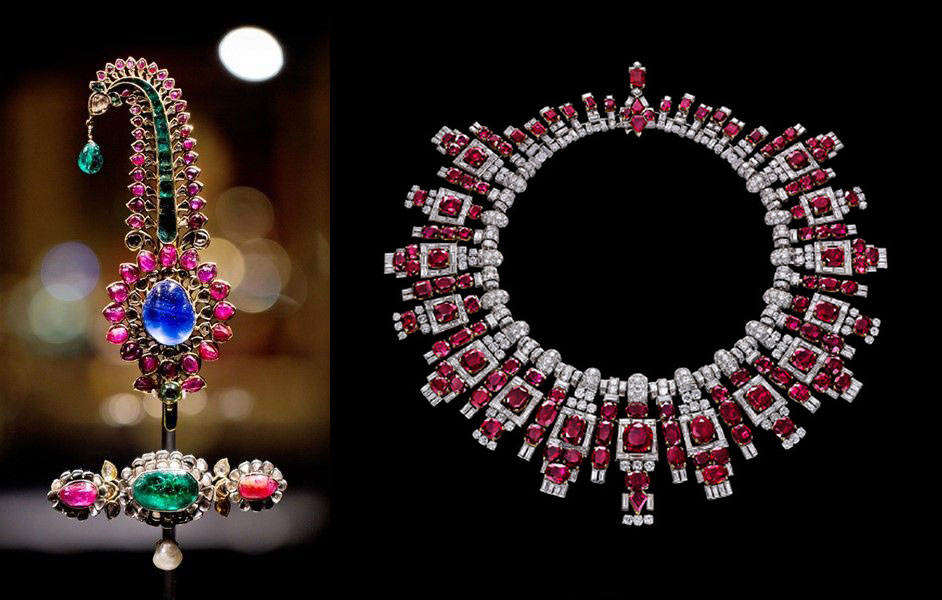
Many of the breathtaking artifacts and jewelry have a historical significance factor added to their appeal. Certain items span centuries-worth of stories, and many lots are comprised of Mughal royal objects, such as a dagger with precious jade affixed to its hilt design.

Other slightly more modern items come from the notable design houses of Bulgari, Linzeler, Lacloche and Cartier among others. Different kinds of rare and illustrious colored stones will take to the spotlight, as emeralds, rubies, sapphires and of course diamonds get showcased through the prestigious sale.


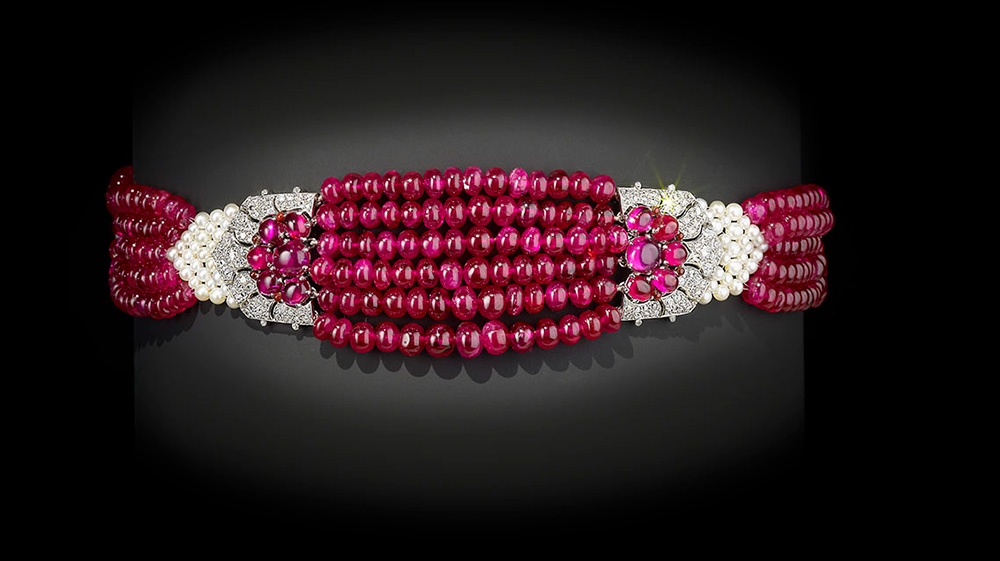
High-visibility items like the Patiala Ruby Choker- commissioned by Maharaja Bhupinder Singh of Patiala to Cartier in the early 1900's, will undoubtedly be some of the center-stage highlights. This item in particular has an estimate pegged at around 1.2 million US dollars.

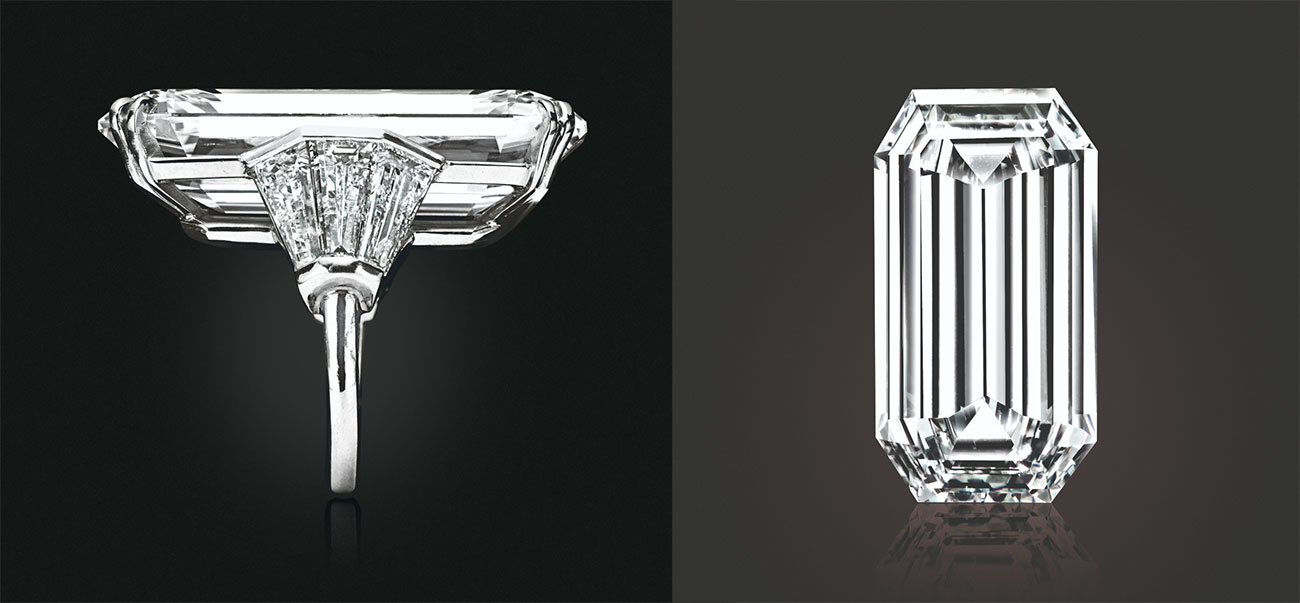
Another included item that has garnered recent fame, is the elegantly named 'Mirror of Paradise' diamond, which is graded at D for color and IF (Internally Flawless) for clarity. This 52.58ct rectangular cut diamond has an estimate range of around 7 to 10 million dollars.


The collection's highlight pieces will be travelling around the world, to displays in Hong Kong, London and Geneva, as is expected of featured lots managed by Christie's. The full suite of the auction items will also be shown at the Christie’s Rockefeller Center galleries located in Manhattan.  The Al Thani Collection still holds around 5,600 individual items, some of which will be shown in Paris starting next year, at a new museum location.

Photography Credit: Christie's Auctions, The Al Thani Collection
Read more »
Gemcamp Laboratories
0 Comments

You Might Also Like

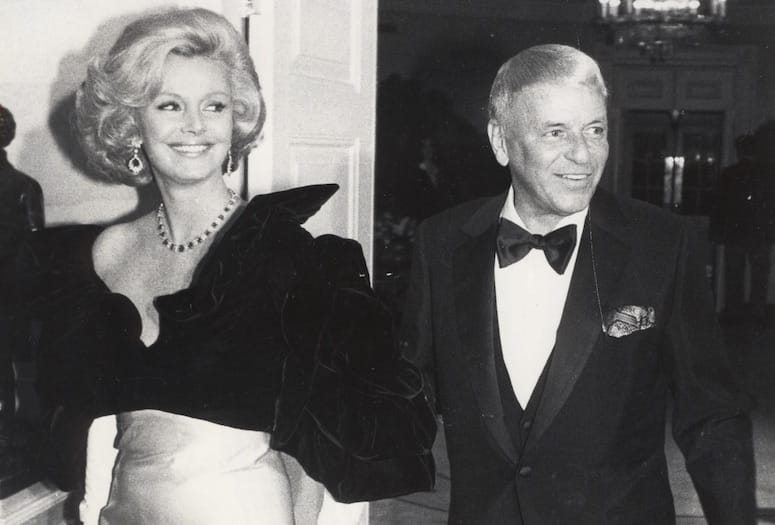
Watching Frank Everett's Narration on The Magnificent Jewels of Barbara Sinatra

Watching Frank Everett's Narration on The Magnificent Jewels of Barbara Sinatra


Many connoisseurs in the jewellery trade are familiar with the annual auction events held internationally. From Geneva to New York, greatly anticipated events led by the duopoly of Christie's and Sotheby's auction houses, have shown us some of the world's most tantalising jewellery from human history's most well known brands and designers.


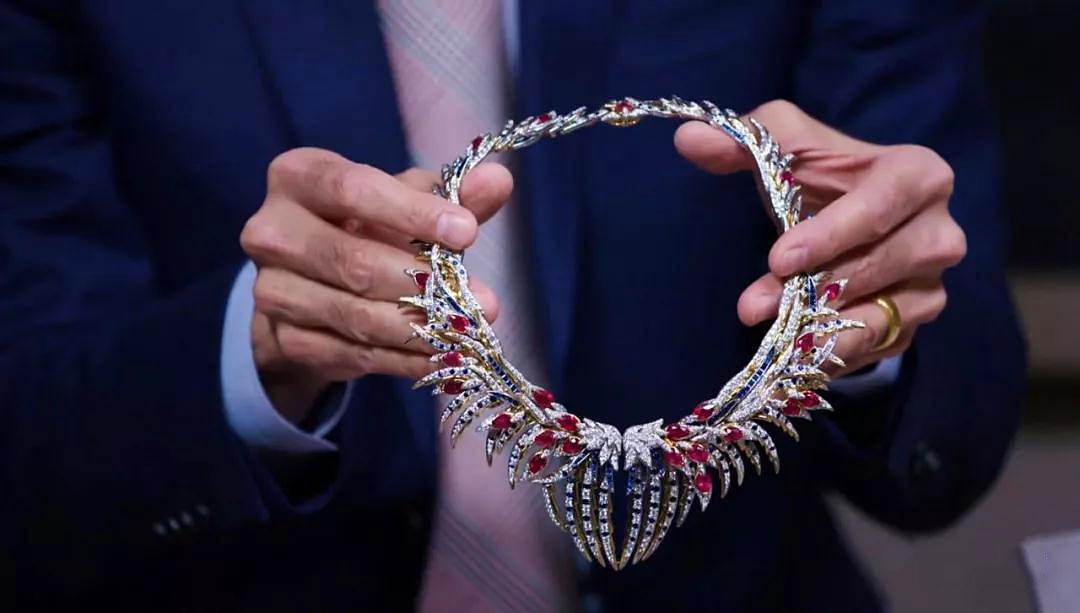
Photography: Sotheby's Auction House, Plume necklace by Jean Schlumberger (Tiffany & Co.)

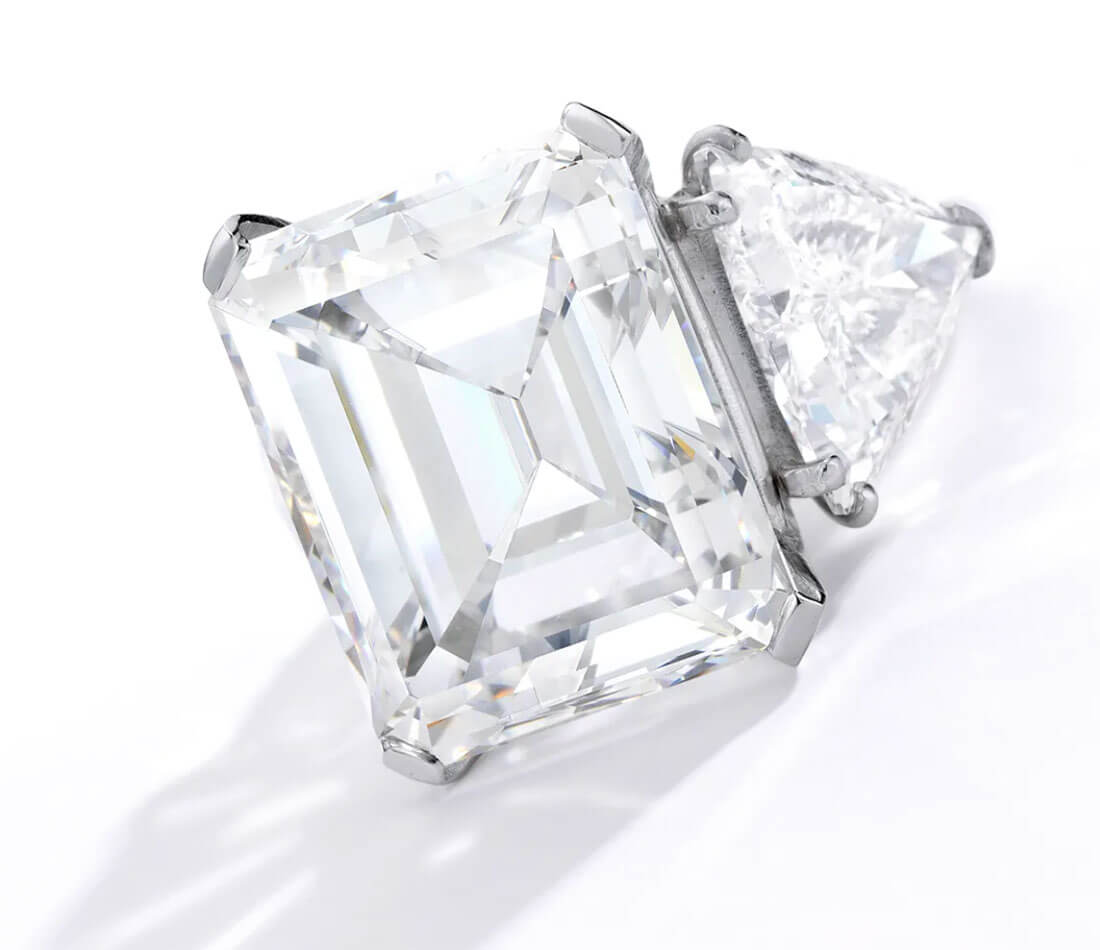
One particular storyteller we often like watching (just for his charismatic narration of significant pieces) is Frank Everett, who spotlights his own section called Frank's Files, on Sotheby's online platform. Here's an episode link where he timelessly describes a couple of novelty pieces from the collections of Barbara Sinatra (wife of Frank Sinatra) and Happy Rockefeller.


Some of the oldest jewellery design houses in the western world are often featured on his segments, including pieces by Cartier, Van Cleef & Arpels and Tiffany & Co. Both diamonds and rare coloured stones are often incorporated within the same piece, creating a mysterious allure unbound by a single hue or theme. Rubies, emeralds and sapphires are among the world's highest priced gemstones, and they're often found in the collections of society's most well regarded socialites and personalities.


Read more »
Gemcamp Laboratories
0 Comments

You Might Also Like

The Identification of Rubies, Sapphires and Emeralds

The Identification of Rubies, Sapphires and Emeralds


The “Big Three” as they’re often called, constitute the vast majority of colored gemstone sales across most international markets. Rubies are traditionally the most expensive among them, given similar quality levels, however in the U.S. sapphire is more frequently purchased by end-consumers.

Depending on your familiarity with gemstones and gemology, you might find it surprising to know that rubies and sapphires are very similar to each other on an atomic level. Both are composed of crystalline aluminum oxide, but are colored by different trace elements. Chromium is responsible for ruby’s vibrant reds, while iron and titanium cause the violetish blue hues of sapphire.


Identification of a gemstone species involves taking note of different gemological traits. When checking rubies for example, our gemologists here at Gemcamp factor in tests that determine properties like optic character, growth structures, birefringence, refractive index and many others. Each gemstone species has its own unique and definable values that allow gemologists to separate it from another similar looking species. Red spinel for example can look identically similar to ruby by just the naked eye, however its crystal structure is actually more symmetrical on an atomic level compared to ruby’s. This can be observed using a polariscope, giving our gemologists information that they can use to scientifically pinpoint a gemstone’s proper identity.

Emeralds are composed of different elements altogether, they are beryllium cyclosilicates. Here at the laboratory, we also look for clues and indicators of identity under the microscope. Mineral inclusions such as pyrite can help us separate natural emerald from man-made emerald- which can be created today using a variety of proprietary methods. Chatham and Tairus are two companies abroad who have pioneered the development of artificial gem growth. They regularly produce man-made emeralds among many other gem species.


Be careful when you’re looking to authenticate a gemstone. Know that two gems can overlap in both clarity and color. Sometimes more in-depth knowledge is required before you can properly separate man-made gemstones from their natural counterparts. Awareness of the different types of inclusions and their significance also helps.

Our laboratory also makes use of advanced instruments for tasks that go beyond microscopy or standard gemological tests. We use spectrometry based instruments for the detection and separation of natural diamonds against lab-grown (man-made) diamonds, which are also composed of pure carbon, with identical properties like hardness, luster and brilliance.
Read more »
Gemcamp Laboratories
0 Comments

You Might Also Like

Did You Know? Rubies and Sapphires Both Belong to the Same Gemstone Species

Did You Know? Rubies and Sapphires Both Belong to the Same Gemstone Species


When we talk about gemstone identity, there is a difference in terminology definition if using the words "species" or "variety". A gemstone species has a specific chemical composition and crystal structure that the members of that species would all have. In contrast, some species have members that differ from one another in certain ways. A variety is defined by the visual color or optical phenomena of a member within a gem species.


What some people don't know, is that rubies and sapphires actually belong to the same gem species called corundum. Corundum is basically aluminium oxide that has crystallised in the trigonal crystal lattice system. It's pretty hard at a 9 on the Moh's scale, and at its most basic composition- is actually colorless. What makes rubies red and sapphires blue though?

Rubies get their red color from the presence of a trace element called Chromium. The percentage of chromium is very small, just a few parts per million actually, but this interacts with light and the surrounding atoms to produce various degrees of red and pink in corundum. Pink sapphire is also often primarily colored by chromium.

Sapphire on the other hand, usually refers to blue sapphire when used as a standalone term. Blue sapphire mostly gets its color from the presence of iron and titanium. Despite this, some people don't know that there are actually many different colors of sapphire- such as green, pink, purple, and orange. These are often called 'fancy sapphires' or are preceded by their respective color hues.


Corundum represents one of the most commonly used colored gemstones in the jewelry trade today. Rubies are traditionally the most expensive colored gemstone actually. Sometimes though there is debate over where the line holds clear in the definition between rubies and pink sapphires, as the only difference is in the strength and presence of the red color component. If a stone's color is too light, traders usually term it as pink sapphire instead of ruby.
Read more »
Gemcamp Laboratories
0 Comments

You Might Also Like

Kyanite May Look Like Blue Sapphire, but These are Very Different Gemstones

Kyanite May Look Like Blue Sapphire, but These are Very Different Gemstones


Although an entirely different species of mineral, Kyanite's usually medium-dark bluish bodycolors often resemble those of blue sapphire. In several markets across the world, many jewelry buyers often mistake one for the other. Experienced jewellers and gemologists however, can make use of a simple jewelry loupe to help them get a better grasp of what it is they are buying.
Kyanite tends to come with a lot of natural inclusions, even in mid-to-high market qualities. This can be a good thing and a bad-thing. On one hand, it helps gemologists separate this natural gem species from imitations like synthetic blue spinel, synthetic corundum and blue glass. On the other hand, some people automatically assume that a blue stone is sapphire if it shows very natural-looking fingerprint and crystal inclusions. Kyanite, just like sapphire can also be very strongly color-zoned.


In rough form, they can look very different. The main confusion for most people usually lies in separating faceted stones or polished cabochons set into jewelry. A little experience goes a long way though, and it's quite possible to find visual signs that can guide you in separating these two gemstones.

Kyanite as a mineral, possesses multiple planes of atomic weakness called cleavage planes. This property makes it easier for a stone to split in certain directions, and poses some threat to durability. You can sometimes observe this by looking at existing chips or fractures on a stone's girdle. Step-like fractures can indicate the presence of cleavage directions. Additionally, jewellers need to be more careful and pay extra attention when setting faceted kyanite onto mountings.


Sapphire does not possess any cleavage direction, and has a superior hardness of 9 on the Moh's scale, compared to Kyanite's direction-based hardness range of 4-7. This means that it can take a sharper and clearer polish on its facets as well.

Kyanite is much more affordable than sapphire, and can resemble the latter very strongly in color and internal profile. Commercial qualities though can show some colorless areas right next to blue zones of color. When these zonal areas are very strong and are arranged in certain positions, they can be a visual indication of the stone's identity for an experienced gem buyer.

Inclusions, fractures and color zones seem to have a tendency for parallel or 'striped' positioning in many kyanite specimens. Perpendicular elongated inclusions are also quite a common sight in many stone samples. Although despite visual characteristics being very helpful, the clear way to separate kyanite from blue sapphire is by testing for gemological properties like refractive index. This is a standard procedure for this separation, easily accomplished by a gemological laboratory.


Gemologists and labs can easily separate faceted kyanite from sapphire, as well as make the distinction between the latter and its man-made counterpart; synthetic sapphire.

Other possible confusions are tanzanite, synthetic forsterite, man-made blue spinel, blue glass, assembled triplet stones, iolite and other blue gemstone species. Each of these are valued differently in the gem trade, and it's always best to consult with a third-party gemologist on all matters of gemstone identity, grading and treatment history.

You can read more about blue sapphires and initial ways of separating it from more common imitations by reading one of our previous posts on the issue.

Read more »
Gemcamp Laboratories
0 Comments

You Might Also Like

Are White Sapphires the Cheapest Alternatives to Diamond?

Are White Sapphires the Cheapest Alternatives to Diamond?


Recently there have been a few articles circulating around, depicting people's advices on the viability of white sapphires as engagement ring centerstones. Some of these talk about natural white (colorless sapphires) and their inherent rarity being a good basis of worth compared to other diamond imitations like cubic zirconia or moissanite. Earth-mined sapphires though typically have much more inclusions than synthetic or man-made sapphires.


Since the very late 1800's synthetic corundum has been produced by the Flame Fusion process invented by the French chemist, Auguste Verneuil. Many other processes and methods have also been developed since then, and virtually flawless synthetic corundum (the mineral species for ruby and sapphire varieties) are now easy to find at many jewelry and gemstone markets.

Lab-grown / synthetic colorless sapphire seems to be gaining a little bit of popularity, mostly as the "budget-goer's" choice for engagement stone alternative. Today you can find synthetic sapphires on many platforms for just a few dollars per carat. It can be very tempting to opt for a non-diamond stone due to diamond's relatively steep pricing index. Cubic zirconia is also a contender for the cheapest alternative gemstone choice for diamonds.

Regardless of whether natural or lab-grown colorless sapphire is used though, the gem variety does not have the same brilliance as diamond. It's luster is described as sub-adamantine, which while very good- directly means "just lower than diamond's". Likewise it also does not have diamond's color dispersion (fire) and hardness. These property differences may be seen by the naked eye, but according to some people not everyone notices by just glancing at the stone.

For our opinion, looking at a diamond versus a colorless sapphire will show you an obvious difference. Diamond's sharp color flashes, it's scintillation and luster are all superior in visual appeal to white sapphire's more mute optical properties. Colored varieties like blue sapphire can have a depth of color that presents its own vivid, eye-catching impact, but white sapphire does not have this advantage.


It really depends though if you would choose to opt for white sapphire as a center-stone, it is very affordable indeed. At the same time, natural white sapphire does hold that status of being a true earth-mined gemstone, which other alternatives like moissanite cannot claim. You can firmly say that your stone was created deep within the earth through natural geological events, and holds that rarity for all of its existence.

Sapphires rank at a 9 on the Moh's scale, second only to diamond in hardness. They are also extremely tough (durable) and resist splitting better than diamond (which has directions of atomic weakness called cleavage planes). Based on these traits, it does make for a practical stone to wear, even on an everyday basis.
Read more »
Gemcamp Laboratories
0 Comments

You Might Also Like

The Historical Sparkle of Sapphires

The Historical Sparkle of Sapphires


Most of you know picture a scintillating, vibrant blue stone when you hear the word "Sapphire", don't you? It's not always common knowledge that sapphire is actually very similar to ruby on the atomic level. They're both varieties of a mineral called corundum that are simply colored by slight traces of other elements.

Sapphires are actually not all blue- it's just that the blue variety became the most famous due to demand, treatment procedures and historical usage.


Many patrons of old used to associate blue sapphire with the traits of faithfulness, sincerity and truth. Royalty and clergy both admonished themselves with this precious gemstone for centuries. Blue sapphires became the ultimate standard for the vibrant saturations by which every other blue gemstone was compared against.


Britain's most beloved princess- Lady Diana Spencer was proposed to by Prince Charles using a pristine blue sapphire ring, which was passed on to their child Prince William when the time came for him to get married as well.

The most famous source for blue sapphire is the mountainous Kashmir region, where the best qualities were touted as 'Cornflower Blue' sapphires. This trade label became quite famous and is still used today to depict some of the finest sapphire color profiles. The Kashmir mines though did not last for more than a few decades. Quite short in comparison to the long-drawn production timelines of other sources like Australia and Sri Lanka.

Other varieties of corundum aside from blue sapphire and ruby, are all called 'fancy sapphire'. These can be pink, orange, yellow, green, purple, black, or even colorless. Another high end corundum variety is called Padparadscha sapphire- inspired by the pinkish orange colors of a certain lotus flower. This relatively new variant has taken the gem world by storm and can match the finest blue sapphire for value in top market tiers.


It's interesting to note that before the Roman empire, sapphire was not actually known. Many of the gem's iterations in scripts and ancient text actually refer to lapis lazuli, being described as 'the night sky spangled with stars, or spotted with gold'.
Read more »
Gemcamp Laboratories
0 Comments

You Might Also Like

The Fine Art of Choosing Your Own Gemstones

The Fine Art of Choosing Your Own Gemstones


For the delightfully selective at heart, a jewelry piece represents more than just luxury. It pronounces itself as a form of personal art, expressing volumes about an individual's taste and style. Most would agree that this could even be likened to high fashion, tailoring beauty to suite the originalities of every client.


(Imagery Rights: Van Cleef & Arpels' Studio)

The major design houses around the world, purposefully select the gemstones they use for their jewelry. Established designers are always on the lookout for the very best gems in terms of quality, color and cutting grade. This creates the barrier between fine jewelry and commercial pieces. The latter represents jewelry that is merely 'there as is', or bought and sold in mass quantities.


Selecting a sapphire for example, allows one to determine how he or she would like to position the piece of jewelry with regards to current market levels. An unheated cornflower blue sapphire from Sri Lanka would be an exquisite choice for the centerpiece of a high-end sculptural ring. On the other hand, a suite of beryllium diffused orange sapphires may go well with a more affordable but classic channel-set men's ring.

Choosing the gemstones for your jewelry is a time-consuming, but rewarding activity that allows you to expand your breadth of appreciation for the craft. You get to play a part in the creation of something that may be passed down from generation to generation throughout the course of your family's history.

It's an act that does not have to be limited to the design houses alone, or to retailers. Individuals can look for their own stones, and select those separately to bring to a jewelry manufacturer somewhere else. This mixing of sources is sometimes also the best way to get the optimum returns for your budget (although other times it can also cost you more.)


(Above: A Designer Watch set with Diamonds & Emeralds by Graff Diamonds)

Whether it's for someone else or your personal enjoyment, remember that nowadays people have an easier time finding loose gemstones to buy. The availability of high-end online merchants plus the access to several trade shows will give you a good reason to spend that extra time and effort in choosing that brilliant gemstone to set as the centerpiece of your jewelry.
Read more »
Gemcamp Laboratories
0 Comments

You Might Also Like

By the Way, What's Your Birthstone?

By the Way, What's Your Birthstone?


In several places around the world, people associate specific varieties of gemstones with different aspects of their life. Some people consider using crystals as a means for enhancing health, prosperity and wellness, with each crystal type affecting a certain goal or aspiration.


Others put an attachment between crystals and their zodiac signs, which are different for the western and eastern versions of the zodiac system. The interweaving of crystals into our culture seems to be derived from history's longstanding view of crystals and gems as symbols of importance.

One particular, and very often uniformly accepted association of gemstones to human culture- is the designation of birthstones. Here's a quick look at each month's assigned birthstone according to the general public:

January's Birthstone is Garnet, which is actually an entire mineral group that's made up of different species and varieties- all called garnet as well. Tsavorite, Demantoid and Rhodolite are all garnets that have slightly different properties due to deviances in their crystals.

February's Birthstone is Amethyst. Along with citrine, amethyst is one of the most popular varieties of the mineral known as quartz. There was a time long ago when amethyst was considered as precious and as valuable as ruby, sapphire and emerald. When the vast Brazilian mining sources turned up, the supply of amethyst skyrocketed and was able to meet worldwide demand. Because of this though, it's prices also became much more affordable for everyone.


March's Birthstone is Aquamarine. This is the stone of the ocean, whose name is literally derived from the sea. Aquamarine is the second most expensive variety of the gem species known as beryl, and is the most famously known light-blue colored gemstone in the world.

April's Birthstone is Diamond, which needs no introduction. Diamond is the hardest mineral on the planet. It symbolizes one's eternal commitment to a partner, and has grown to be the ultimate symbol for marriage in our contemporary society.

May's Birthstone is Emerald. The green variety of beryl is typically its most expensive type. Emerald is also considered one of the 'Big Three' colored stones that make up a huge portion of the jewelry industry. It's said that the best emerald source is Colombia, where the mines of Muzo and Chivor produce emeralds with intensely saturated viridian greens.

June's Birthstone is either Pearl or Alexandrite. There are four types of pearls used today in the jewelry trade: Akoya, South Sea, Tahitian and Freshwater. Any can be used as appropriate birthstone jewelry for June. Likewise, alexandrite is also a famously traded stone today, as the color-change variety of fine chrysoberyl.

July's Birthstone is Ruby, which was once referred to as ratnaraj or 'the king of all colored gemstones'. Ruby actually holds the most expensive price-per-carat of all gemstones apart from diamond. It's also been mentioned in bible passages four times, and has a distinct recognition in the history of many popular cultures and ethnicities.

August's Birthstone is Peridot, which is the most famous light green stone variety in the world, and the gem-quality version of the mineral known as olivine. Peridot specimens were even harvested from meteorites that fell from space.


September's Birthstone is Sapphire. The blue hues of sapphire may be the most famous, but sapphire actually comes in a rainbow of colors, including orange, yellow, pink, black and green. Ruby and sapphire actually have nearly the exact same chemical composition, differing mainly just by their trace-elements that cause their unique colors.

October's Birthstone is either Tourmaline or Opal. Tourmaline is also a mineral group, and one that boasts the greatest variety of colors out of any popularly traded gem today. Some tourmaline specimens can even have up to five colors in a single crystal (Liddicoatite). Opal on the other hand, is an amorphous gem that exhibits a beautifully dazzling phenomena called play-of-color.

November's Birthstone is either Topaz or Citrine. Both are famously known golden gemstones, although topaz can come in other colors as well. These two gems are very much associated with fortune and the attraction of prosperity.

December's Birthstone is either Tanzanite, Zircon or Turquoise. Each of these three stones exhibit different shades of blue, with tanzanite usually holding the most in terms of saturation and intensity. It is also the most expensive of the three.


Some say that the origins of adopting gemstones to symbolize one's birth month has its roots in biblical sources. In the book of Exodus, there is a mention of Aaron's breastplate, which was inlaid with twelve different gemstones to symbolize the twelve tribes of Israel during that period. The stones that were present included sapphire, emerald, topaz, carbuncle, sardius, agate, amethyst, ligure, onyx, beryl, jasper, and diamond.

Carrying one's birthstone, or wearing it on your person is said to bring benefits to him or her, especially during the month of their birth. While this is again, outside of the gemological realm, it is a part of jewelry market studies. People often use birthstone themes to create beautiful pieces that appeal to each individual by a specific personal attachment (the birthday).

Whether you believe in birthstones or not, it is quite curious to note that gemstones that have had significance back during the days of our ancestors, still hold a special place and meaning for us today, in modern society.
Read more »
Gemcamp Laboratories
0 Comments

You Might Also Like

Your Rubies and Sapphires Could Have Been Grown in a Factory.

Your Rubies and Sapphires Could Have Been Grown in a Factory.


Man-made rubies and sapphires have been circulating around the jewelry trade since the 1800's. The manufacturing method created by Auguste Victor Louis Verneuil for synthesizing corundum is still used to this day due to its affordability and convenience. Here in the Philippines, the mentality of most people dictates that if a gemstone has been passed down from older generations, it's most likely a genuine and natural item. For rubies and sapphires though, beware that this assumption may lead to very costly mistakes, especially in dividing up inheritances.


Here at the laboratory, we have seen enough synthetic rubies and man-made sapphires from clients, to know that a large portion of the jewelry buying population still does not know the difference between natural VS synthetic VS imitation stones. Natural fine rubies for example, are often worth tens of thousands of dollars, however synthetic rubies (also beautiful) are grown using an artificial method and can cost anywhere from 5 to 20 dollars per piece. Synthetic rubies are also called man-made, cultured or laboratory grown rubies, and it's imperative that jewelry buyers find out beforehand whether their ruby or sapphire is natural or synthetic.


Imitation rubies on the other hand, are simply lookalikes. While synthetic stones possess the same chemical composition and structure as their natural counterparts, imitations do not at all. They merely show some resemblance to precious gemstone materials, and are often used in costume jewelry or for fraudulent purposes. Be sure to ask your gemologist about the authenticity of your gemstone. Don't get fooled by charismatic vendors who spin wild stories about how their rubies and sapphires were unearthed in some ancient mining deposit, use science to distinguish fact from fiction.


Gemcamp will be conducting workshops on gemology later in the year, so feel free to message us if you're interested in joining the updater's list for when details do arrive from our management. These details have yet to be finalized, but we're currently already getting people expressing their interest in reserving one of the limited slots per month for our class sessions.

Read more »
Gemcamp Laboratories
0 Comments

You Might Also Like

5 DIY Steps to Help You Know if Your Blue Sapphire is Real or Fake

5 DIY Steps to Help You Know if Your Blue Sapphire is Real or Fake


Before anything else, we advise you to proceed with caution when doing your own evaluations of gemstones. These items have values that can vary greatly depending on things like color intensity, treatments, nature and of course authenticity. Many specimens will resemble others visibly, but then turn out to be something else, and therefore it is always best to have your sapphire checked with proper instrumentation at a professional gemological lab for assurance.


 Sapphire, especially the blue variety, is one of the most popularly traded gemstones anywhere in the world. Today, we'll teach you some helpful tips and tricks to differentiating precious sapphire from some of its more common imitation counterparts. Even some less expensive natural gems are used today as imitations to trick the inexperienced buyer.


1. Check For the Presence of Gas Bubbles.

Although many people confuse mineral or crystal inclusions with gas bubbles, only synthetic gems and glass imitations will possess raw bubbles within their material. Natural sapphire can show gas bubbles, but only when they are contained within "negative crystal" inclusions, which are basically mineral-shaped holes that have liquid suspended within them, and pockets of trapped air.


2. View Your Stone's Blue Color Under Reflected Light.

Blue sapphire will only show hues of violet, blue and dark green. Many imitations like glass and synthetic alexandrite, will show you a reddish or reddish purple color when you shine light against the stone. If you see any color other than those mentioned for sapphire, it might be best to have a gemologist look at your material. Just because a stone shows the proper color though, does not automatically mean it's authentic. Ever gem identification is a step-by-step process of deduction.


3. Look For a Colorless Plane in Sideview.

Some imitations, called assembled stones, will show you their true nature when viewed from the side. Assembled stones are comprised of two or three fused sections that are usually not of the same material. A green sapphire crown is often fused with a synthetic blue sapphire pavilion to create the deceptive look of natural blue sapphire. Likewise, colorless beryl or spinel are often fused with blue cement to create triplets that can imitate precious sapphire specimens. The colorless plane on this triplet is tricky, as the entire assembled stone's color actually comes from a colored cement layer at its mid-point.


4. Look for Intersecting Needles at 60, 120 and 180 degrees.


Sapphire is a variety of the mineral known as corundum, and some specimens tend to have inclusions of rutile, which we call "silk". These can help you determine their natural origin. Be very careful though, as many other stones can also possess needle inclusions- garnet often has needles that intersect at slightly different angles to sapphire. Assembled stones can trick you with needles on a thin crown, and glass can sometimes have elongated inclusions that one might confuse with silk.


5. Watch for Nearly Perpendicular Cleavage Directions.

Examine your stone under magnification. Sapphire does not possess any cleavage directions (planes of atomic weakness), but a close visual cousin does- Kyanite. This gems species can look extremely similar to blue sapphire in color, and is often confused with it. One big difference is that kyanite possesses nearly perpendicular cleavage directions and will often have very straight "breaks" or fractures that follow this property. Do not confuse intersecting cleavage breaks with the intersecting needles found in sapphire. If you are unsure about the inclusions found within your stone, ask a gemologist to properly check it.

Lastly, glass and plastic are often used to imitate sapphire, so check for heft. Sapphire is much more dense than either of those two imitation materials, so you'll feel a distinct difference bouncing it on your palm. Many glass gemstones will also have highly abraded facet edges, because the material is much softer than sapphire, and can be victimized by wear and tear quite easily.
Read more »
Gemcamp Laboratories
0 Comments

You Might Also Like

The Three Most Romantic Gems for a Valentines’ Day Surprise.

The Three Most Romantic Gems for a Valentines’ Day Surprise.


It’s an open secret that Valentines’ day often marks the start for many couples’ romantic journeys together. Such a day hosts the perfect mood to plan a passionate surprise for that special someone in your life.


With the ambience of love and excitement in the air, there are certain varieties of gemstones that can compliment the day’s warm sweetness. Perhaps one known to all, is the peerless beauty of diamond. Stones that stand the test of time, can represent the commitment forged by two people over many years of ups and downs.


Pink diamonds are also a romantic favorite, especially in many European countries that see the pastel hue as an intimate display of emotion and endearment.

Sapphires are also some of the most beloved stones used for gifts on this auspicious day. Many who choose the blue sapphire, do so for its tantalizing depth of color and vibrantly dark saturations.

Oceanic blues can convey feelings of loyalty, fidelity and commitment, all important values needed for the fulfillment of a healthy relationship. Sapphires, along with tanzanites, make up most of the royal-blue gemstone supply currently on the markets.


Another lovely Valentines’ gemstone is the saltwater pearl. With a soft and satiny blush of iridescence, fine pearls accentuate the beautiful characteristics of a feminine figure. Their symmetrical yet demure curvatures blend a sense of awe and mystery into an outfit’s design, fitting well with the classic elegance of womanly beauty.

Gems, although not a necessity for true love to manifest, can be delightful little reminders of one’s care and appreciation. We invite you to treat your lover this season, to a night out on the town. Whether or not gifts are given, remind your soulmate that he or she is cherished adamantly. 


The world can change timelessly, and random circumstances will always test the mettle of every relationship, but to be in love with someone simply means being there for them always, regardless of whatever comes your way.

The team here at Gemcamp Laboratories wants to greet a very happy Valentines Day to all of the wonderful couples out there who have visited us over the years. We wish you the most fruitful relationships, and the best of stories to come.
Read more »
Gemcamp Laboratories
0 Comments

You Might Also Like

[name=Gemcamp Laboratories] [img=http://www.gemcamp.org/img/gemcamp-black-badge-3.jpg] [description=A Philippine-based laboratory group headed by GIA graduate gemologists who share a collective passion for the sciences that support gemstone identification and evaluation.] (facebook=https://www.facebook.com/gemcamplab/) (twitter=https://twitter.com/gemcamplab) (instagram=https://www.instagram.com/gemcamplaboratories/) (pinterest=https://www.pinterest.ph/gemcamplaboratories/)

Follow @Gemcamp Instagram