Theme Layout

Boxed or Wide or Framed

Theme Translation

Display Featured Slider

Featured Slider Styles

Display Grid Slider

Grid Slider Styles

Display Trending Posts

Yes

Display Author Bio

Display Instagram Footer

Dark or Light Style

Showing posts with label Ruby. Show all posts
 The Evolving Art of Colored Gemstone Grading

The Evolving Art of Colored Gemstone Grading


While many of you are familiar with the way most diamonds are graded for color, not a lot of people know much about how precious gemstone varieties like ruby, sapphire and emerald are graded for their most important attribute. The visual aspect of color has governed the values of most gemstones throughout history, even during a time period when the big three colored gems were valued much more highly that colorless diamond. Entire societies would covet the rare, vermillion greens of scarce Colombian emeralds, as well as the infamous 'pigeon blood' shades of highly vivid rubies from Burma (Myanmar).


The trade has often used very descriptive terms to somehow paint a picture of a gemstone's colorful beauty. For sapphires, the term 'cornflower blue' would often be touted as the finest color shade available on the high end market. Such a term was first applied to products from the Kashmir region, back when the original sapphire mines in that area were operational.

Most trade names for gem colors were created for marketing purposes, and as you might expect- there was a degree of inconsistency between different people when trying to imagine or evaluate stones based on such descriptive names. Today, the colored stone industry still holds multiple systems for conveying the color of most precious stones. There exists a much larger degree of subjectivity when dealing with this topic, and so it is always advisable to physically view a colored gemstone of any species before making a purchase. Simply assuming a color profile based on a trade term (or even a description) may be hard to depend on. Likewise images on the internet can be easily enhanced using most modern computer programs today.


At our laboratory, while we recognize the subjectivity of grading colored gemstones, we make use of a coded color-component system popularized by the GIA back when our gemological staff were taking their classes at their campus. In this system, color could be divided into three sections- hue, tone and saturation. Hue pertains to the basic bodycolor of a gemstone. This could be a single main color such as red or blue, or it could be comprised of a dominant color and a modifying color, such as bluish green, purplish red or orangey red. For some gemstones, the hue is also what determines the gem's variety. Take the mineral species corundum for instance. Corundum is defined by its chemical composition of Al2O3, crystalized in the trigonal lattice system, however its two most famous varieties- ruby and sapphire, are defined by their true dominant hue. A gem-quality corundum specimen must have a dominant red hue to belong to the ruby gem variety for example.

This system makes use of 31 different hues, each having its own abbreviated form. Purplish red for instance, would simply be coded as pR. The modifying hue would be marked as a lowercase letter, while the dominant hue would follow as a capital letter. 


Apart from hue, the next component of color would be tone. Tone governs the lightness or darkness of a gemstone's color. Rated as a number from 0 (colorless or white) to 10 (black), a stone's tone plays an important factor in the overall beauty and appeal of its color. The ideal tone values can differ between many separate gem species and varieties. The vast majority of gems maintain a general tone range from 1 (extremely light) to 9 (extremely dark) and typically have their best tier somewhere in the middle of said range- i.e. 5 (medium) or 6 (medium dark). Again, it still depends on the kind of gem though, with regards to the specific ideal tone that the market tends to receive better. 

The third color component would be saturation. Now saturation is the aspect of color that governs its intensity. It is also frequently described as a number that corresponds to a descriptive adjective. Most top color gems would often get a saturation level of 5 (strong) or 6 (vivid). Such would be the way that our lab (and many others) systematically describe the saturation level of a colored gem. Many also use saturation to distinguish variety differences within a species. A green beryl of low saturation for example, would simply be called 'green beryl' and not 'emerald'. A reddish corundum with low saturation or light tone might be classified as pink sapphire rather than ruby. Such topics can be highly debated issues for many gem traders, with the subjectivity of different opinions sometimes causing clashes on where the dividing line exists between two varieties.


This is just one of the many existing color systems currently being used in the jewelry trade, and while it is likely the most comprehensive one, there is no one-single universally accepted system that absolutely everyone will recognize unanimously. Likewise two people using the same system can also have their own differences of opinion, as even the human eye can read color slightly differently (across different individuals).

Color is highly subjective with most precious gemstones, and submitting your gem to a gemological laboratory will allow you to get their unbiased opinion on the specific hue, tone and saturation profile of your gem. This may help you in formulating your own opinion about its color, or aid in counterchecking how far apart your seller's opinion was from that of a third-party assessor's.


In the latter part of the year, our laboratory has procured a very rare set of color grading reference-paddles created by collaborative efforts between the Gemological Institute of America and the Pantone color company. The three dimensional color-calibrated plastic paddles mimic the visuals of a gem, while allowing you to see color differences in much greater depth and appreciation. The 324 GIA Gemset system is widely known to be the most specialized instrumental aid in determining the color of non-diamond gemstones across the history of the jewelry industry. Unfortunately due to a combination of its very high price and the acquisition of Pantone by X-Rite, the set is no longer in production for new customers to acquire today. Laboratories would either have to make use of 'flat' reference images such as computer software created pictures or relatively inexpensive transparent comparison sheets. Both of these work well enough, but do not give the same level of comparative support for color grading when pit against a full three dimensional system such as the GIA Gemset. Whenever comparative aid is necessary, our gemological staff and graders make use of this system to help evaluate gemstones graded with our laboratory since July of this year and onwards. 


Read more »
Gemcamp Laboratories
0 Comments

You Might Also Like

Did You Know That Not All Sapphires are Blue?

Did You Know That Not All Sapphires are Blue?


While most likely known by a large population of jewelry collectors, not everyone is familiar with the fact that sapphires can actually come in a wide variety of colors. Let's start first with a little bit of basic chemistry- Aluminium oxide (Al2O3) that naturally crystallises in the trigonal atomic lattice system forms as a gem species properly called corundum. Now, corundum is not a word you would often hear while talking shop with socialites at parties, but within this gem species rests two of the most famous gem varieties in the world of colored gemstones- ruby and sapphire.


Ruby is actually red corundum, drawing its color from the presence of a trace element called Chromium. A few parts-per-million is enough to interact with the gemstone's chemistry to produce the red color widely coveted in the fine jewelry trade. Meanwhile, trace elements like iron and titanium can be responsible for producing a violetish-blue color, which results in the corundum specimen being designated to the blue sapphire variety.

Ruby and sapphire have very similar chemistry, with minuscule differences in the trace elements that create their differences in color. Sapphire though, is not always blue. While its bluish variety is indeed the most popular, sapphires can also come yellow, pink, green, purple, black, colorless and many other hues of the rainbow. Some of these hues may commonly occur in higher saturations than others. For example, violet-purple and green colored sapphires can appear grayish or muted in intensity, at least when compared to other gemstones of similar color (such as amethyst or emerald). All color of sapphire other than blue are grouped up and called 'fancy colored sapphires'.


The global gem market for sapphires is very diverse today. The biggest or most popular demand surges usually target blue sapphires, Padparadscha sapphires (pinkish-orange) and pink sapphires. Vivid yellowish sapphires are also commonly used, especially in seasonal tandem with the trendy color palettes governed by the fashion industry. Colorless sapphires (especially the lab-grown or synthetic versions) are sometimes utilised as diamond imitations as well, although their dispersion and brilliance are noticeably different from those of diamond.

Many sapphire colors are also produced by heating, or other more complicated enhancement procedures- like diffusing beryllium as a coloring agent into the stone's crystal lattice.

Also do keep in mind that synthetic corundum (lab-grown ruby and lab-grown sapphire) is a very common sight in today's jewelry marketplace. The flame-fusion process of creating man-made sapphire / synthetic sapphire is very widespread across many international manufacturers. Synthetic product can be created and sold at very low prices, as the creation technology (pioneered in the late 1800's) has grown accessible and affordable for many mid-scale entrepreneurs to get into.


Other similar creation methods, like the Czochralski process of growing crystal, are also being used today- not solely just for the jewelry industry, but also for military and industrial purposes as well. This is mainly due to corundum's high hardness (9) and general durability, as well as some of its other properties.
Read more »
Gemcamp Laboratories
0 Comments

You Might Also Like

Watching Frank Everett's Narration on The Magnificent Jewels of Barbara Sinatra

Watching Frank Everett's Narration on The Magnificent Jewels of Barbara Sinatra


Many connoisseurs in the jewellery trade are familiar with the annual auction events held internationally. From Geneva to New York, greatly anticipated events led by the duopoly of Christie's and Sotheby's auction houses, have shown us some of the world's most tantalising jewellery from human history's most well known brands and designers.


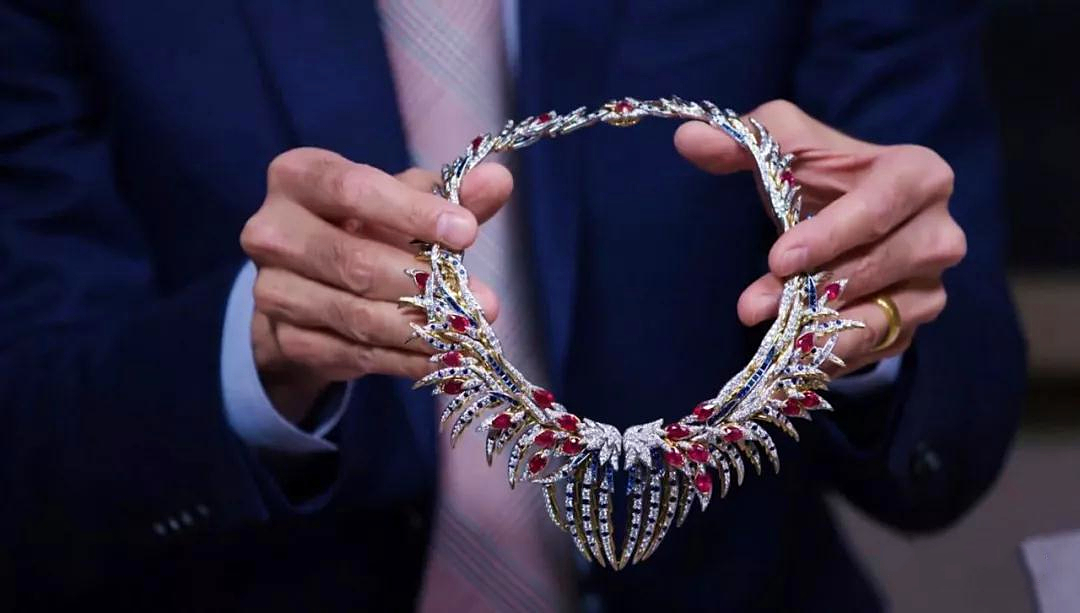
Photography: Sotheby's Auction House, Plume necklace by Jean Schlumberger (Tiffany & Co.)

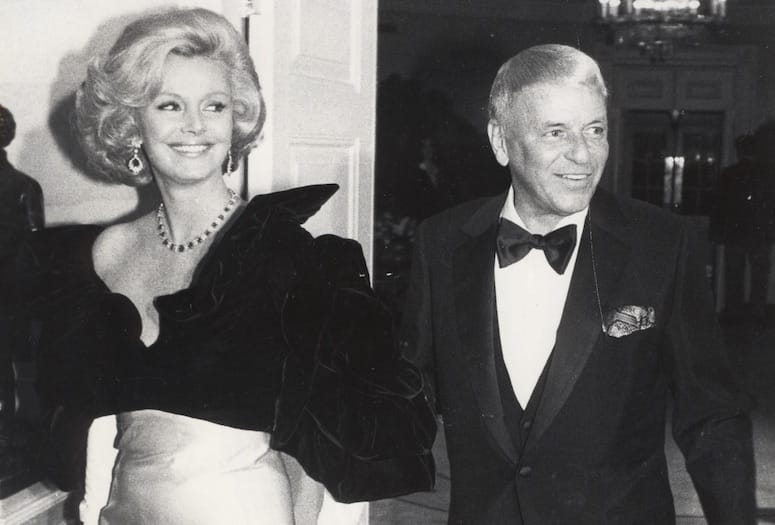
One particular storyteller we often like watching (just for his charismatic narration of significant pieces) is Frank Everett, who spotlights his own section called Frank's Files, on Sotheby's online platform. Here's an episode link where he timelessly describes a couple of novelty pieces from the collections of Barbara Sinatra (wife of Frank Sinatra) and Happy Rockefeller.


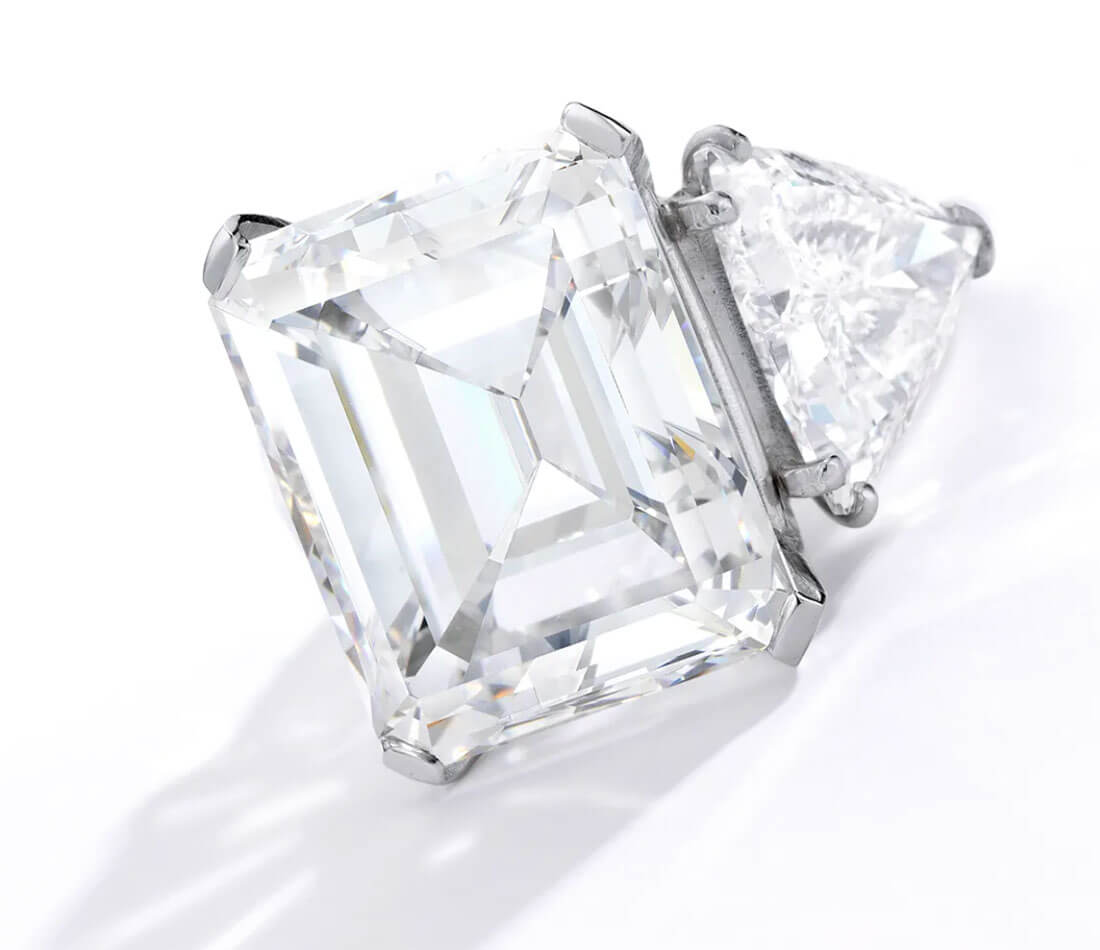
Some of the oldest jewellery design houses in the western world are often featured on his segments, including pieces by Cartier, Van Cleef & Arpels and Tiffany & Co. Both diamonds and rare coloured stones are often incorporated within the same piece, creating a mysterious allure unbound by a single hue or theme. Rubies, emeralds and sapphires are among the world's highest priced gemstones, and they're often found in the collections of society's most well regarded socialites and personalities.


Read more »
Gemcamp Laboratories
0 Comments

You Might Also Like

The Identification of Rubies, Sapphires and Emeralds

The Identification of Rubies, Sapphires and Emeralds


The “Big Three” as they’re often called, constitute the vast majority of colored gemstone sales across most international markets. Rubies are traditionally the most expensive among them, given similar quality levels, however in the U.S. sapphire is more frequently purchased by end-consumers.

Depending on your familiarity with gemstones and gemology, you might find it surprising to know that rubies and sapphires are very similar to each other on an atomic level. Both are composed of crystalline aluminum oxide, but are colored by different trace elements. Chromium is responsible for ruby’s vibrant reds, while iron and titanium cause the violetish blue hues of sapphire.


Identification of a gemstone species involves taking note of different gemological traits. When checking rubies for example, our gemologists here at Gemcamp factor in tests that determine properties like optic character, growth structures, birefringence, refractive index and many others. Each gemstone species has its own unique and definable values that allow gemologists to separate it from another similar looking species. Red spinel for example can look identically similar to ruby by just the naked eye, however its crystal structure is actually more symmetrical on an atomic level compared to ruby’s. This can be observed using a polariscope, giving our gemologists information that they can use to scientifically pinpoint a gemstone’s proper identity.

Emeralds are composed of different elements altogether, they are beryllium cyclosilicates. Here at the laboratory, we also look for clues and indicators of identity under the microscope. Mineral inclusions such as pyrite can help us separate natural emerald from man-made emerald- which can be created today using a variety of proprietary methods. Chatham and Tairus are two companies abroad who have pioneered the development of artificial gem growth. They regularly produce man-made emeralds among many other gem species.


Be careful when you’re looking to authenticate a gemstone. Know that two gems can overlap in both clarity and color. Sometimes more in-depth knowledge is required before you can properly separate man-made gemstones from their natural counterparts. Awareness of the different types of inclusions and their significance also helps.

Our laboratory also makes use of advanced instruments for tasks that go beyond microscopy or standard gemological tests. We use spectrometry based instruments for the detection and separation of natural diamonds against lab-grown (man-made) diamonds, which are also composed of pure carbon, with identical properties like hardness, luster and brilliance.
Read more »
Gemcamp Laboratories
0 Comments

You Might Also Like

[name=Gemcamp Laboratories] [img=http://www.gemcamp.org/img/gemcamp-black-badge-3.jpg] [description=A Philippine-based laboratory group headed by GIA graduate gemologists who share a collective passion for the sciences that support gemstone identification and evaluation.] (facebook=https://www.facebook.com/gemcamplab/) (twitter=https://twitter.com/gemcamplab) (instagram=https://www.instagram.com/gemcamplaboratories/) (pinterest=https://www.pinterest.ph/gemcamplaboratories/)

Follow @Gemcamp Instagram