Theme Layout

Boxed or Wide or Framed

Theme Translation

Display Featured Slider

Featured Slider Styles

Display Grid Slider

Grid Slider Styles

Display Trending Posts

Yes

Display Author Bio

Display Instagram Footer

Dark or Light Style

Showing posts with label Gemologists. Show all posts
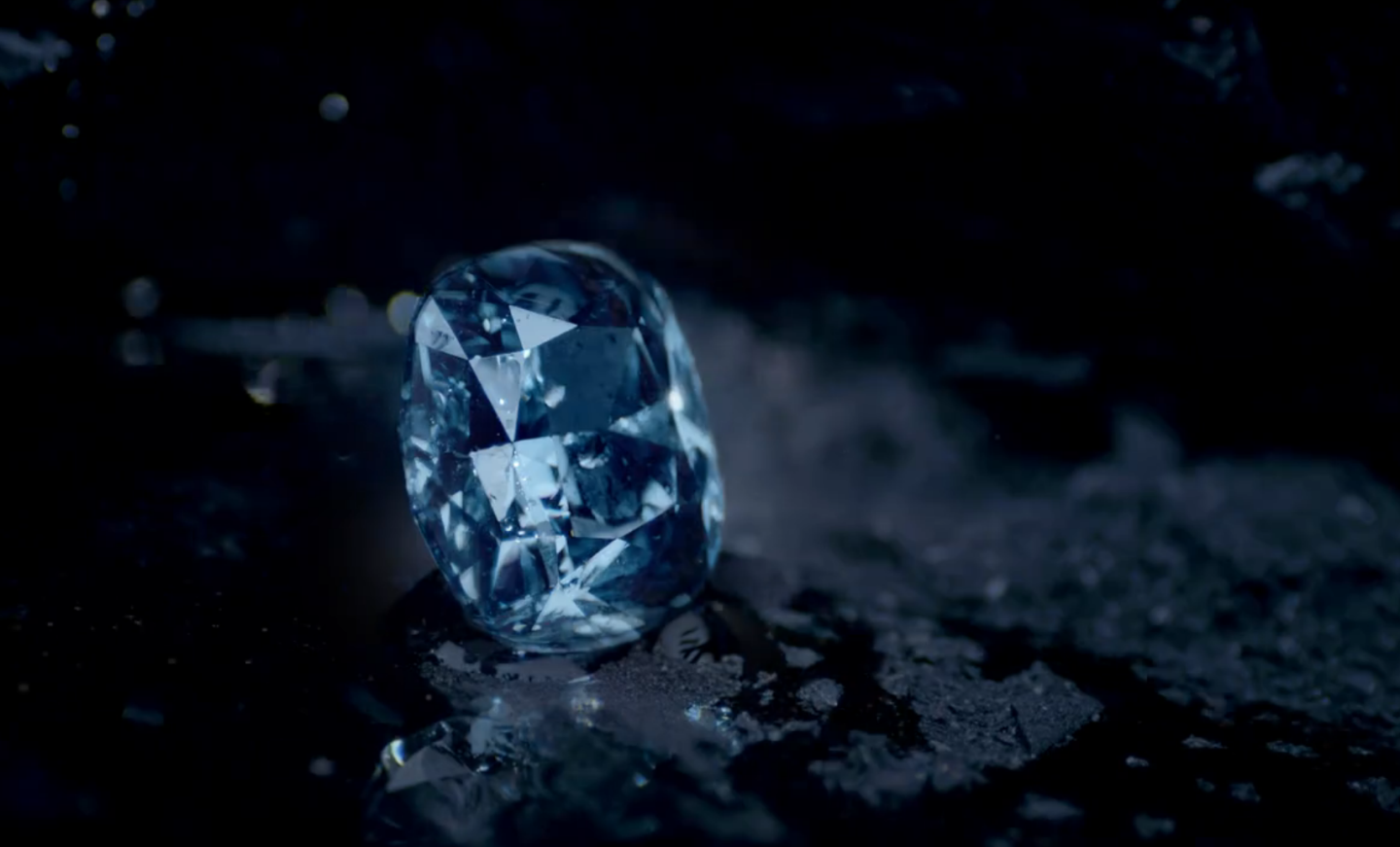
The 392.52 carat Blue Belle of Asia, An Extraordinary Sapphire (4th Largest in the World)

The 392.52 carat Blue Belle of Asia, An Extraordinary Sapphire (4th Largest in the World)


While many notable fancy colored blue diamonds grace the halls of auction houses around the world, colored stones like blue sapphire can also achieve a level of quality and prominence worthy of high distinction and exclusivity. One of the largest pristine blue sapphires ever to arrive at the international jewelry scene is aptly named the Blue Belle of Asia.


This 392.52ct vivid blue gemstone was recorded as the fourth largest sapphire in history, following the likes of the Queen of Romania Sapphire, the Blue Giant of the Orient, and the Logan Sapphire. It was mentioned that this particular gem was unearthed from the gem-rich mines of Sri Lanka, previously referred to as Ceylon. Many blue sapphires of bright saturation and medium to medium-light color are still called 'Ceylon Sapphires' due to the notable production of fine blues associated with the area.

The Blue Belle of Asia has a long history of ownership. After its discovery in the 1920's, it was soon obtained by Macan Markar in Colombo. Then in 1937, Lord Nuffield, the founder of Morris Motors Limited bought the sapphire for his estate. There were some indications that the stone had meant to be presented to Queen Elizabeth for her coronation in May of 1937, however this did not happen as the Blue Belle instead vanished from the public eye for the next several decades.


In 2014, Christie's auction house held a Geneva auction wherein the Blue Belle of Asia was seen again. The stone at the time was listed by a private persona, and it eventually sold for just over 17 million dollars, which at the time broke all records for the most expensive colored gemstone to be sold at auction. There are not many sapphires of this quality and size, even in national museum displays and exhibitions.

Its historical significance and rarity shows collectors that sapphire's place as part of the 'Big Three' colored gemstones (along with ruby and emerald) is well earned in the jewelry trade, and that fine blue sapphires are truly some of the rarest treasures of nature.
Read more »
Gemcamp Laboratories
0 Comments

You Might Also Like

Only 1 in every 200,000 Natural Diamonds are Blue.

Only 1 in every 200,000 Natural Diamonds are Blue.


Have you ever wondered why some of the most illustrious diamonds in the world are blue? Gleaming, pristine colors as deep as the oceanic depths, give such an astounding ambience to many of these incredibly rare treasures of the earth.


It's estimated that just 1 in every 200,000 diamonds are blue. The 45 carat Hope Diamond at the Smithsonian, is probably the greatest example we have today of this incredibly scarce variety of diamond.

A scientist at the University of Hawaii, Dongzhou Zhang has studied the formation of natural blue diamond. Alongside his team of researchers, Zhang published an article in the journal 'Nature', that showed the world a little more about how blue diamonds form.


We already know that their vivid colors arise from trace percentages of boron. This element, aside from sharing some electro-conductive properties with the stone, also allows it to selectively absorb light differently from other diamonds. Portions of visible light enter the stone, but only some wavelengths are able to leave and return to our eyes, causing the blue color we see so clearly.

The article published newer information, that the impurities contained in most blue diamonds are actually found at a very deep level of the earth. It became clear that based on their findings, blue diamonds form at far greater depths than typical colorless diamonds- many at levels below 410 miles down into the earth.


Some of the researchers have suggested that boron, which absorbs red light (and makes diamonds show up blue) could have been originally present on areas of the ocean floor. When continental plates collided, there were forces that pushed these elements even further down, to levels where heat and pressure allowed for diamond formation occur.

Note that many blue diamonds sold today in jewelry, are a product of artificial enhancement. Color dyes, irradiation and many other modern-day processes create colors in otherwise near-colorless stones. The prices of treated diamonds are much lower than their natural-colored counterparts.
Read more »
Gemcamp Laboratories
0 Comments

You Might Also Like

How to Tell if Your Gemstone is Real or Fake in 6 Guided Steps

How to Tell if Your Gemstone is Real or Fake in 6 Guided Steps


There are some measures that you can take in order to eliminate common imitations like glass or plastic from your stone's possible identifications. Here, we present the steps needed for basic gemstone evaluation, pre-grading. It's much easier to detect certain simulants over others, however practice is highly recommended under the tutelage of an experienced gemologist, so as to not make a crucial mistake in your identification.


The process of initial gem identification, makes use of studying a stone's specific gravity, hardness, optical density and the presence of inclusions. Interpreting these observations in the context of gemology can help separate real gemstones from their fake counterparts.


1. Check your Gemstone's Heft by Bouncing it on Your Palm.


Using your open palm, bounce the stone around the center of your hand to get an idea of its heft. Every gemstone has a property called specific gravity that will determine how much it weighs at a certain volume or size. Even an average person can use an item's heft to rule out lighter imitations such as transparent gemstones made from plastic. The presence of mould lines or mould marks on facet surfaces can also help to give plastic or resin imitations away.

2. Search for Rounded or Curving Facet Junctions.


Look at the edges of your stone's individual facets. Some glass imitations will give you the impression of having rounded facet junctions, which would never be observable in a natural gemstone. This is because natural gemstones are mined from the earth and cut using hard abrasive materials. They therefore get very sharp facet edges in the process. Certain glass imitation gems are actually molded from molten silica material. An evidence of this would be that their edges are more curved than they ought to be.

3. Loupe Your Stone, Check for Any Inclusions at All.


Examine the interior of a stone with a 10x triplet loupe. A standard magnifying glass is not enough. Loupes are the minimum requirement for studying the inclusions within a gemstone. Certain inclusions can prove that a gem actually came from deep beneath the earth. Other inclusions, or a lack of them, can also sometimes indicate that a stone was synthesized in a laboratory. This may take practice and experience, but observation under magnification is one of the most reliable ways to identify gemstone species.

4. Consider the Design, Craftsmanship and Markings of its Setting.


Examine the metal setting of a gemstone if it is already mounted on a piece of jewelry. Sometimes the design can help give you clues about the stone itself. Large, brilliant stones with intense saturation should not be seen on metal mountings that are poorly constructed. Hallmark stamps can also be clues in your identification process. Silver settings are often stamped with a '925' mark, for 92.5% silver, the requirement for sterling silver. A five carat natural, untreated diamond for example, would be an unlikely sight on a silver banded ring. All these indications are not 100% however, only hints that can definitely help you make a smart estimate of your stone's nature.

5. Observe and Note Down the Hardness of Your Stone's Surface.


Check for any signs of wear-and-tear or scratches. Certain gemstones like diamond, are actually very hard. These stones would be less likely to display abrasions along facet junctions, or multitudes of scratches on the surface. Use reflected light to observe the texture of a stone's facets. Bumpy or "orange peel" texture is also an indication that the stone may be a moulded glass imitation.

6. Determine the Other Properties it Possesses as a Mineral.


If you possess a gemological setup, such as a desktop refractometer, polariscope and spectroscope, you can study a material's unique properties and use this information to deduce its identity. Although this sounds simple enough, it does require a considerable familiarity with the field of gemology. If you are uncomfortable taking or interpreting this information, or lack the necessary instrumentation, find a third-party laboratory to do it for you. Eliminate the guesswork with facts and science. Feel free to contact our laboratory gemologists for assistance on your stone.


Be very cautious about using handheld 'diamond testers', these make use of thermal conductivity (some use electric conductivity), and do possess a lot of limitations on their usage and precision. Thermal-based diamond testers, as well as many dual testers can misidentify moissanite as diamond. Neither instrument is also able to detect evidences of a stone being man-made, i.e. lab-grown diamond will fool them easily. Gain awareness above the marketing of these tools. They are useful in their own right, but not foolproof by any means. The misuse of tampered, outdated, or even standard testing instruments is especially rampant here in the Philippines today. 

Read more »
Gemcamp Laboratories
0 Comments

You Might Also Like

[name=Gemcamp Laboratories] [img=http://www.gemcamp.org/img/gemcamp-black-badge-3.jpg] [description=A Philippine-based laboratory group headed by GIA graduate gemologists who share a collective passion for the sciences that support gemstone identification and evaluation.] (facebook=https://www.facebook.com/gemcamplab/) (twitter=https://twitter.com/gemcamplab) (instagram=https://www.instagram.com/gemcamplaboratories/) (pinterest=https://www.pinterest.ph/gemcamplaboratories/)

Follow @Gemcamp Instagram