Theme Layout

Boxed or Wide or Framed

Theme Translation

Display Featured Slider

Featured Slider Styles

Display Grid Slider

Grid Slider Styles

Display Trending Posts

Yes

Display Author Bio

Display Instagram Footer

Dark or Light Style

Showing posts with label Diamonds. Show all posts
Two Major March Hong Kong Jewelry & Gem Fairs Postponed to May 2020

Two Major March Hong Kong Jewelry & Gem Fairs Postponed to May 2020


Diamond and gemstone traders will have to wait a little longer this year for the world’s largest jewelry fair to take place. The Hong Kong International Diamond, Gem & Pearl Show, supposedly scheduled for March 2 to 6, has now been moved to May 18 to 21 by the event’s organisers due to the recent events related to the corona virus. 


The traditional-tandem fair; the Hong Kong International Jewellery Show, which was supposed to be held on March 4 to 8 at the Wan Chai Convention center has been postponed and relocated this year as well. It will be held at the Asiaworld Expo area, on the same dates as the Hong Kong International Diamond, Gem & Pearl Show.


* This blog article is dated February, 2020, and we recommend for you to check updated information from the Hong Kong Trade Development Council's (HKTDC) website directly in case of any future changes or updates to these initially shared details.


Some are worried about the two fairs’ announced postponement, as the new dates are now nearer to other traditionally scheduled international jewelry fairs, such as the 'Baselworld' show (held in Switzerland | Messe, Basel) and also the next running June Show (to be held in Hong Kong as well).

The past two years have been a little rough for the world’s largest diamond and jewelry shows, from typhoon limitations in 2018, to a lower attendance due to protest fears last September. 

Read more »
Gemcamp Laboratories
0 Comments

You Might Also Like

The Biggest D-Flawless Round Brilliant Diamond in the World

The Biggest D-Flawless Round Brilliant Diamond in the World


Round brilliant diamonds are the cornerstone of the fine jewellery industry today. Many collectors invest in stones that belong to the 'magic sizes' of 1, 2, 2.5 or even 5 carats. To those of you who've been to some of the most prestigious jewellery fairs across different continents, perhaps you may have even seen larger stones being exhibited by many of the international design houses.

Jewelry auctions however, tend to showcase those rare exceptional stones that come around once in a lifetime. Just a few years back, Sotheby's released such a stone that made headlines across nearly every jewelry news portal. The unveiling of a 102.34 carat natural round brilliant diamond.

The stone was a colorless gem with no clarity characteristics, and was touted to be the largest D-flawless round brilliant cut diamond in the world at the time. Its exceptional quality made it even more rare and sought after by thousands of luxury collectors.

The original rough came from Botswanna, a locality very well known for diamond production. It weighed about 425 carats, and master cutters took over half a year to correctly create the finished cut stone from its material.

More rough diamond materials of high carat weight have also been unearthed since then. One of which in particular was acquired by Graff, and contained the potential for a new record-holder in this classic category.


In 2019, the recently unveiled 102.79 carat Graff Constellation was said to beat the previous record by a very narrow margin.

This stone was cut from the 'Light of Letseng' rough diamond originally found in Lesotho mines. It is now considered as the largest D-flawless natural round brilliant cut diamond graded by the Gemological Institute of America at the date of this article.

The photo above depicts the said stone in the hand of Graff Chairman; Lawrence Graff- a pioneer in the global diamond retail trade, and an avid collector record-breaking precious gems.

Among all the fancy-cut shapes you'd normally hear about at auctions, it's sometimes quite interesting to see such a traditional or classic shape like the round brilliant, come in such large and elusive carat weights. One may wonder if any more will be unveiled at auctions in the years to come.
Read more »
Gemcamp Laboratories
0 Comments

You Might Also Like

Watching Frank Everett's Narration on The Magnificent Jewels of Barbara Sinatra

Watching Frank Everett's Narration on The Magnificent Jewels of Barbara Sinatra


Many connoisseurs in the jewellery trade are familiar with the annual auction events held internationally. From Geneva to New York, greatly anticipated events led by the duopoly of Christie's and Sotheby's auction houses, have shown us some of the world's most tantalising jewellery from human history's most well known brands and designers.


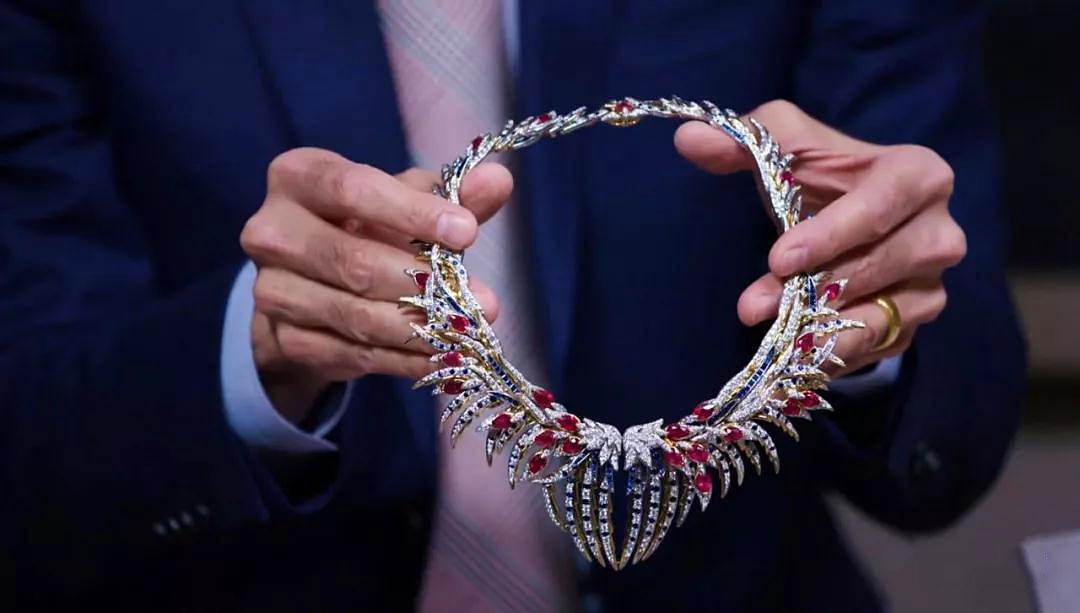
Photography: Sotheby's Auction House, Plume necklace by Jean Schlumberger (Tiffany & Co.)

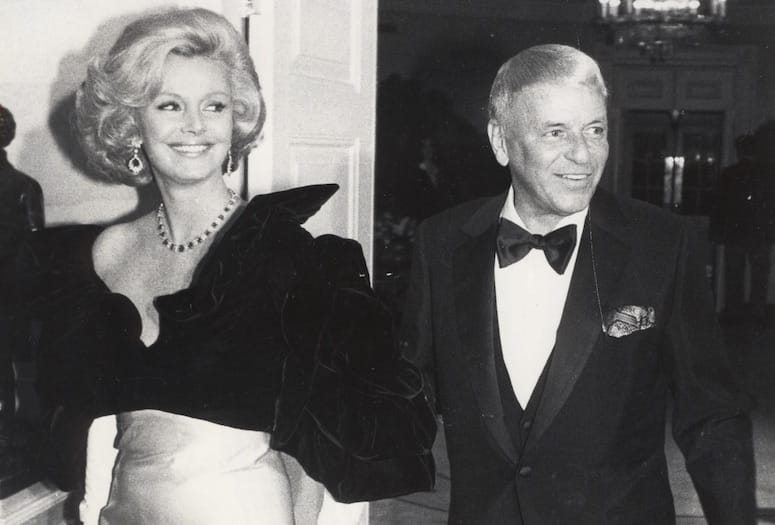
One particular storyteller we often like watching (just for his charismatic narration of significant pieces) is Frank Everett, who spotlights his own section called Frank's Files, on Sotheby's online platform. Here's an episode link where he timelessly describes a couple of novelty pieces from the collections of Barbara Sinatra (wife of Frank Sinatra) and Happy Rockefeller.


Some of the oldest jewellery design houses in the western world are often featured on his segments, including pieces by Cartier, Van Cleef & Arpels and Tiffany & Co. Both diamonds and rare coloured stones are often incorporated within the same piece, creating a mysterious allure unbound by a single hue or theme. Rubies, emeralds and sapphires are among the world's highest priced gemstones, and they're often found in the collections of society's most well regarded socialites and personalities.


Read more »
Gemcamp Laboratories
0 Comments

You Might Also Like

Three of The Most Popular Cuts for Colored Gemstones

Three of The Most Popular Cuts for Colored Gemstones


We all know that diamonds are most often polished and cut into round brilliant formats. The standard 57 to 58 facet design pioneered by Marcel Tolkowsky in 1919 took hold of the diamond industry and influenced how we want our diamonds to be cut today. This is common knowledge already, but what about the cutting preferences for the rest of the colored gemstone varieties?


Well today let's take a look at a handful of faceting styles and shapes that have captured the market's attention for best displaying the appeal and beauty of a gemstone. First off, probably the most utilized cut for rubies and sapphires (non-melee) would be the oval mixed-cut. The mixed faceting style simply refers to a gem that has both the brilliant-cut faceting style (triangular & kite shaped facets) and the step-cut faceting style (four sided facets). One might be on the crown, the other may be on the pavilion, or the reverse can also be true. This particular cutting style allows gem cutters to save weight from the original crystal, by cutting with a bit more bulge, especially if cutting the pavilion as a step-cut. Unlike diamond, the focus for colored gemstones is more about the intensity of color, and adding more material intensifies the selective absorption process that expresses a stone's color to our eyes. (Image credits to Sotheby's Auction House)

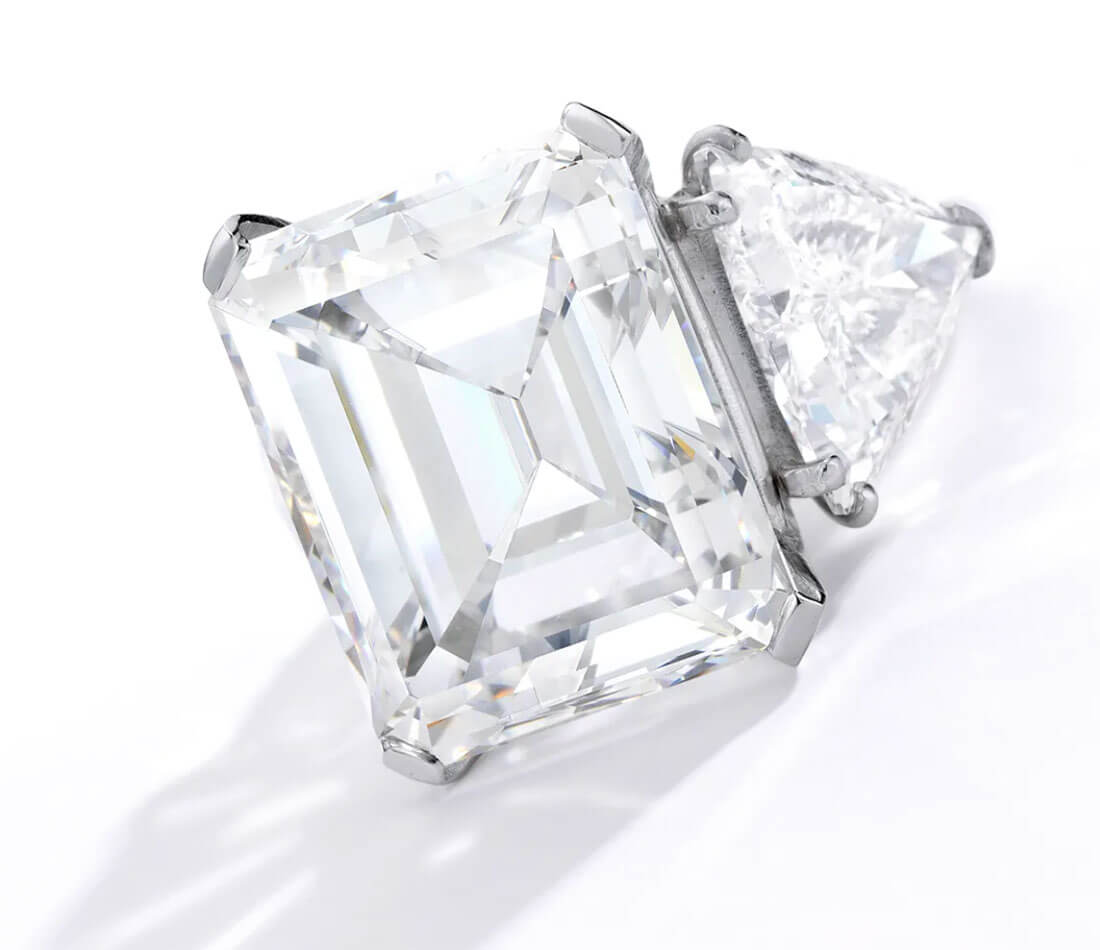
While rubies and sapphires are very often cut as mixed cuts, another very popular cutting orientation would be what the industry calls the 'Emerald Cut', which as you might have guessed, is very popularly used with emeralds. This is mainly because of how emerald crystals grow. Compared to the common tabular shapes of rough ruby, emerald crystals tend to grow as hexagonal prisms, or at least in elongated formats. The Emerald cut is a rectangular step-cut style that makes use of bevelled edges, and it's been the number one choice for emerald gemstones for a long time now. Even diamonds have adopted the appeal of this cut, because it accentuates their transparency and clarity, while presenting a very bold elegance and feel.


While the two styles above are probably the most popular choices for colored stone cuts today, another forerunner would be the cushion cut. Now the cushion cut is a little less defined than the previous two we mentioned. There are square cushions and rectangular cushions, as well as other shapes and varieties. The main difference between the cushion cut and other cuts, lies in the fact that cushion cuts have curving edges on all sides when seen face-up. It sort of resembles a pillow, or a cushion in shape outline- hence the name. This cutting preference allows a good amount of weight to be saved, and just like the standard oval mixed-cut, this appeals well for gem-cutters due to the fact that color can be better shown with more material.

Colored diamonds are also often cut into cushion shapes. The 'oval' or 'stadard' cushion cut pink diamond, pictured below, is a prime example of this. Color will always be one of the defining factors in gemstone valuation- whether it be the presence of it or the absence of it.


Each gemstone can be cut in a huge variety of choices. Emeralds can also be cut as mixed-cuts, and star rubies & sapphires can be polished into cabochon cuts. There are so many choices for gemstone appearances in today's trade, that the main factor to consider is your own personal preference. Brilliant faceting styles create sharper, more crisp brilliance patterns, while step-cut faceting styles can save more weight, and deepen color. Proportions and angles are also equally important so as not to create areas of windowing or extinction, where light can leak out of the stone rather than bounce back to the viewer's eye.
Read more »
Gemcamp Laboratories
0 Comments

You Might Also Like

[name=Gemcamp Laboratories] [img=http://www.gemcamp.org/img/gemcamp-black-badge-3.jpg] [description=A Philippine-based laboratory group headed by GIA graduate gemologists who share a collective passion for the sciences that support gemstone identification and evaluation.] (facebook=https://www.facebook.com/gemcamplab/) (twitter=https://twitter.com/gemcamplab) (instagram=https://www.instagram.com/gemcamplaboratories/) (pinterest=https://www.pinterest.ph/gemcamplaboratories/)

Follow @Gemcamp Instagram