Theme Layout

Boxed or Wide or Framed

Theme Translation

Display Featured Slider

Featured Slider Styles

Display Grid Slider

Grid Slider Styles

Display Trending Posts

Yes

Display Author Bio

Display Instagram Footer

Dark or Light Style

Showing posts with label Diamond. Show all posts
September 2025 Brief Update on Lab-Grown Diamond News

September 2025 Brief Update on Lab-Grown Diamond News


In many parts of the world, lab-grown diamonds are now being produced in larger sizes and better clarity levels than ever before. Did you know that starting this October 2025, The Gemological Institute of America (GIA) will be changing how they grade lab-grown diamonds—moving away from the classic 4 Cs to just “Premium” or “Standard”? Meanwhile the International Gemological Institute (IGI); another one of the big three international laboratories, seems to be reaffirming its commitment to continue grading lab-grown diamonds the same way (using the 4C’s) at least for the time being.

In other related news, the World Jewellery Confederation or CIBJO (which serves as the confederation of national jewelry trade associations worldwide) is also set to reverse a decision made in 2010 - and insist that non-natural diamonds are labelled instead as 'synthetic' (similarly to how other man-made gemstones are described). This story is currently progressing as both sides of the industry are weighing in on how to most ethically handle the situation of lab-grown diamonds in our industry today.

Read more »
Gemcamp Laboratories
0 Comments

You Might Also Like

Checking for Undisclosed Lab-Grown Diamonds in Metro Manila Society

Checking for Undisclosed Lab-Grown Diamonds in Metro Manila Society


Whether you're for or against the recent hype on lab-grown diamonds, the product's presence is undoubtedly increasing in many parts of the world. From our own experience, 2017's roster of visitors to the laboratory consisted mostly of people needing to separate moissanite from diamond. A handful of lab-grown diamonds were also seen as well as, but most of the year's requests centered on differentiating diamonds from their imitations.


Photoluminescence analysis and spectrometry-based testing instruments help our gemologists detect and separate a majority of natural diamonds from potentially man-made counterparts (HPHT, CVD), however not everyone is properly informed on what lab-grown diamonds are, and the means needed to detect them.

Note that standard 'DIY' diamond or jewelry testers (those that are thermal and electric conductivity based) cannot separate lab-grown diamonds from natural ones. This is because lab-grown diamonds are made up essentially of carbon atoms crystallised in the isometric / cubic crystal system, just like natural diamonds. They are essentially also diamonds by chemistry, the only difference is their artificial origination due to the efforts of human beings.


Lab-grown diamonds do have substantial value, way above the current prices of imitations like cubic zirconia or moissanite, but their values are typically well below those of natural diamonds at the current time. This is just what we've observed ourselves during visits to international trade fairs, and constitute our opinion only on the matter. From what we've seen, wholesale cost rates of lab-grown (CVD, HPHT) diamonds are about 40% to 60% lower than equivalently graded natural counterparts. Lab-grown diamonds, despite their name, should also not be confused with gemological labs (which only hold the purpose of evaluating third-party gemstones).

Lab-grown diamonds are beautiful products in their own right, as long as they are sold ethically with proper disclosure. They should never be sold as 'natural diamonds', because buyers would most definitely feel deceived regarding their origin.

Take note that many sellers on the market use the term 'real' in their marketing pitch for these diamond products. Buyers must be careful with this descriptor as it might have subjective interpretations by different people. If someone defines a 'real' diamond as simply crystallised carbon (cubic) or basically by essential chemical standards, he might advertise lab-grown diamonds under that notion of understanding. On the other hand, if an opposing person defines a 'real' diamond as needing to have come from natural geological processes, then he may not agree that a lab-grown diamond be called 'real'. It's a tricky situation, since terminologies like this are not universally understood by people exactly in the same way.


We ourselves here at the laboratory try to refrain from ambiguity, and use the two descriptive terms "natural" and "lab-grown" instead (as much as possible) when referring to diamonds. These words are much more clearly defined, so that people do not get confused about the origins of their diamond.

If the term 'real' is used, a statement of accompaniment- such as 'real diamond by chemical definition, but created artificially by man', should at least be present for better ethical transparency.

If you are purchasing a diamond or diamond jewelry and the vendor describes them only with the words real or genuine, it's always still advisable to further ask them if the diamond(s) are natural or lab-grown. This should be done respectfully of course, just to be certain that all parties understand the product on equal definitions without subjective interpretations.

Gemcamp Laboratories does not create, produce, buy, or sell lab-grown diamonds or natural diamonds. We also do not recommend or discourage sale from any specific seller, vendor or business.
Read more »
Gemcamp Laboratories
0 Comments

You Might Also Like

 Christie's Maharajas & Mughal Magnificence Auction Garnered $109.2 Million. The Second Highest Auction Total for a Private Jewelry Collection

Christie's Maharajas & Mughal Magnificence Auction Garnered $109.2 Million. The Second Highest Auction Total for a Private Jewelry Collection


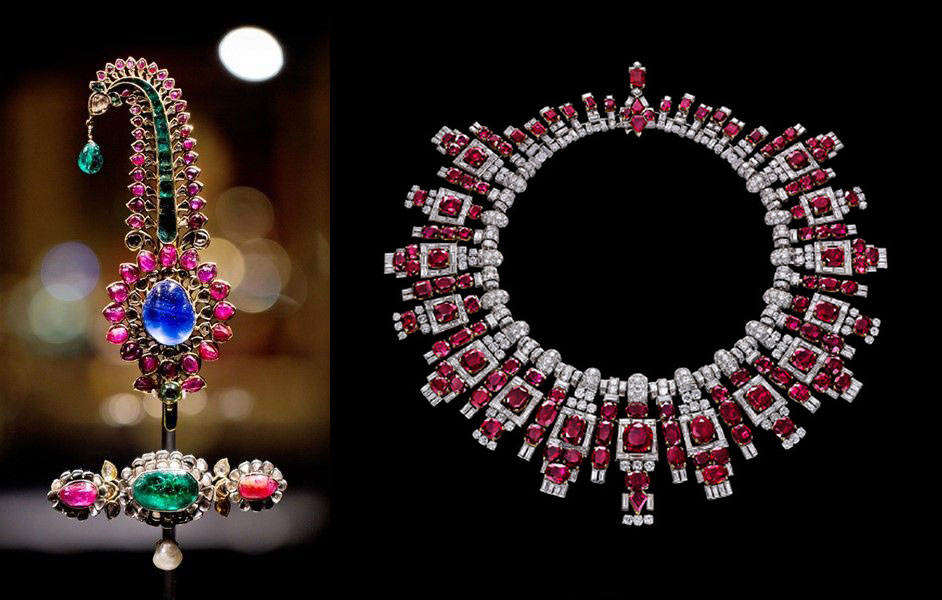
On June 19th of 2019, Sheikh Hamad Bin Abdullah Al Thani through Christie's auction house put together a ground-breaking collection of almost 400 gemstones and jewel-encrusted objects for public offer. This esteemed sale may prove to be one of the highest in value of all time, in tier with the Elizabeth Taylor collection- which itself garnered around 115.9 million dollars back in 2011.


Many of the breathtaking artifacts and jewelry have a historical significance factor added to their appeal. Certain items span centuries-worth of stories, and many lots are comprised of Mughal royal objects, such as a dagger with precious jade affixed to its hilt design.

Other slightly more modern items come from the notable design houses of Bulgari, Linzeler, Lacloche and Cartier among others. Different kinds of rare and illustrious colored stones will take to the spotlight, as emeralds, rubies, sapphires and of course diamonds get showcased through the prestigious sale.


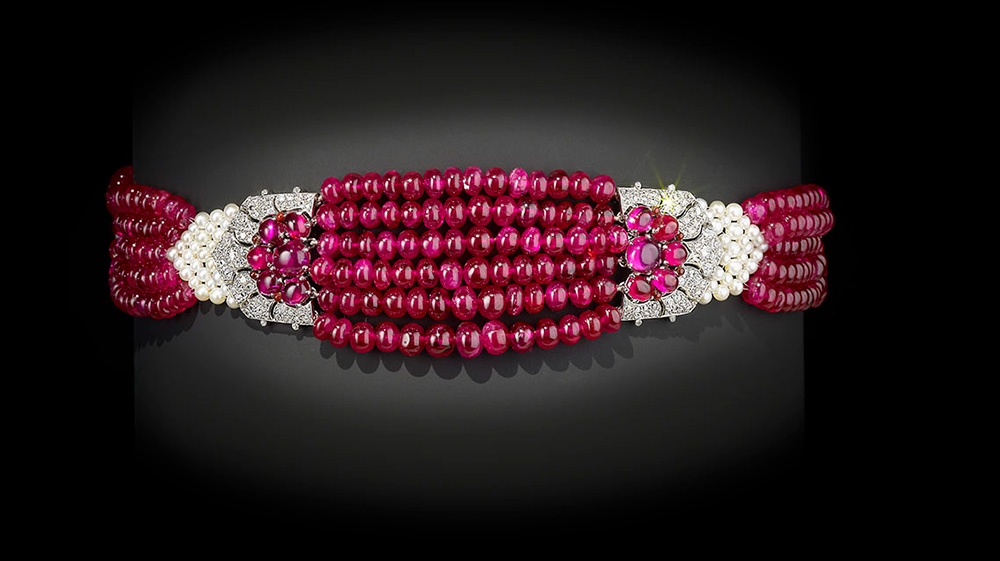
High-visibility items like the Patiala Ruby Choker- commissioned by Maharaja Bhupinder Singh of Patiala to Cartier in the early 1900's, will undoubtedly be some of the center-stage highlights. This item in particular has an estimate pegged at around 1.2 million US dollars.

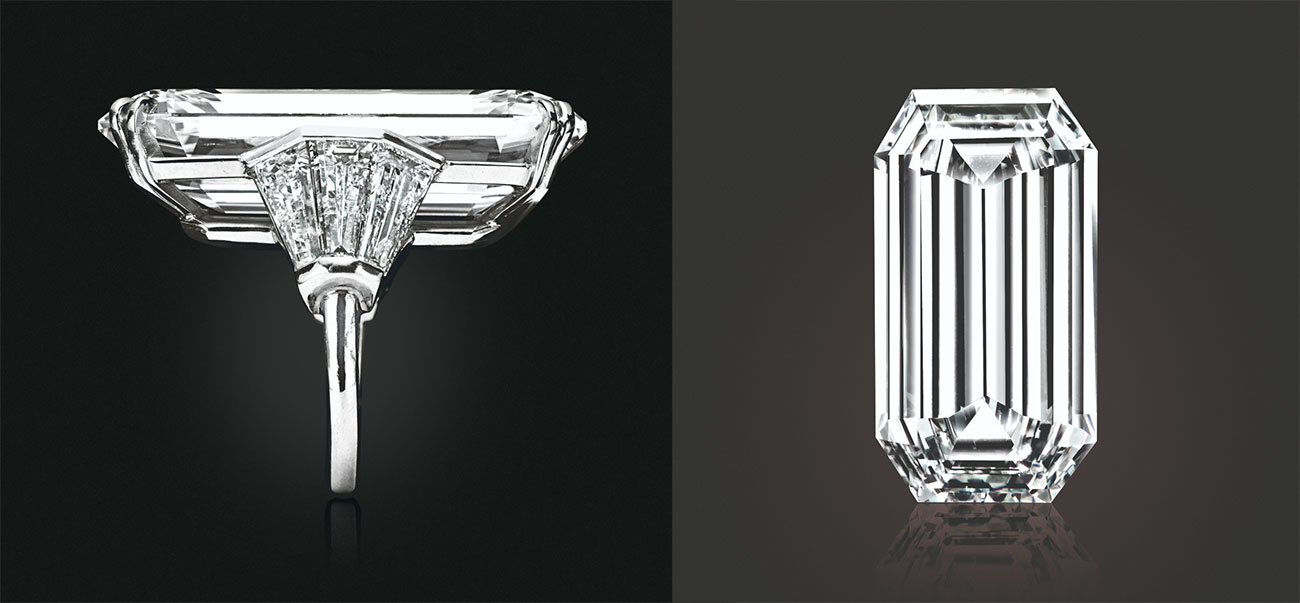
Another included item that has garnered recent fame, is the elegantly named 'Mirror of Paradise' diamond, which is graded at D for color and IF (Internally Flawless) for clarity. This 52.58ct rectangular cut diamond has an estimate range of around 7 to 10 million dollars.


The collection's highlight pieces will be travelling around the world, to displays in Hong Kong, London and Geneva, as is expected of featured lots managed by Christie's. The full suite of the auction items will also be shown at the Christie’s Rockefeller Center galleries located in Manhattan.  The Al Thani Collection still holds around 5,600 individual items, some of which will be shown in Paris starting next year, at a new museum location.

Photography Credit: Christie's Auctions, The Al Thani Collection
Read more »
Gemcamp Laboratories
0 Comments

You Might Also Like

The Story of the 101 carat Winston Legacy Diamond, that was Once Auctioned for 26.7 Million Dollars

The Story of the 101 carat Winston Legacy Diamond, that was Once Auctioned for 26.7 Million Dollars


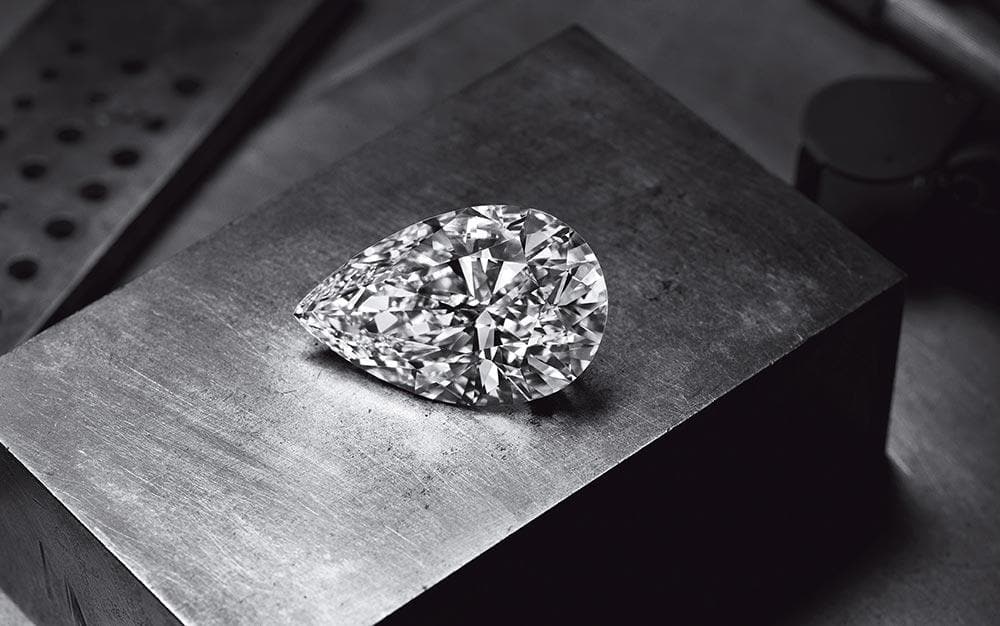
The number 101 might be familiar in most modern day pop-culture references. Even children can relate to the catchy number being used as part of the 101 Dalmatians animation franchise. Did you know though that there is a beautiful pear-shaped diamond out there called the '101'? Precisely it actually weighs 101.73 carats, however 'point seventy three' didn't quite sound as catchy for its proprietors.


This diamond was once bought by Harry Winston, the famous jewelry design house, during a Christie's event several years ago. The purchases was a celebratory event of Harry Winston being acquired by the Swatch Group. The company currently owns many famous jewelry and watch brands such as Blancpain, Tissot and Omega, aside from their own Swatch brand.


The 101 diamond was described as the most perfect diamond ever offered at auction- by Rahul Kadakia, the head of Christie's Switzerland during the time of sale. Harry Winston originally purchased the stone for about 254,000 USD per carat, or about 26.7 million dollars in total. It sits today as one of the world's finest pear-shaped D-colored, flawless diamonds recorded in human history. It was soon after renamed to the 'Winston Legacy' in honour of the jewelry house's founder.
Read more »
Gemcamp Laboratories
0 Comments

You Might Also Like

[name=Gemcamp Laboratories] [img=http://www.gemcamp.org/img/gemcamp-black-badge-3.jpg] [description=A Philippine-based laboratory group headed by GIA graduate gemologists who share a collective passion for the sciences that support gemstone identification and evaluation.] (facebook=https://www.facebook.com/gemcamplab/) (twitter=https://twitter.com/gemcamplab) (instagram=https://www.instagram.com/gemcamplaboratories/) (pinterest=https://www.pinterest.ph/gemcamplaboratories/)

Follow @Gemcamp Instagram