Today, we'll just lightly discuss four common misconceptions believed about diamonds in the jewelry industry. We'll briefly offer counterpoints to these statements in order to provide helpful information from our own experiences and point-of-view.

1.) Some say that diamonds are nearly indestructible?
Diamonds are not indestructible. Even if they are the hardest naturally occurring mineral on the planet, hardness is understood by definition as 'resistant to scratches or abrasion' rather than being impervious to breakage or splitting. Diamonds are actually able to 'chip' and break, especially at the thinnest points of their physical structure- the girdle edge and the culet. Chipped diamonds obviously become lower in value, as this does affect their clarity grade. Likewise, diamonds also have certain crystallographic directions where the bonds between atoms are weaker, causing them to possibly or potentially 'split apart' in clean breaks if hit with enough force along those directions. These are called cleavage planes. Furthermore, diamonds are made of carbon. Carbon can burn. Which is why diamonds can be altered significantly by intensely high temperature fires, and can also be 'cut' or separated using lasers.
2.) There are some people who say that 'lab-grown diamonds' are not diamonds at all? (specifically referring to CVD and HPHT produced LG diamonds)
Actually, by chemical definition- a diamond is essentially made-up of carbon atoms crystallized in the isometric / cubic crystal lattice system. By this definition, a lab-grown diamond is a diamond. The difference between natural diamonds and lab-grown diamonds mainly relates to two things: market price value and how they grew. Natural diamonds take billions of years to form, and this results in the presence of minor trace-elements and certain atomic defects when compared to lab-grown diamonds, which allow properly equipped gemological laboratories to differentiate between the two. Trace elements are very small percentages of elements that are non-essential to a diamond's basic chemistry, but form along with it during growth. The present-day selling prices / value of natural diamonds are higher than those of artificially grown or man-made diamonds due to the rarity factors involved, as well as the idea that lab-grown diamonds can simply be produced over and over again (despite manufacturing technologies still being expensive). Be very careful of using terms like 'real' or 'genuine' when buying or selling a lab-grown diamond. These terms are very subjective and can have different meanings and interpretations for different people. For ethical transparency you should always say 'lab-grown diamond', if your stone is indeed a man-made diamond. You can always further differentiate it from imitation materials like moissanite or cubic zirconia as well, and say that its essential chemistry is composed of carbon.
(Note: Lab-grown diamonds are different from lab-grown imitation materials like cubic zirconia or moissanite. This article refers specifically to lab-grown diamonds grown from the Chemical Vapor Deposition (CVD) process or the High-Pressure, High-Temperature (HPHT) process. We are only talking about man-made diamonds themselves (carbon chemistry), not about any kind of simulant or lookalike gem material.)
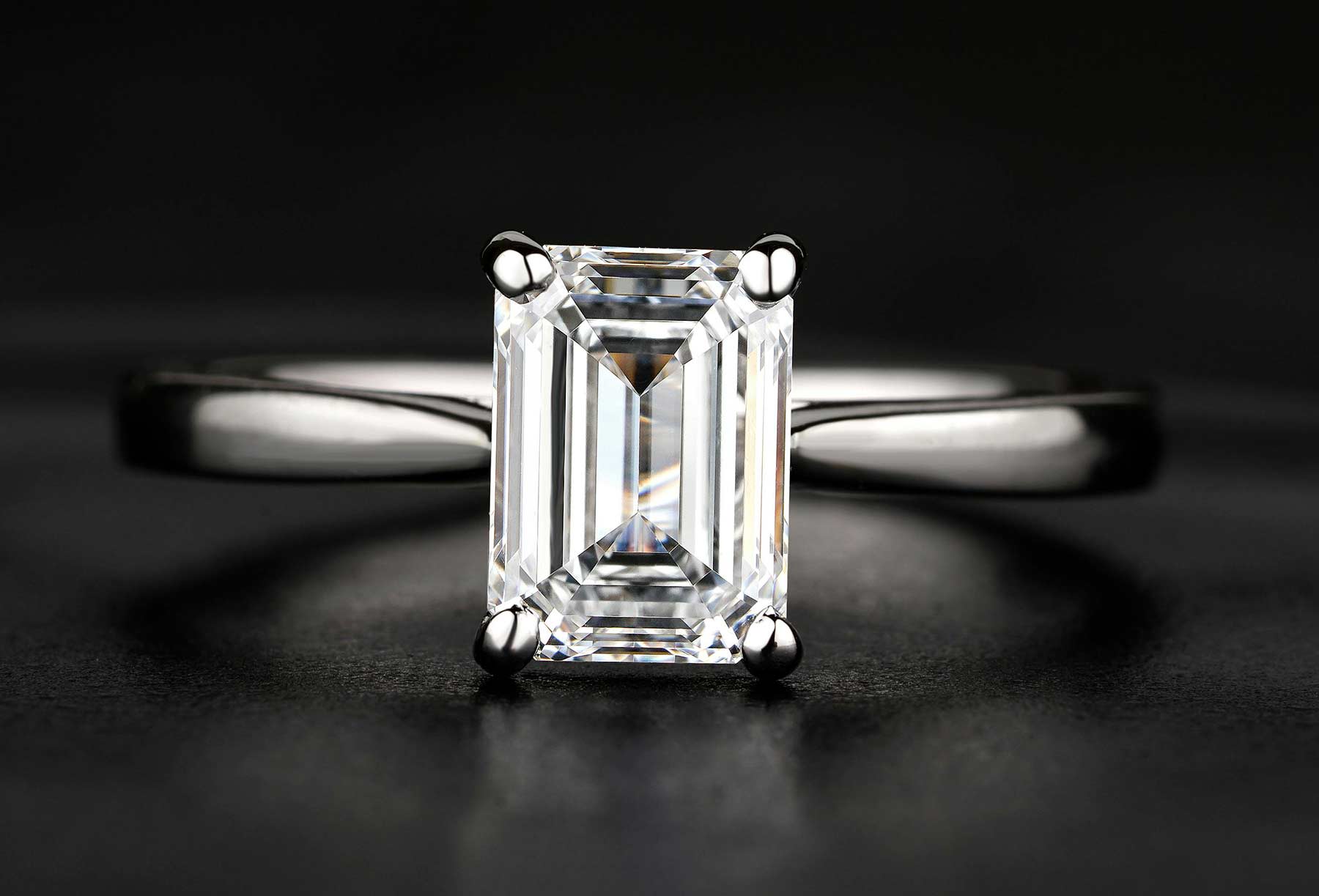
3.) Most Philippine collectors think colorless diamonds are always the most expensive ones?
While the vast majority of diamonds in the jewelry trade are indeed colorless to faint or light yellow, and obviously as many of you have noted- the colorless ones are more expensive, in reality there are also other vibrant colors of diamond out there that you may not have come across yet. Fancy colored pink, blue and red diamonds do exist, and these are sometimes more expensive per carat compared to a D-colored diamond. Many of these can often be seen at auction houses and prestigious jewelry boutiques. (Within the D-Z color scale, D is the most expensive color grade, however keep in mind that there are diamonds that exist outside of this scale that may exceed the valuations of stones within it.)
4.) The more facets on a diamond, the better the cut?
Diamond cut is a subject of taste and opinion. Currently the standard 57 to 58 facet round brilliant cut is still the most popular diamond cut around, even with many proprietary manufacturers creating diamond cuts that have up to 100 or even 200 tiny facet surfaces. There is a balance between white light reflection, spectral fire and proportion symmetry that has to be considered when evaluating a diamond's cut and not everyone will prefer the same range as being the utmost standard of beauty. Today though, the RBD currently goes for slightly higher prices that other basic fancy shapes like pears, hearts or ovals.
1.) Some say that diamonds are nearly indestructible?
Diamonds are not indestructible. Even if they are the hardest naturally occurring mineral on the planet, hardness is understood by definition as 'resistant to scratches or abrasion' rather than being impervious to breakage or splitting. Diamonds are actually able to 'chip' and break, especially at the thinnest points of their physical structure- the girdle edge and the culet. Chipped diamonds obviously become lower in value, as this does affect their clarity grade. Likewise, diamonds also have certain crystallographic directions where the bonds between atoms are weaker, causing them to possibly or potentially 'split apart' in clean breaks if hit with enough force along those directions. These are called cleavage planes. Furthermore, diamonds are made of carbon. Carbon can burn. Which is why diamonds can be altered significantly by intensely high temperature fires, and can also be 'cut' or separated using lasers.
2.) There are some people who say that 'lab-grown diamonds' are not diamonds at all? (specifically referring to CVD and HPHT produced LG diamonds)
Actually, by chemical definition- a diamond is essentially made-up of carbon atoms crystallized in the isometric / cubic crystal lattice system. By this definition, a lab-grown diamond is a diamond. The difference between natural diamonds and lab-grown diamonds mainly relates to two things: market price value and how they grew. Natural diamonds take billions of years to form, and this results in the presence of minor trace-elements and certain atomic defects when compared to lab-grown diamonds, which allow properly equipped gemological laboratories to differentiate between the two. Trace elements are very small percentages of elements that are non-essential to a diamond's basic chemistry, but form along with it during growth. The present-day selling prices / value of natural diamonds are higher than those of artificially grown or man-made diamonds due to the rarity factors involved, as well as the idea that lab-grown diamonds can simply be produced over and over again (despite manufacturing technologies still being expensive). Be very careful of using terms like 'real' or 'genuine' when buying or selling a lab-grown diamond. These terms are very subjective and can have different meanings and interpretations for different people. For ethical transparency you should always say 'lab-grown diamond', if your stone is indeed a man-made diamond. You can always further differentiate it from imitation materials like moissanite or cubic zirconia as well, and say that its essential chemistry is composed of carbon.
(Note: Lab-grown diamonds are different from lab-grown imitation materials like cubic zirconia or moissanite. This article refers specifically to lab-grown diamonds grown from the Chemical Vapor Deposition (CVD) process or the High-Pressure, High-Temperature (HPHT) process. We are only talking about man-made diamonds themselves (carbon chemistry), not about any kind of simulant or lookalike gem material.)

3.) Most Philippine collectors think colorless diamonds are always the most expensive ones?
While the vast majority of diamonds in the jewelry trade are indeed colorless to faint or light yellow, and obviously as many of you have noted- the colorless ones are more expensive, in reality there are also other vibrant colors of diamond out there that you may not have come across yet. Fancy colored pink, blue and red diamonds do exist, and these are sometimes more expensive per carat compared to a D-colored diamond. Many of these can often be seen at auction houses and prestigious jewelry boutiques. (Within the D-Z color scale, D is the most expensive color grade, however keep in mind that there are diamonds that exist outside of this scale that may exceed the valuations of stones within it.)
4.) The more facets on a diamond, the better the cut?
Diamond cut is a subject of taste and opinion. Currently the standard 57 to 58 facet round brilliant cut is still the most popular diamond cut around, even with many proprietary manufacturers creating diamond cuts that have up to 100 or even 200 tiny facet surfaces. There is a balance between white light reflection, spectral fire and proportion symmetry that has to be considered when evaluating a diamond's cut and not everyone will prefer the same range as being the utmost standard of beauty. Today though, the RBD currently goes for slightly higher prices that other basic fancy shapes like pears, hearts or ovals.