Theme Layout

Boxed or Wide or Framed

Theme Translation

Display Featured Slider

Featured Slider Styles

Display Grid Slider

Grid Slider Styles

Display Trending Posts

Yes

Display Author Bio

Display Instagram Footer

Dark or Light Style

Showing posts with label Diamond. Show all posts
September 2025 Brief Update on Lab-Grown Diamond News

September 2025 Brief Update on Lab-Grown Diamond News


In many parts of the world, lab-grown diamonds are now being produced in larger sizes and better clarity levels than ever before. Did you know that starting this October 2025, The Gemological Institute of America (GIA) will be changing how they grade lab-grown diamonds—moving away from the classic 4 Cs to just “Premium” or “Standard”? Meanwhile the International Gemological Institute (IGI); another one of the big three international laboratories, seems to be reaffirming its commitment to continue grading lab-grown diamonds the same way (using the 4C’s) at least for the time being.

In other related news, the World Jewellery Confederation or CIBJO (which serves as the confederation of national jewelry trade associations worldwide) is also set to reverse a decision made in 2010 - and insist that non-natural diamonds are labelled instead as 'synthetic' (similarly to how other man-made gemstones are described). This story is currently progressing as both sides of the industry are weighing in on how to most ethically handle the situation of lab-grown diamonds in our industry today.

Read more »
Gemcamp Laboratories
0 Comments

You Might Also Like

Checking for Undisclosed Lab-Grown Diamonds in Metro Manila Society

Checking for Undisclosed Lab-Grown Diamonds in Metro Manila Society


Whether you're for or against the recent hype on lab-grown diamonds, the product's presence is undoubtedly increasing in many parts of the world. From our own experience, 2017's roster of visitors to the laboratory consisted mostly of people needing to separate moissanite from diamond. A handful of lab-grown diamonds were also seen as well as, but most of the year's requests centered on differentiating diamonds from their imitations.


Photoluminescence analysis and spectrometry-based testing instruments help our gemologists detect and separate a majority of natural diamonds from potentially man-made counterparts (HPHT, CVD), however not everyone is properly informed on what lab-grown diamonds are, and the means needed to detect them.

Note that standard 'DIY' diamond or jewelry testers (those that are thermal and electric conductivity based) cannot separate lab-grown diamonds from natural ones. This is because lab-grown diamonds are made up essentially of carbon atoms crystallised in the isometric / cubic crystal system, just like natural diamonds. They are essentially also diamonds by chemistry, the only difference is their artificial origination due to the efforts of human beings.


Lab-grown diamonds do have substantial value, way above the current prices of imitations like cubic zirconia or moissanite, but their values are typically well below those of natural diamonds at the current time. This is just what we've observed ourselves during visits to international trade fairs, and constitute our opinion only on the matter. From what we've seen, wholesale cost rates of lab-grown (CVD, HPHT) diamonds are about 40% to 60% lower than equivalently graded natural counterparts. Lab-grown diamonds, despite their name, should also not be confused with gemological labs (which only hold the purpose of evaluating third-party gemstones).

Lab-grown diamonds are beautiful products in their own right, as long as they are sold ethically with proper disclosure. They should never be sold as 'natural diamonds', because buyers would most definitely feel deceived regarding their origin.

Take note that many sellers on the market use the term 'real' in their marketing pitch for these diamond products. Buyers must be careful with this descriptor as it might have subjective interpretations by different people. If someone defines a 'real' diamond as simply crystallised carbon (cubic) or basically by essential chemical standards, he might advertise lab-grown diamonds under that notion of understanding. On the other hand, if an opposing person defines a 'real' diamond as needing to have come from natural geological processes, then he may not agree that a lab-grown diamond be called 'real'. It's a tricky situation, since terminologies like this are not universally understood by people exactly in the same way.


We ourselves here at the laboratory try to refrain from ambiguity, and use the two descriptive terms "natural" and "lab-grown" instead (as much as possible) when referring to diamonds. These words are much more clearly defined, so that people do not get confused about the origins of their diamond.

If the term 'real' is used, a statement of accompaniment- such as 'real diamond by chemical definition, but created artificially by man', should at least be present for better ethical transparency.

If you are purchasing a diamond or diamond jewelry and the vendor describes them only with the words real or genuine, it's always still advisable to further ask them if the diamond(s) are natural or lab-grown. This should be done respectfully of course, just to be certain that all parties understand the product on equal definitions without subjective interpretations.

Gemcamp Laboratories does not create, produce, buy, or sell lab-grown diamonds or natural diamonds. We also do not recommend or discourage sale from any specific seller, vendor or business.
Read more »
Gemcamp Laboratories
0 Comments

You Might Also Like

 Christie's Maharajas & Mughal Magnificence Auction Garnered $109.2 Million. The Second Highest Auction Total for a Private Jewelry Collection

Christie's Maharajas & Mughal Magnificence Auction Garnered $109.2 Million. The Second Highest Auction Total for a Private Jewelry Collection


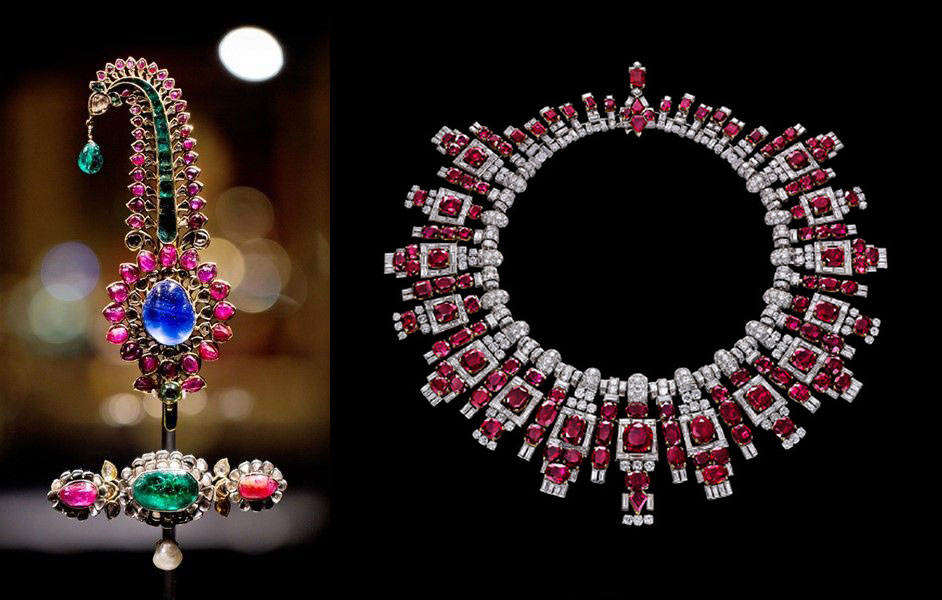
On June 19th of 2019, Sheikh Hamad Bin Abdullah Al Thani through Christie's auction house put together a ground-breaking collection of almost 400 gemstones and jewel-encrusted objects for public offer. This esteemed sale may prove to be one of the highest in value of all time, in tier with the Elizabeth Taylor collection- which itself garnered around 115.9 million dollars back in 2011.


Many of the breathtaking artifacts and jewelry have a historical significance factor added to their appeal. Certain items span centuries-worth of stories, and many lots are comprised of Mughal royal objects, such as a dagger with precious jade affixed to its hilt design.

Other slightly more modern items come from the notable design houses of Bulgari, Linzeler, Lacloche and Cartier among others. Different kinds of rare and illustrious colored stones will take to the spotlight, as emeralds, rubies, sapphires and of course diamonds get showcased through the prestigious sale.


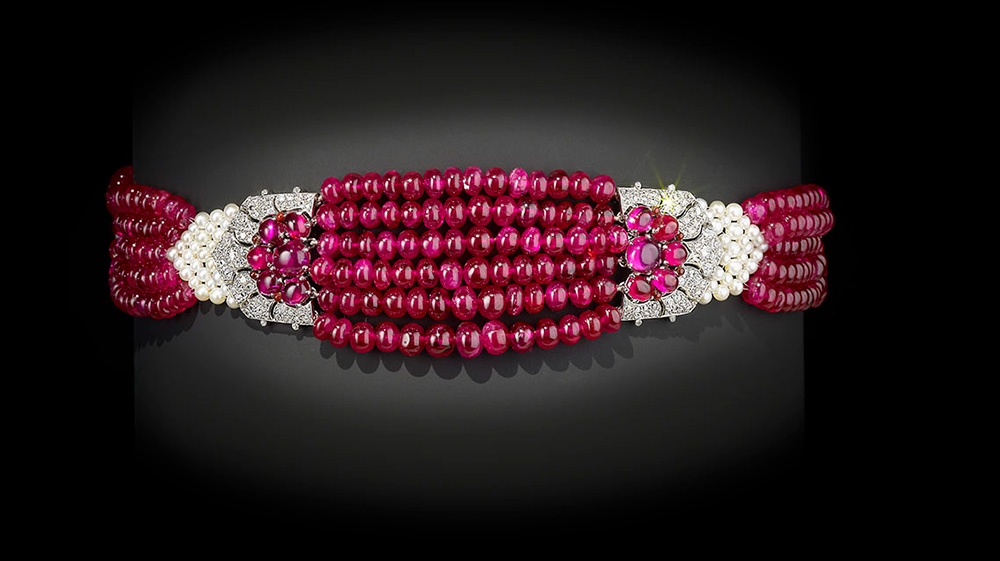
High-visibility items like the Patiala Ruby Choker- commissioned by Maharaja Bhupinder Singh of Patiala to Cartier in the early 1900's, will undoubtedly be some of the center-stage highlights. This item in particular has an estimate pegged at around 1.2 million US dollars.

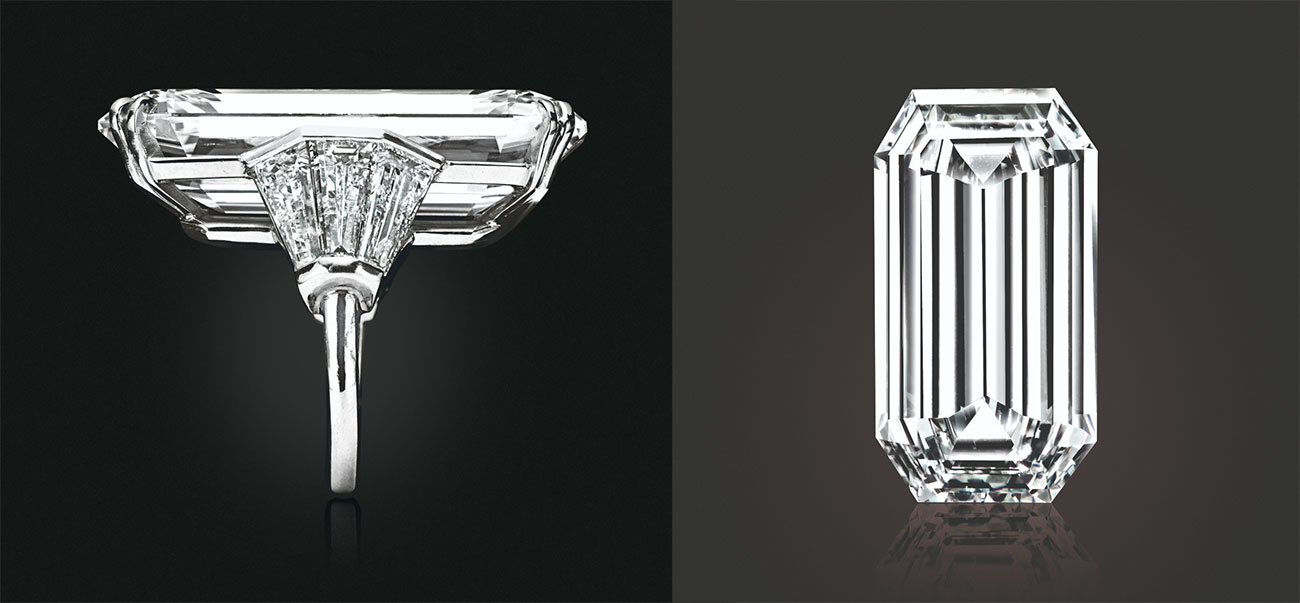
Another included item that has garnered recent fame, is the elegantly named 'Mirror of Paradise' diamond, which is graded at D for color and IF (Internally Flawless) for clarity. This 52.58ct rectangular cut diamond has an estimate range of around 7 to 10 million dollars.


The collection's highlight pieces will be travelling around the world, to displays in Hong Kong, London and Geneva, as is expected of featured lots managed by Christie's. The full suite of the auction items will also be shown at the Christie’s Rockefeller Center galleries located in Manhattan.  The Al Thani Collection still holds around 5,600 individual items, some of which will be shown in Paris starting next year, at a new museum location.

Photography Credit: Christie's Auctions, The Al Thani Collection
Read more »
Gemcamp Laboratories
0 Comments

You Might Also Like

The Story of the 101 carat Winston Legacy Diamond, that was Once Auctioned for 26.7 Million Dollars

The Story of the 101 carat Winston Legacy Diamond, that was Once Auctioned for 26.7 Million Dollars


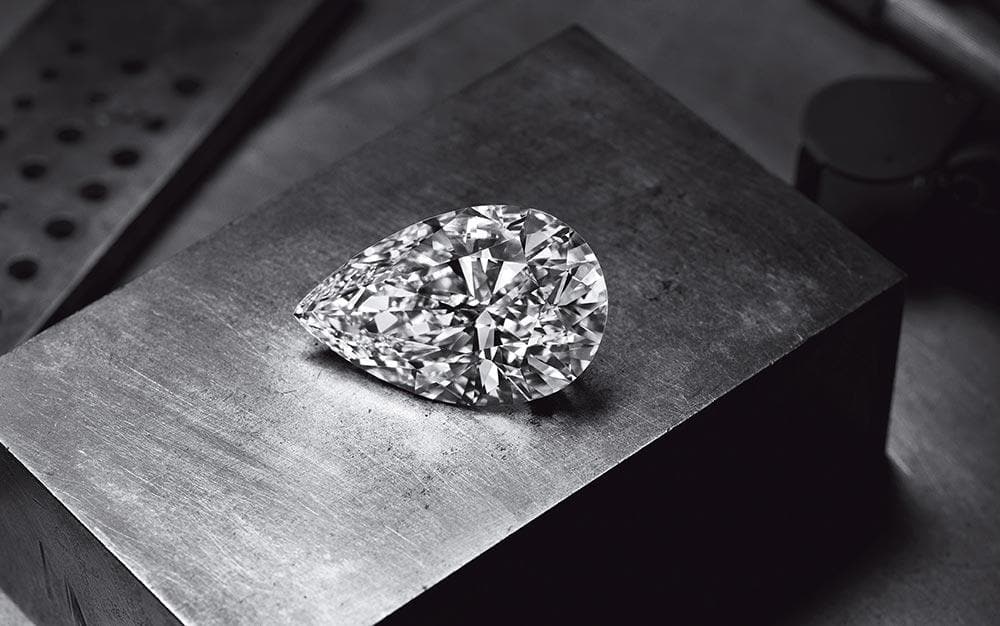
The number 101 might be familiar in most modern day pop-culture references. Even children can relate to the catchy number being used as part of the 101 Dalmatians animation franchise. Did you know though that there is a beautiful pear-shaped diamond out there called the '101'? Precisely it actually weighs 101.73 carats, however 'point seventy three' didn't quite sound as catchy for its proprietors.


This diamond was once bought by Harry Winston, the famous jewelry design house, during a Christie's event several years ago. The purchases was a celebratory event of Harry Winston being acquired by the Swatch Group. The company currently owns many famous jewelry and watch brands such as Blancpain, Tissot and Omega, aside from their own Swatch brand.


The 101 diamond was described as the most perfect diamond ever offered at auction- by Rahul Kadakia, the head of Christie's Switzerland during the time of sale. Harry Winston originally purchased the stone for about 254,000 USD per carat, or about 26.7 million dollars in total. It sits today as one of the world's finest pear-shaped D-colored, flawless diamonds recorded in human history. It was soon after renamed to the 'Winston Legacy' in honour of the jewelry house's founder.
Read more »
Gemcamp Laboratories
0 Comments

You Might Also Like

Engagement Rings and The Famous Two Month Salary Rule

Engagement Rings and The Famous Two Month Salary Rule


While popular culture from the west has pushed our societal mindset into the longstanding trend of diamond proposal rings, the specifics of such purchases can be very daunting to those who are just planning out the next step of their life's journey.

You might often hear the usual advice that's often shared by relatives, and sometimes their private jewellers. The "two months' salary rule" as most would call it, advises that a ring's value ought to be somewhere around twice the monthly salary of the groom to-be. Some may agree, others might not. This simple rule tries to adapt itself very generally to the financial situation of the couple, so that at the very least they don't overspend or underspend, but does it really make the most sense?


It really depends. The purchase of an engagement ring should be more of a sentimental endeavor, rather than a necessity. Some people see it as an investment, others see it as a symbolical heirloom, and some even feel like its should be one of the biggest purchases of their lives. No matter who you ask, answers will always be subjective at their core. (Photography Credit: Jean Dousset Jewellers)

If you're earning a six or seven figure salary, then two months worth of funding can be quite substantial for buying a diamond of one carat size or higher. People earning slightly less may be tempted to dip deeper into their savings for a large stone, but balance of budget should always be kept in mind. Know that if in case you need to liquidate in the future, don't expect a pawnshop to pay the same price as you did to the jewelry store in return for your precious jewelry. Retail prices and pawnshop offerings are often very far apart in value.


In 2019, many Filipinos and Chinese-Filipinos are deviating from the normal expectations of what an engagement ring should be like. Cost may sometimes be a factor, given that diamonds are quite expensive, but alternative gemstone choices such as white sapphires and lab-grown diamonds are indeed options to some part of the consumer market. Others who prefer the standing of natural, earth-mined diamonds, can opt for multiple smaller stones to be mounted on their ring. There is simply no governing rule for the type of ring you should choose to represent your feelings for the person you love.

Did you know some people even choose to use tatoos for their rings instead of buying actual bands? Others think of creative themes to personalise their proposal jewelry- such as rings that are cast from the sound-wave graphs of each partner saying "I love you" in their natural tone. It's not the biggest spender that wins in the end. While a larger diamond can indeed command the attention and awe of everybody in the room, the only attention you need to capture is that of your partner's. Tradition is there to guide us, but not define who we become, even in simple choices like this.

Choose your engagement ring and stone, based on what you and your partner want. Take note also of your financial situation, so as not to prioritise bling over budget. Make it a ring that symbolises love rather than impression, and you'll never go wrong.
Read more »
Gemcamp Laboratories
0 Comments

You Might Also Like

3.43ct Bubblegum Pink Diamond takes the Spotlight at Christie's Hong Kong Jewelry Auction

3.43ct Bubblegum Pink Diamond takes the Spotlight at Christie's Hong Kong Jewelry Auction


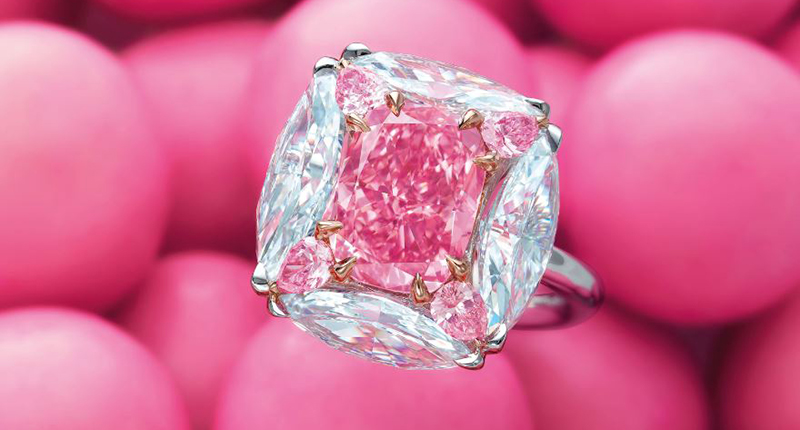
With the trend of coloured diamonds continuing its surge at international auction events, a 3.43 carat cushion cut diamond known for its bubblegum pink appearance has just sold for 7.5 million dollars at Christie's recent Hong Kong auction. The stone was mounted onto a ring designed by Moussaieff, alongside several more pink diamonds and some marquise shaped white diamonds as well.


Initially estimated between 6 million and 8 million US dollars, the beautiful ring did not disappoint when it came to the actual sale. The prominent piece was considered as one of the premier lots sold during the 'Magnificent Jewels' event held regularly by the famed auction house. The sale in its entirety encompassed purchases of over 40 million dollars, and showcased many other coloured gemstones- such as Colombian emeralds and brilliant blue diamonds.

Photography: Christie's Auction House | Magnificent Jewels

Read more »
Gemcamp Laboratories
0 Comments

You Might Also Like

The World's Most Beloved Gemstone- Diamond.

The World's Most Beloved Gemstone- Diamond.


Diamonds used to be marketed as many things, a girl's best friend, the stone that lasts forever, an ultimate symbol of enduring love. Whether or not you agree with the long-running sentiments surrounding the story of diamonds, you'll agree that among the world's many beautiful gemstones and treasures, it is by far the most famous.


This precious stone, known more for its brilliance and hardness rather than vibrant color, has been the center of our fine jewelry trade for many centuries now. Even in this day and age when mankind can atomically grow artificial diamonds, we still share in the marvel and desire for what a diamond can represent in our lives. You might be a collector, or maybe a jewelry design-creator, but the intrepid sparkle of diamonds draws you in to awe all the same.


Here in the Philippines, we evaluate and examine faceted diamonds this 2019. We check diamond jewelry as well, to help you understand more about your item's identity and quality, while also being fans of the stone ourselves. We do remain neutral when it comes to the appeal-debate between natural and lab-created diamonds. Our job is just to identify and separate the two kinds of diamonds so that you can properly know which category your stone belongs to, as they do have different price ranges in today's market.
Read more »
Gemcamp Laboratories
0 Comments

You Might Also Like

A Blue Diamond to Rival the Hope Diamond.

A Blue Diamond to Rival the Hope Diamond.


One of the largest blue diamonds, and possibly the highest ranking one in terms of clarity grade, has been discovered in Botswana this year. At 20.46ct, the 'Okavango Blue' was originally unveiled in Gaborone, Botswana by the Okavango Diamond Company.


The gemstone was originally unearthed from the Orapa mine, and is said to rival the rarity and beauty of the famed Hope Diamond. While the Hope is bigger at 45.52ct, it also has a clarity grade of VS1.

The Okavango Blue on the other hand, obtained a grade of VVS2, and its imperfections are reportedly only visible under 10x magnification (which is the standard setting for diamond clarity grading).


Cut out from a very large 41.11ct piece, the Okavango Blue is just one of many large diamonds that have recently been dug up. It seems that large fancy-colored diamonds are becoming one of the fastest-growing trends in the international auction world as well.

Marcus ter Haar, managing director of Okavango Diamond Company, said in a statement: "It is incredibly unusual for a stone of this color and nature to have come from Botswana -- a once-in-lifetime find, which is about as rare as a star in the Milky Way."


In other news, A 72 carat yellow diamond was recently also recovered from the Liqhobong mine in the Maluti mountains in Lesotho. That same mine also produced three more large diamonds, following the 910 ct 'Lesotho Legend' which was worth about 40 million U.S. dollars.
Read more »
Gemcamp Laboratories
0 Comments

You Might Also Like

Do We Have to Remove a Diamond from its Setting to Detect If It's a Lab-Grown Stone?

Do We Have to Remove a Diamond from its Setting to Detect If It's a Lab-Grown Stone?


We get a lot of inquiries regarding the possibility of testing a faceted (fully cut) diamond that has already been mounted onto a metal setting. People often ask if they need to remove their diamonds from the gold or platinum mounting first before setting an appointment.

Our laboratory's current setup of instruments allow our gemological staff to properly test *most diamonds for natural identity confirmation without requiring removal from setting. There may be rare exception cases where certain types of mountings or settings would cover the stone too much- however for the vast majority of natural diamond jewelry, yes we can perform identity detection tests on stones without the need for unmounting procedures.


Our spectrometric instrumentation is supplemented by microscopic evaluation, color-master comparison and many other applicable instrumental tests such as LW and SW UV observation. Lab-grown (or man-made) diamonds by the way, are not the product of gemological labs. They are called 'lab-grown' because they are manufactured by private companies through joint factory lab projects that require high grade machinery to artificially grow the stones. Gemological labs do not grow, buy, sell or endorse lab-grown diamonds, our only function is to detect them using existing research and scientific instrumentation, in order to help the public gain better knowledge on their item.


Both natural and lab-grown diamonds are chemically diamond. They are both essentially made up of carbon, and the main differences that the trade is concerned with is the proper disclosure of one from the other. Natural diamonds cannot be grown, and can be separated from man-made diamonds. Their value is different (higher) on virtually all international markets, but the value of lab-grown diamonds is still significant as well. CVD and HPHT lab-grown diamonds are much more valuable compared to diamond simulants such as moissanite and cubic zirconia.

Standard pen-hold jewelry testers, diamond testers (thermal conductivity testers) and moissanite testers will not be able to separate lab-grown diamonds from natural diamonds. It is important to note this when dealing with the purchase or sale of a diamond from absolutely anyone, including friends, pawnshops and jewelry establishments. Have the proper testing done to make sure your diamond is exactly what a seller describes it to be (whether that be a natural stone or a man-made stone, both are valid products of the jewelry trade).
Read more »
Gemcamp Laboratories
0 Comments

You Might Also Like

An Auspicious 88ct. D-Flawless Diamond to be Sold at Sotheby's Hong Kong Auction

An Auspicious 88ct. D-Flawless Diamond to be Sold at Sotheby's Hong Kong Auction


April 2, 2019 marks the date of Sotheby's latest auction event, wherein the world's top jewelry audiences will arrive to bid for a D-flawless 88.2ct oval-brilliant diamond. Most estimates for the sale of this rare gemstone range from between 11.2 to 12.7 million dollars. A very small number of large oval cut diamonds have been released at auction houses during the recent years, but a previous 118 ct oval did sell for about 30.6 million dollars in 2013.


The current stone, weight at just a bit over the lucky number 88, is sure to please many collectors at the event's location in Hong Kong. The number represents a 'double infinity' for many cultural societies, and it's very rare to see such a large diamond in this exact carat weight. The rise of asia as a primary force in the jewelry-buying sector shows how its influence also affects the decision of high-end diamond cutters to tailor stones precisely for this growing market.

Patti Wong, chairman of Sotheby’s Asia, labeled the stone as a rare “treasure” in a statement made dates before the event. Sotheby's has always been a driving force in the auction world, most especially for jewelry and the arts. They've been able to publicise and sell some of the world's largest faceted diamonds, in all manners of shapes and color hues. Last year (2018), the sales totalled from their jewelry auctions is said to be somewhere slightly over 400 million dollars.
Read more »
Gemcamp Laboratories
0 Comments

You Might Also Like

Are White Sapphires the Cheapest Alternatives to Diamond?

Are White Sapphires the Cheapest Alternatives to Diamond?


Recently there have been a few articles circulating around, depicting people's advices on the viability of white sapphires as engagement ring centerstones. Some of these talk about natural white (colorless sapphires) and their inherent rarity being a good basis of worth compared to other diamond imitations like cubic zirconia or moissanite. Earth-mined sapphires though typically have much more inclusions than synthetic or man-made sapphires.


Since the very late 1800's synthetic corundum has been produced by the Flame Fusion process invented by the French chemist, Auguste Verneuil. Many other processes and methods have also been developed since then, and virtually flawless synthetic corundum (the mineral species for ruby and sapphire varieties) are now easy to find at many jewelry and gemstone markets.

Lab-grown / synthetic colorless sapphire seems to be gaining a little bit of popularity, mostly as the "budget-goer's" choice for engagement stone alternative. Today you can find synthetic sapphires on many platforms for just a few dollars per carat. It can be very tempting to opt for a non-diamond stone due to diamond's relatively steep pricing index. Cubic zirconia is also a contender for the cheapest alternative gemstone choice for diamonds.

Regardless of whether natural or lab-grown colorless sapphire is used though, the gem variety does not have the same brilliance as diamond. It's luster is described as sub-adamantine, which while very good- directly means "just lower than diamond's". Likewise it also does not have diamond's color dispersion (fire) and hardness. These property differences may be seen by the naked eye, but according to some people not everyone notices by just glancing at the stone.

For our opinion, looking at a diamond versus a colorless sapphire will show you an obvious difference. Diamond's sharp color flashes, it's scintillation and luster are all superior in visual appeal to white sapphire's more mute optical properties. Colored varieties like blue sapphire can have a depth of color that presents its own vivid, eye-catching impact, but white sapphire does not have this advantage.


It really depends though if you would choose to opt for white sapphire as a center-stone, it is very affordable indeed. At the same time, natural white sapphire does hold that status of being a true earth-mined gemstone, which other alternatives like moissanite cannot claim. You can firmly say that your stone was created deep within the earth through natural geological events, and holds that rarity for all of its existence.

Sapphires rank at a 9 on the Moh's scale, second only to diamond in hardness. They are also extremely tough (durable) and resist splitting better than diamond (which has directions of atomic weakness called cleavage planes). Based on these traits, it does make for a practical stone to wear, even on an everyday basis.
Read more »
Gemcamp Laboratories
0 Comments

You Might Also Like

The Greville Emerald and Diamond Kokoshnik Tiara, Chosen by Princess Eugenie

The Greville Emerald and Diamond Kokoshnik Tiara, Chosen by Princess Eugenie


For her illustrious wedding day headpiece, Princess Eugenie chose to borrow an emerald and diamond tiara from her grandmother; the Queen. Though many speculated that she would opt to wear the 'New York Diamond Tiara', which was initially worn by her mother Sarah Ferguson at her wedding to Prince Andrew, Eugenie's choice was instead, the Greville Emerald Kokoshnik Tiara, commonly referred to as the Boucheron Tiara.


The dazzling jewelry piece was made by the famed French jeweler Boucheron back in 1919. It has belonged to the royal family for over seventy years now.

Its original owner was Margaret Greville, who was a very famous society hostess. Madame Greville passed her jewels to the queen after her death, who eventually also passed it (along with her other jewelry collections) to Queen Elizabeth in the year 2002.


The "Kokoshnik” style was popularized in the Russian Imperial Court back when this piece was originally made. It features brilliant, rose cut diamonds that were set in platinum, housing six emeralds on each side as well. The tiara went well with Eugenie's open-back, long-sleeve Peter Pilotto gown for the event.


Emeralds and diamonds have been a well-established luxury pair for as long as anyone can remember. Being one of the 'Big Three' colored gemstones, the vivid green beryl can come in many qualities, with its most famous locality source being the Muzo region of Colombia.

Large emerald specimens, like the one on Eugenie's Tiara, have become even more exceedingly rare in modern markets. With the popularity of hydrothermal lab-grown emeralds, people have also now grown cautious when selecting extra-fine emeralds that are nearly-free of inclusions.

(Editorial photography credit to the corresponding media representatives of the royal wedding event.)
Read more »
Gemcamp Laboratories
0 Comments

You Might Also Like

Which is Rarer, Gold or Diamonds?

Which is Rarer, Gold or Diamonds?


Even in the earliest of ages, gold has been put on a pedestal for its beautiful, malleable and stable properties. As a very rare metal, with a concentration of only 4 parts per billion on the earth's crust, gold captures the desires and wants of people enough to consider it a hard-asset currency. Bank notes and paper money forms were developed as easy-to-trade representations of gold ownership stock long ago.


In terms of material elemental rarity, gold wins hands down. Diamonds are made up of carbon atoms- which are not inherently rare as an element, because you can find them everywhere- even in your own body.

Why is it thought that based on weight, gem-quality diamonds are much more expensive to buy today? Well, aside from the various quality factors that create a value-hierarchy in the diamond trade, this gemstone species has to go through a lot of rare environmental conditions to manifest.

What makes diamonds truly rare, is the specific manner in which they form or crystallize. Highly pressurized carbon (under the correct ratio of temperature) can turn into diamond. Without this extreme pressure, another material may form instead. You know this as graphite, which is so very dark and soft that artists use it to create drawings and portraits.

While diamonds can only form deep below, in the earth's mantle regions, the geological journey that brings them to the surface can also sometimes destroy them. An imbalance of heat and pressure for prolonged periods of time can graphitize the carbon mass in diamond.


Because of this, only a (relative percentage) few transparent, fine crystals of diamond ever make their way up to an extractable level for miners to acquire it. There are a lot more low-quality diamonds out there though that people can still mine for use as abrasive material, but these aren't counted in our comparison because their prices are very different from gem-quality samples.

Today though, there is a great amount of concern in the diamond industry. While rare conditions create natural diamond deep beneath the earth's surface, man can now replicate those conditions in a lab. This technology- once proprietary in the ownership of a view, is spreading so that many companies around the world can now 'create diamond'. Chemically equivalent in its composition and structure, man-made diamond has finally gotten to the point that normal vision cannot always separate it from its natural counterpart.

Advanced gemological instruments that make use of spectrometric data, can separate the two kinds of diamond, but not everyone has access to these machines. This begs the question- are diamonds still rare? Many people are on opposing sides of the debate. Natural earth-mined diamonds cannot be created, because by definition they are products of nature. Man-made diamonds will only grow in potential quantity over the next decades, due to the propagation of technology. It's really up to you to decide where you stand on the matter.

Man-made versions of rubies and sapphires have existed since the 1800's, but while they are very cheap today, they haven't really affected the values of natural rubies and sapphires in the long run of history.


Gold is finite here on earth, the reserves can't be man-made or replicated, from what we know. It's an element, and there is a specific amount of it that has yet to be extracted from the earth's soil. Once that's dug out, what then?

Natural diamonds are very rare and expensive. Gold as an element or material is more rare, but currently less expensive. The question of rarity does not have a cut-and-dry answer, but we hope that this article has shed a bit of insight on the matter.
Read more »
Gemcamp Laboratories
0 Comments

You Might Also Like

Don't Make Costly DIY Mistakes: Diamonds that Turn Up as Imitations

Don't Make Costly DIY Mistakes: Diamonds that Turn Up as Imitations


During the past year, we've observed a very common occurrence here from different visitors at the laboratory- public over confidence and a misinterpreted understanding of the results produced by some inexpensive, DIY diamond home testers. What we specifically mean, are those pen-hold type testers from unknown brands that for one reason or another, keep giving our visitors the initial idea that what they have is immediately a natural diamond.

This article is only based on the opinions of our gemologist, as he has been steadily observing the habits and results of Filipino visitors who make heavy use of these instruments, and then bring their items to the laboratory due to their own uncertainty. You are free to conclude your own opinions regarding these testers, but the record below constitutes our experience of these portable machines.

It should be said that these types of pen-hold testers are also often called thermal testers as they are created to measure the thermal conductivity of a gemstone. In our own experience, we have had some consistent performance when using certain brands of testers that were manufactured by well-established companies, to separate regular cubic zirconia from diamond- however even these products (which may cost upwards of 14,000 Php) still made mistakes on certain stones like diamond-coated CZ or some other species of non-diamond gemstones.


In the past, we have also conducted experiments using diamond thermal testers that cost about 2,000-4,000 Php that were being sold here in the country, and also being imported from China-based manufacturers- a number of these testers occasionally failed on items like quartz, glass and cubic zirconia, passing them off as diamond. In terms of consistency, they were not dependable for our laboratory purposes. We purchased them strictly for the experiment only, and never put them into daily operational use here at the laboratory. (No specific brands or names will be mentioned to preserve objectivity and neutrality)

No standard diamond tester based on thermal conductivity (or even electric conductivity / multi-test pen-hold tools) has been known to be capable of separating synthetic or man-made diamond from natural diamond. These grown diamonds are also made up of carbon, with the same structure as natural diamond- but are grown by people in a factory. Advanced photoluminescence spectrometric testing like the technology we use here at our laboratory, is routinely utilized by industry professionals abroad for positively identifying the vast majority of natural diamonds by their trace elements and absorption spectra. Some natural diamonds may show inclusion-evidence of their unearthed-origin, and many older versions of synthetic diamonds may also show visual evidence of their man-made origin, however technology is getting better at a rapid rate, which causes alarm for many in the jewelry trade.


We hope that the general public here in the Philippines will use whatever personal tester they have with care, and a cautious, skeptical mind. The lab has seen too many obvious imitations brought in, mentioned as diamond by their owners, all because something beeped or a light flashed on their personal gadget.

In the end, if you would like to use these instruments on your own, spend the extra money to buy the more (or most) expensive ones. Those aren't perfect by any means- and have also been known to provide some mixed / wrong results if used by inexperienced checkers, but if used properly in the right conditions, they can help you at least with separating some kinds of lower-tier / cheaper imitations from diamond. This is still much better than buying the cheaper DIY testers that seem to cause a lot of unnecessary confusion.

Read more »
Gemcamp Laboratories
0 Comments

You Might Also Like

Engagement Rings 101, Diamonds and Lookalikes

Engagement Rings 101, Diamonds and Lookalikes


During the recent months, many of the laboratory's visitors expressed an intent of proposal with regards to the stones they brought in to have checked. Engagement rings are perhaps one of the most widely popular reasons people familiarize themselves with diamonds and the jewelry industry.


The currently long-standing market acceptance of diamond as the stone for engagement rings, has its roots in the landmark campaign of the De Beers Trading Company. They gave the public a vision of everlasting love, through associating marriage with diamond's unique natural properties. "A diamond is forever"- the popular slogan echoed throughout the decades by everyone who has ever felt passionate about the renowned sparkling gem, although we must ask ourselves the question: what more can we learn about the brilliance behind diamonds (and their lookalikes)?

Today we'd like to shed a bit of light on the stones most commonly used for engagement rings. A lot of people seem to show some confusion when it comes to stone-selection, and we wanted to share some information to help them understand the differences between popular choices.

First of all, what is known to be 'diamond', is divided into two significant categories today- natural diamond and synthetic (or man-made) diamond. Both of these are essentially composed of pure carbon (with some trace elements like nitrogen, which causes color). They also have an atomic structure that follows the isometric or cubic crystal system. Basically to cut things short, the main difference is that synthetic diamond is grown in a factory setting, and not mined from the ground.

This makes it very hard to differentiate the two, even for experienced gemologists, which is why laboratories like ours have a wide selection of spectrometry-based instruments and specialized gemological equipment to separate one from the other.

Natural diamonds, and synthetic diamonds may both be diamonds, speaking atomically, however their prices as we've come to observe- are not the same. In 2017, our research team inquired with several synthetic diamond wholesalers and retailers at the Hong Kong Gems and Jewelry Fair. Prices for synthetic diamond were still hefty, but only about 60% the price of a natural diamond counterpart with the same grade. Nevertheless, they were also very beautiful in their own right.


Next up, we have to talk about simulant diamonds. Now simulant diamonds are not the same as natural or synthetic diamonds. Simulant means 'imitation', and a simulant diamond in actuality is not a diamond, but something else entirely. It can be man-made, or mined from nature- but regardless of its source, it is not atomically the same as diamond.


The most popular man-made simulants used today are cubic zirconia and moissanite. Both of these can be easily separated by gemologists from diamonds. Some other people also prefer to use natural colorless stones as simulants- like colorless or white sapphire.

Do be very careful when buying a diamond engagement ring today. Because of technology, some people around the world do try to fool buyers into purchasing something that's not what they advertise. Natural diamonds and synthetic diamonds are of a particular concern, due to their difficulty of separation.

These days, many people also opt to have colored stones set into engagement rings. Princess Diana (and now Kate Middleton's) engagement ring had a large cornflower blue sapphire as its centerpiece, surrounded by smaller accent natural diamonds.


We've also seen some engagement rings that use phenomenal stones with interesting visual effects- such as color-changing sapphires, or cat's eye chrysoberyl. Even pearls are now used by some people as symbols of marriage, due to their natural feminine beauty and association with purity and grandeur.

Regardless of the stone you choose for your ring, make sure that it connects with you and your fiance's feelings toward one another. The greatest value in a marriage is not the worth of the stone, but the commitment and trust within the relationship.
Read more »
Gemcamp Laboratories
0 Comments

You Might Also Like

By the Way, What's Your Birthstone?

By the Way, What's Your Birthstone?


In several places around the world, people associate specific varieties of gemstones with different aspects of their life. Some people consider using crystals as a means for enhancing health, prosperity and wellness, with each crystal type affecting a certain goal or aspiration.


Others put an attachment between crystals and their zodiac signs, which are different for the western and eastern versions of the zodiac system. The interweaving of crystals into our culture seems to be derived from history's longstanding view of crystals and gems as symbols of importance.

One particular, and very often uniformly accepted association of gemstones to human culture- is the designation of birthstones. Here's a quick look at each month's assigned birthstone according to the general public:

January's Birthstone is Garnet, which is actually an entire mineral group that's made up of different species and varieties- all called garnet as well. Tsavorite, Demantoid and Rhodolite are all garnets that have slightly different properties due to deviances in their crystals.

February's Birthstone is Amethyst. Along with citrine, amethyst is one of the most popular varieties of the mineral known as quartz. There was a time long ago when amethyst was considered as precious and as valuable as ruby, sapphire and emerald. When the vast Brazilian mining sources turned up, the supply of amethyst skyrocketed and was able to meet worldwide demand. Because of this though, it's prices also became much more affordable for everyone.


March's Birthstone is Aquamarine. This is the stone of the ocean, whose name is literally derived from the sea. Aquamarine is the second most expensive variety of the gem species known as beryl, and is the most famously known light-blue colored gemstone in the world.

April's Birthstone is Diamond, which needs no introduction. Diamond is the hardest mineral on the planet. It symbolizes one's eternal commitment to a partner, and has grown to be the ultimate symbol for marriage in our contemporary society.

May's Birthstone is Emerald. The green variety of beryl is typically its most expensive type. Emerald is also considered one of the 'Big Three' colored stones that make up a huge portion of the jewelry industry. It's said that the best emerald source is Colombia, where the mines of Muzo and Chivor produce emeralds with intensely saturated viridian greens.

June's Birthstone is either Pearl or Alexandrite. There are four types of pearls used today in the jewelry trade: Akoya, South Sea, Tahitian and Freshwater. Any can be used as appropriate birthstone jewelry for June. Likewise, alexandrite is also a famously traded stone today, as the color-change variety of fine chrysoberyl.

July's Birthstone is Ruby, which was once referred to as ratnaraj or 'the king of all colored gemstones'. Ruby actually holds the most expensive price-per-carat of all gemstones apart from diamond. It's also been mentioned in bible passages four times, and has a distinct recognition in the history of many popular cultures and ethnicities.

August's Birthstone is Peridot, which is the most famous light green stone variety in the world, and the gem-quality version of the mineral known as olivine. Peridot specimens were even harvested from meteorites that fell from space.


September's Birthstone is Sapphire. The blue hues of sapphire may be the most famous, but sapphire actually comes in a rainbow of colors, including orange, yellow, pink, black and green. Ruby and sapphire actually have nearly the exact same chemical composition, differing mainly just by their trace-elements that cause their unique colors.

October's Birthstone is either Tourmaline or Opal. Tourmaline is also a mineral group, and one that boasts the greatest variety of colors out of any popularly traded gem today. Some tourmaline specimens can even have up to five colors in a single crystal (Liddicoatite). Opal on the other hand, is an amorphous gem that exhibits a beautifully dazzling phenomena called play-of-color.

November's Birthstone is either Topaz or Citrine. Both are famously known golden gemstones, although topaz can come in other colors as well. These two gems are very much associated with fortune and the attraction of prosperity.

December's Birthstone is either Tanzanite, Zircon or Turquoise. Each of these three stones exhibit different shades of blue, with tanzanite usually holding the most in terms of saturation and intensity. It is also the most expensive of the three.


Some say that the origins of adopting gemstones to symbolize one's birth month has its roots in biblical sources. In the book of Exodus, there is a mention of Aaron's breastplate, which was inlaid with twelve different gemstones to symbolize the twelve tribes of Israel during that period. The stones that were present included sapphire, emerald, topaz, carbuncle, sardius, agate, amethyst, ligure, onyx, beryl, jasper, and diamond.

Carrying one's birthstone, or wearing it on your person is said to bring benefits to him or her, especially during the month of their birth. While this is again, outside of the gemological realm, it is a part of jewelry market studies. People often use birthstone themes to create beautiful pieces that appeal to each individual by a specific personal attachment (the birthday).

Whether you believe in birthstones or not, it is quite curious to note that gemstones that have had significance back during the days of our ancestors, still hold a special place and meaning for us today, in modern society.
Read more »
Gemcamp Laboratories
0 Comments

You Might Also Like

The Three Most Romantic Gems for a Valentines’ Day Surprise.

The Three Most Romantic Gems for a Valentines’ Day Surprise.


It’s an open secret that Valentines’ day often marks the start for many couples’ romantic journeys together. Such a day hosts the perfect mood to plan a passionate surprise for that special someone in your life.


With the ambience of love and excitement in the air, there are certain varieties of gemstones that can compliment the day’s warm sweetness. Perhaps one known to all, is the peerless beauty of diamond. Stones that stand the test of time, can represent the commitment forged by two people over many years of ups and downs.


Pink diamonds are also a romantic favorite, especially in many European countries that see the pastel hue as an intimate display of emotion and endearment.

Sapphires are also some of the most beloved stones used for gifts on this auspicious day. Many who choose the blue sapphire, do so for its tantalizing depth of color and vibrantly dark saturations.

Oceanic blues can convey feelings of loyalty, fidelity and commitment, all important values needed for the fulfillment of a healthy relationship. Sapphires, along with tanzanites, make up most of the royal-blue gemstone supply currently on the markets.


Another lovely Valentines’ gemstone is the saltwater pearl. With a soft and satiny blush of iridescence, fine pearls accentuate the beautiful characteristics of a feminine figure. Their symmetrical yet demure curvatures blend a sense of awe and mystery into an outfit’s design, fitting well with the classic elegance of womanly beauty.

Gems, although not a necessity for true love to manifest, can be delightful little reminders of one’s care and appreciation. We invite you to treat your lover this season, to a night out on the town. Whether or not gifts are given, remind your soulmate that he or she is cherished adamantly. 


The world can change timelessly, and random circumstances will always test the mettle of every relationship, but to be in love with someone simply means being there for them always, regardless of whatever comes your way.

The team here at Gemcamp Laboratories wants to greet a very happy Valentines Day to all of the wonderful couples out there who have visited us over the years. We wish you the most fruitful relationships, and the best of stories to come.
Read more »
Gemcamp Laboratories
0 Comments

You Might Also Like

The Top 3 Most Favourite Diamond Shapes of Filipino Collectors Around Metro Manila

The Top 3 Most Favourite Diamond Shapes of Filipino Collectors Around Metro Manila


Over the past year, Gemcamp's local gemologists have been conducting a trade survey all across the different areas of Metro Manila. We wanted to find out about the diamond preferences of Filipinos today. Of course, differences in age obviously diversified the main results of this survey, but we were indeed able to figure out some interesting bits of information.


In our first ever community-driven survey, we set out to ask over 100 high-end jewelry buyers which popular diamond shapes and cutting styles they preferred the most. 


Even if the laboratory doesn't buy or sell diamonds or gemstones, some of us thought to share this knowledge with the Philippine jewelry-buying public. It might be of advisory use, or possibly just a good read to pass the time while you're waiting for an appointment or event to start.


In any case, we'll begin first with this article, talking briefly about how Filipinos decide on the shape they prefer the most for their diamonds and diamond jewelry sets. We do suppose that it's no surprise, across every age range the unanimous preference was for the standard round-brilliant cut. With a total of 57-58 facets, the round brilliant cut is the currently the world's most popular cutting style for all high-end precious gemstones.

We were more curious about the other shapes to be honest, as all of us already expected the RB cut to take the top spot. About 34% of the people we asked preferred a different shape however. This list talks a bit more on these other shapes and why Filipinos tend to prefer them over most other cuts.


 The Oval Shaped Cut in a Full Brilliant Faceting Style

Oval cuts are inherently the most similarly shaped cuts to the round-brilliant style. Their curved, yet over-arching forms showcase an air of minimalist classicism, finding a balanced placement between the familiarity of round cuts and the elegance of 'emerald cuts'. Most of our surveyed population chose this shape as their favorite cut after the round brilliant, stating that it simply looks like a much larger (and much more imposing) version of the latter. Oval brilliant cuts are widely popular for use in rings as solitaire or center stones. They are also a good choice for earrings, pendants and even cufflinks, due to their tantalizing symmetry and broad lengths.


The Rectangular Shaped "Emerald" Step-Cut Style

Next on the list, we have the 'emerald cut'. For those of you who are not familiar with this cutting style, the emerald cut is a rectangular-shaped cut with bevelled corners. It was so named this way because many of the raw emerald crystals unearthed from Colombia in the 1900's were very elongated in one dimension, therefore gem cutters always cut the rough stones into long rectangular shapes in order to save the most weight. This cut also requires all of the gem's facets to possess four sides or edges. We call this faceting preference, a step cut. Step cuts have rectangular, trapezoidal or square facets, as opposed to brilliant cuts, which have triangular and kite shaped facets.

Emerald cuts create the most regal appearance for your diamond, according to the opinions of many here in the country. Their specific faceting style however can also be a double-edged sword. The orientation creates the opportunity to make the stone appear more brightly transparent, making this cut the best choice for very high-clarity diamonds. On the other side of the range, low-clarity stones may find that their inclusions would look more obvious and significant when fashioned as emerald cuts.


The Two Square Shaped Cuts, "Princess" and "Asscher"

For our third most favourite fancy cut, we have a tie between two square shaped variants, each one faceted differently in either the step-cut or brilliant-cut polishing styles.

Both the "princess" and "asscher" cuts (as they have been coined by the trade) are some of the most popularly used styles for diamonds today. One boasts an unparalleled sharpness when it comes to light reflection, with a crisp allure that stems from miniature pinpoint flashes of spectral color and scintillation. This arises from the multitudes of thinly-partitioned facets placed on its gleaming, elegant surface. The other in turn, promotes a strictness of clarity and pristine transparency, just like the "emerald cut", but while also showcasing a geometric grandeur that can only come from the minimalistic appeal of symmetrically angled forms.

A lot of proprietary cuts and fancy shapes exist out there in the market today, and some of which don't seem to be doing as well in terms of demand. For many Filipinos and Chinese-Filipino families, the pear-shaped or droplet shaped brilliant cut can sometimes give the impression of a lastings sadness, due to its outline resembling the visage of a teardrop. Little superstitions like this seem to play a bigger factor than some of us realize, as they can govern the buying-trends of not only small family clans, but entire societies as well.

Heart-shaped diamonds, while popular among the younger millennial population for their jovial and intimate appearance, is not as thoroughly appreciated today by the older generations. These shapes are seen as romantically thematic, and not everyone decides to buy an expensive diamond to give as a present to their lover. Diamonds that are to be given as gifts for great aunts, sisters or even those that are bought for basic self-satisfaction, rarely come in the form of hearts. Investment diamonds also don't regularly come in heart-shapes, as people would normally prefer faster moving shapes on the market, like rounds and ovals.

As we continue to document our findings, we do hope that these small tidbits of information can become helpful for those currently shopping the local jewelry trade here in Metro Manila. Some specific shapes are great for investment purposes, others might be ideal for fancy and elegant party-wear, and some are best suited for special themed occasions like Valentines' day surprises or romantic gestures.

Next up we'll publish results from our second and third surveys about color and carat-size preferences in the nation's most bustling city.

Image Credit: Graff Diamonds and Respective Photographers
Read more »
Gemcamp Laboratories
0 Comments

You Might Also Like

4 Visible Signs That a Diamond Might be Fake

4 Visible Signs That a Diamond Might be Fake


Diamonds are being faked everyday, so Gemcamp wants the public to gain awareness on a few easy-to-read flags that could raise your alert on the topic of whether or not a diamond should be tested for being fake.


Even if you aren't a gemologist, it's still possible to employ some smart tips and buying tactics when looking to purchase a new diamond. You can also use these bits of information to check your own personal collection for any doubtful signs that your stone might actually be an imitation and needs to be evaluated and authenticated by a gemologist. Be aware that these signs are only indicators or observations that are not often seen in natural diamonds. While their presence is still possible in a very small population of genuine stones, it is very unlikely.


If Your Diamond Shows Too Much Fire or Dispersion During Rocking and Tilting

While diamond is known for having strong "fire", which is basically the spectral color flashes you see when you rock and tilt the stone, two very famous imitations actually possess a higher dispersion rate. Cubic Zirconia and Moissanite both disperse white light into beautiful spectral colors as well, and they do it to a higher degree when compared to diamonds. Moissanite displays 2.4 times more "fire" than diamond, which can become visually evident, but might also be overlooked by the inexperienced buyer.


A Rough or Polished Diamond that Possesses Multiple "Scalloped" or "Curving" Fractures in Several Different Directions

Most gemstones when fractured, will show a scalloped, shell-like texture that gemologists refer to as a "conchoidal fracture", now while this can still also appear in diamonds, it really depends on the direction of the breakage. Diamond is one of the few gemstones that possesses several planes of cleavage, or atomic weakness. This makes them slightly more prone to breaking in a "step-like" fashion. Stones that do show a signs of fracturing or breakage should depict cleavage signs, at least in certain directions, instead of having several conchoidal fractures like glass, or CZ.


There Seems to Be Significant Signs of Abrasion and Scraching on the Surface Diamond (Especially During Post-Purchase Years)

As the hardest natural mineral in the world, cut diamonds should be very resistant to abrasions and surface blemishes caused by wear-and-tear. It is still possible for them to be scratched, chipped or bruised, but much less likely compared to fakes. Keep an eye out for high amounts of abrasion near the facet junctions, which can look like multitudes of sugary or grainy scratches that populate the edges of an already-polished stone.


The Stone Appears Slightly "Watered Down", Or Too See-Through When You Look at It With the Naked Eye

Diamond's high refractive index, combined with its hardness factor should allow for an optimum amount of light reflection when properly cut. Light should enter the stone, bounce around within its interior facets, and return to your eye. Many imitations, like colorless quartz, glass and even some cubic zirconia, will have brilliance that appears to muddled or watered down. This is because they possess different properties, which affect the way light travels through their material. When cut with the ideal proportions of diamond, these imitations may not present the same grade of brilliance (light reflection) that a diamond would show, and therefore look too see-through. Be careful though, some diamonds that are cut too shallow, will also appear this way, because of an effect called "windowing", where angles are proportioned inadequately and light leakage occurs.

These signs are not certainties, they are only indicators that you may want to have your diamond checked with a gemologist to make sure that it's actually a diamond. With all the rampant fraudulent business in the jewelry trade these days, many sellers too quickly give in to the temptation of vending a 10 dollar cubic zirconia as a 10,000 dollar diamond to novice buyers who don't yet know how to tell the difference. It is our mission here at Gemcamp to help Filipino diamond buyers make the best use of their funds and prevent themselves from being tricked into buying fakes and imitations.
Read more »
Gemcamp Laboratories
0 Comments

You Might Also Like

[name=Gemcamp Laboratories] [img=http://www.gemcamp.org/img/gemcamp-black-badge-3.jpg] [description=A Philippine-based laboratory group headed by GIA graduate gemologists who share a collective passion for the sciences that support gemstone identification and evaluation.] (facebook=https://www.facebook.com/gemcamplab/) (twitter=https://twitter.com/gemcamplab) (instagram=https://www.instagram.com/gemcamplaboratories/) (pinterest=https://www.pinterest.ph/gemcamplaboratories/)

Follow @Gemcamp Instagram