Theme Layout

Boxed or Wide or Framed

Theme Translation

Display Featured Slider

Featured Slider Styles

Display Grid Slider

Grid Slider Styles

Display Trending Posts

Yes

Display Author Bio

Display Instagram Footer

Dark or Light Style

Showing posts with label Cubic Zirconia. Show all posts
Don't Make Costly DIY Mistakes: Diamonds that Turn Up as Imitations

Don't Make Costly DIY Mistakes: Diamonds that Turn Up as Imitations


During the past year, we've observed a very common occurrence here from different visitors at the laboratory- public over confidence and a misinterpreted understanding of the results produced by some inexpensive, DIY diamond home testers. What we specifically mean, are those pen-hold type testers from unknown brands that for one reason or another, keep giving our visitors the initial idea that what they have is immediately a natural diamond.

This article is only based on the opinions of our gemologist, as he has been steadily observing the habits and results of Filipino visitors who make heavy use of these instruments, and then bring their items to the laboratory due to their own uncertainty. You are free to conclude your own opinions regarding these testers, but the record below constitutes our experience of these portable machines.

It should be said that these types of pen-hold testers are also often called thermal testers as they are created to measure the thermal conductivity of a gemstone. In our own experience, we have had some consistent performance when using certain brands of testers that were manufactured by well-established companies, to separate regular cubic zirconia from diamond- however even these products (which may cost upwards of 14,000 Php) still made mistakes on certain stones like diamond-coated CZ or some other species of non-diamond gemstones.


In the past, we have also conducted experiments using diamond thermal testers that cost about 2,000-4,000 Php that were being sold here in the country, and also being imported from China-based manufacturers- a number of these testers occasionally failed on items like quartz, glass and cubic zirconia, passing them off as diamond. In terms of consistency, they were not dependable for our laboratory purposes. We purchased them strictly for the experiment only, and never put them into daily operational use here at the laboratory. (No specific brands or names will be mentioned to preserve objectivity and neutrality)

No standard diamond tester based on thermal conductivity (or even electric conductivity / multi-test pen-hold tools) has been known to be capable of separating synthetic or man-made diamond from natural diamond. These grown diamonds are also made up of carbon, with the same structure as natural diamond- but are grown by people in a factory. Advanced photoluminescence spectrometric testing like the technology we use here at our laboratory, is routinely utilized by industry professionals abroad for positively identifying the vast majority of natural diamonds by their trace elements and absorption spectra. Some natural diamonds may show inclusion-evidence of their unearthed-origin, and many older versions of synthetic diamonds may also show visual evidence of their man-made origin, however technology is getting better at a rapid rate, which causes alarm for many in the jewelry trade.


We hope that the general public here in the Philippines will use whatever personal tester they have with care, and a cautious, skeptical mind. The lab has seen too many obvious imitations brought in, mentioned as diamond by their owners, all because something beeped or a light flashed on their personal gadget.

In the end, if you would like to use these instruments on your own, spend the extra money to buy the more (or most) expensive ones. Those aren't perfect by any means- and have also been known to provide some mixed / wrong results if used by inexperienced checkers, but if used properly in the right conditions, they can help you at least with separating some kinds of lower-tier / cheaper imitations from diamond. This is still much better than buying the cheaper DIY testers that seem to cause a lot of unnecessary confusion.

Read more »
Gemcamp Laboratories
0 Comments

You Might Also Like

The $150 Million Dollar Diamond Necklace  in ‘Ocean’s 8’ is Actually a Fake

The $150 Million Dollar Diamond Necklace in ‘Ocean’s 8’ is Actually a Fake


Have you all watched the latest sequel to the Ocean's trilogy? Sandra Bullock's all-star team of female thieves concoct an ingenious plan to steal a 150 million dollar necklace from the renowned design house; Cartier.


The plan, involving Anne Hathaway's character Daphne Kruger, involved switching the original 6 pound diamond necklace with a fake, 3D printed or digitally machined from zirconium crystal- which many may link to the popular diamond imitation; cubic zirconia.


Now what most people don't know, but have probably speculated, is that even the real necklace depicted in the movie was actually a fake. Cartier took about 56 days to create the stunning piece of faux jewelry using several giant pieces of cubic zirconia and white gold.


The illustrious "Jeanne Toussaint" necklace was named after the brand's creative director (1930's), and was directly inspired by a former piece of jewelry created for the Maharaja of Nawanagar by Jacques Cartier, which shows that the movie's maestros wanted to incorporate a deeply historical and true-to-life feel for the masterpiece's aesthetics.


The movie budget would have skyrocketed by over 30 million dollars (more) had actual diamonds been used in-place of zirconia. Although despite the main piece being fake, several authentic diamond pieces actually make cameos throughout the film, especially during the scenes at the Metropolitan Museum of Art. Cartier had a lot of participation in the development of the movie, loaning several of their fine works on-site to create more realistic exhibition display scenes.
Read more »
Gemcamp Laboratories
0 Comments

You Might Also Like

The Myths and Limitations of Diamond Testers

The Myths and Limitations of Diamond Testers


Over the past few months our gemologists have had several people come up to us with a great diversity of materials, from moissanite to diamond-coated cubic zirconia, to synthetic lab-grown diamond. Many of them would say that a certain electronic diamond tester registered their item "within the diamond level", and therefore that indication supposedly led them to self-prove their item's natural authenticity.

The very first thing we would ask them (politely and respectfully) is, "If you're indeed certain about your item, and the credibility of your "automatic" tester, then why would you opt to come to our laboratory in search of further answers?". By this time, many of them would often reply something along the lines of 'taking a second opinion', or 'just having to be 100% sure of things'.


Here is a collective commentary from our gemologists who have been working in the jewelry trade for many years, even before Gemcamp's establishment as a gemological laboratory. Having been a part of jewelry companies in the Philippines, and in different parts of America, exposure to different brands and types of diamond testers was quite inevitable, and so logically tests, experiments and conclusions were drawn based on our concrete observations. These are not meant to be product reviews, so we will not be mentioning any specific brand or item, just our informed opinion of an widely marketed instrument that we have tested ourselves in many situations.

Let me begin by saying that we do have a diamond pen-type tester at the laboratory, patented and manufactured by one of the best instrument makers in the United States. It's a great tool that can help us separate some certain imitations from diamond, but even this tester is only ever used with extreme caution. Pen-type testers like these are divided into three types: Thermal conductivity testers, electric conductivity testers, and multi-type testers (both heat and electrical conductivity).

Thermal conductivity testers were the earliest ones invented, supposedly allowing people to separate their diamonds from the most prominent imitation at the time, cubic zirconia. When used properly in ideal situations, the testers would register a visual and audio signal denoting a pass or fail result for diamond authenticity.

Now, to put it plain and simple- moissanite, newer types of proprietary synthetic crystals, certain rough rocks and mineral compounds, and ALL synthetic (lab-grown) diamonds are capable of fooling thermal testers very easily, even if these are warranted to be in proper working condition. Thermal-conductivity based diamond testers can indeed designate some other materials as "diamond", even if these materials are composed of something else. This is because there are other gem-like materials that exhibit similar thermal conductivity properties comparable to diamond.

Next up, we have electric conductivity testers and multi-testers. These testers are slightly more advanced, normally being made to distinguish moissanite from diamond. A majority of diamonds have lower electrical conductivity compared to moissanite, however do note that there are both natural and lab-grown diamonds that can still fall within the same range as moissanite on some certain testers or units due to specific trace elements / impurities or from other reasons. Calibration and sensitivity on many of these testers can also often change over time (common). Despite this technology's marketing, we ourselves have seen many moissanite samples 'beep' or pass as diamond and vice versa on several electrical conductivity testers.

At our laboratory moissanite will never accidentally pass as diamond, as its anisotropic structure easily gives it away under microscopy observation by our graduate gemologists who have over a decade of experience participating in the jewelry trade. We also make use of photoluminescence spectrometry on every 'potential diamond' candidate to check if a stone's spectral absorption patterns. Moissanite will never pass this highly advanced method of testing.

We have also seen how many thermal and multi-tester readings can fluctuate in response to minor changes in the surrounding conditions, accidental contact with foreign surfaces, and even how hard you press the probe agains the material being tested. There are way too many influencing factors that could disrupt a test's performance. Likewise miscalibration is definitely something to be wary of when using such kinds of testers.

Man-made synthetic diamonds, which are also made from pure carbon, will automatically register as "diamond" when tested with any electro-thermal conductivity tester. It is important to note that this test will not differentiate natural diamonds from synthetic ones.


While we do acknowledge the thermo-electric conductivity tester or "diamond tester" to be a supportive and helpful secondary test in gemology (when used in proper calibration), no gemologist from our institution would rely on the results of this test alone, even if he or she used a calibrated and quality-assured instrument from our laboratory suite. It has never given us the confidence in consistency of results to do so. At best, instruments like these are simply used as a screener-test or secondary test for eliminating a few known diamond imitations.

Such kinds of testers are alright as supportive tests, when performed honestly and correctly, but aside from not being fool-proof for certain case situations, fraudulent sellers and individuals can make use of tricks to purposely change a tester's result. The sensitive internal wiring of many pen-type diamond testers can sometimes change over time. They can also be dismantled and altered by external parties to reflect a higher sensitivity than recommended. Many have manual calibrators that can also be manipulated in the wrong way.

Some vendors have even discovered faults in certain diamond tester units that have allowed them to exploit the pressure differences of those machines to their advantage. Applying more pressure or less pressure can sometimes affect the resulting verdict ever so slightly, giving question to their consistent accuracy relative to the motive of whoever is performing the test.

From our combined experiences in the jewelry trade, working with many of these machines, our conclusion and warning to the public is simple:

If you have no other means of testing a stone, using an electronic diamond tester (properly and in the right calibrated condition) is better than simple guessing outright. However, we do not believe that these machines are 100% consistent in any way, all of the time. We have personally observed many misreadings with a varying range of causes when utilizing such machines, most of the time from unintentional circumstances. 


We will not name any brands or models, as this post is not meant to demean the value of these instruments. They are still useful supportive tools in certain processes. These are strictly just the observations we've accumulated over the years in our industry. For melee sized stones already mounted onto jewelry, a pen-type tester may be your only applicable test in specific scenarios. Like every type of test, whether it be for refractive index, pleochroism, optic character or thermal conductivity, there are always stones that can break the mould. We cannot stress this enough:
Multiple tests must always be considered without exception, so that you can avoid very costly mistakes.

There is no 'one-size' fits all 'DIY' test, each type of test has its own important limitations that if overlooked can lead to very costly mistakes by buyers and sellers, and so it's always professional SOP to counter-check each stone with multiple applicable tests for different identifying properties whenever possible. If you are in doubt regarding the findings of your tester, do not be alarmed, simply bring your stone to a gemological laboratory (one that employs a graduate gemologist and a lab-grade spectrometer, and preferably does not engage in the buying and selling of gemstones for non-bias / objectivity).


Be sure about your stones. There is a reason that gemological laboratories caution the usage of these instruments. Always take care that you apply the right amount of pressure in an environment that is conducive to proper testing.

Thermal conductivity and electric conductivity testers are objectively unable to separate natural diamond from synthetic diamond due to their same atomic structure and composition. More advanced spectrometric instrumentation is required to determine whether a diamond is natural or man-made.
Read more »
Gemcamp Laboratories
0 Comments

You Might Also Like

4 Visible Signs That a Diamond Might be Fake

4 Visible Signs That a Diamond Might be Fake


Diamonds are being faked everyday, so Gemcamp wants the public to gain awareness on a few easy-to-read flags that could raise your alert on the topic of whether or not a diamond should be tested for being fake.


Even if you aren't a gemologist, it's still possible to employ some smart tips and buying tactics when looking to purchase a new diamond. You can also use these bits of information to check your own personal collection for any doubtful signs that your stone might actually be an imitation and needs to be evaluated and authenticated by a gemologist. Be aware that these signs are only indicators or observations that are not often seen in natural diamonds. While their presence is still possible in a very small population of genuine stones, it is very unlikely.


If Your Diamond Shows Too Much Fire or Dispersion During Rocking and Tilting

While diamond is known for having strong "fire", which is basically the spectral color flashes you see when you rock and tilt the stone, two very famous imitations actually possess a higher dispersion rate. Cubic Zirconia and Moissanite both disperse white light into beautiful spectral colors as well, and they do it to a higher degree when compared to diamonds. Moissanite displays 2.4 times more "fire" than diamond, which can become visually evident, but might also be overlooked by the inexperienced buyer.


A Rough or Polished Diamond that Possesses Multiple "Scalloped" or "Curving" Fractures in Several Different Directions

Most gemstones when fractured, will show a scalloped, shell-like texture that gemologists refer to as a "conchoidal fracture", now while this can still also appear in diamonds, it really depends on the direction of the breakage. Diamond is one of the few gemstones that possesses several planes of cleavage, or atomic weakness. This makes them slightly more prone to breaking in a "step-like" fashion. Stones that do show a signs of fracturing or breakage should depict cleavage signs, at least in certain directions, instead of having several conchoidal fractures like glass, or CZ.


There Seems to Be Significant Signs of Abrasion and Scraching on the Surface Diamond (Especially During Post-Purchase Years)

As the hardest natural mineral in the world, cut diamonds should be very resistant to abrasions and surface blemishes caused by wear-and-tear. It is still possible for them to be scratched, chipped or bruised, but much less likely compared to fakes. Keep an eye out for high amounts of abrasion near the facet junctions, which can look like multitudes of sugary or grainy scratches that populate the edges of an already-polished stone.


The Stone Appears Slightly "Watered Down", Or Too See-Through When You Look at It With the Naked Eye

Diamond's high refractive index, combined with its hardness factor should allow for an optimum amount of light reflection when properly cut. Light should enter the stone, bounce around within its interior facets, and return to your eye. Many imitations, like colorless quartz, glass and even some cubic zirconia, will have brilliance that appears to muddled or watered down. This is because they possess different properties, which affect the way light travels through their material. When cut with the ideal proportions of diamond, these imitations may not present the same grade of brilliance (light reflection) that a diamond would show, and therefore look too see-through. Be careful though, some diamonds that are cut too shallow, will also appear this way, because of an effect called "windowing", where angles are proportioned inadequately and light leakage occurs.

These signs are not certainties, they are only indicators that you may want to have your diamond checked with a gemologist to make sure that it's actually a diamond. With all the rampant fraudulent business in the jewelry trade these days, many sellers too quickly give in to the temptation of vending a 10 dollar cubic zirconia as a 10,000 dollar diamond to novice buyers who don't yet know how to tell the difference. It is our mission here at Gemcamp to help Filipino diamond buyers make the best use of their funds and prevent themselves from being tricked into buying fakes and imitations.
Read more »
Gemcamp Laboratories
0 Comments

You Might Also Like

There Are Black Spots in My Diamond, Does that Mean it's the Real Thing?

There Are Black Spots in My Diamond, Does that Mean it's the Real Thing?


It's a common assumption here in the Philippines, that if a gemstone or diamond has some spots or dots inside its material, that automatically makes it a natural stone. This is a dangerous way to think, although the thought was probably formed from observing the early masses of glass imitations that were prevalent several decades ago. These fakes were often very clean, as opposed to low-medium clarity diamond specimens which could have eye-visible inclusions (especially visible if the stone was cut in an older faceting style).


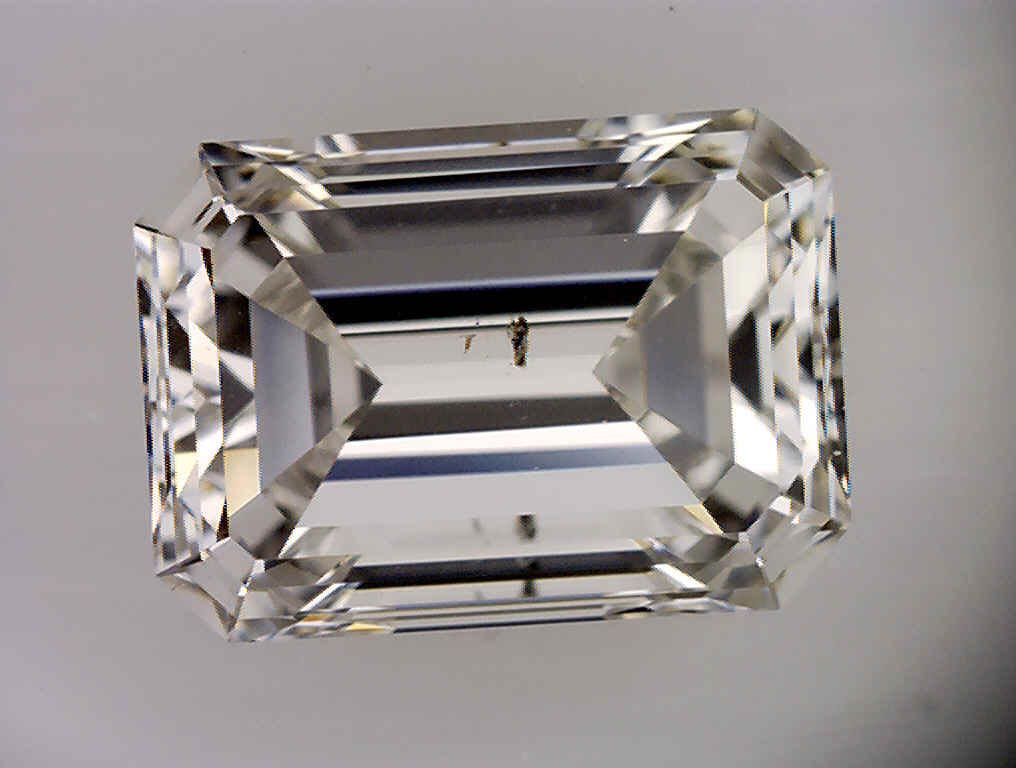
Here at the Metro Manila Gemcamp laboratory branch, a lot of clients come in with the mindset that their diamonds are genuine because they possess inclusions. Although it's far more common to see high levels of clarity in imitations like cubic zirconia and moissanite, we have seen both these materials possess white, gray and black speck-like inclusions during the course of 2017. Likewise, many glass faux diamonds can also show black inclusions, often mislabeled as 'carbon spots' or 'black diamond inclusions' by the local vendors. Be very wary of entertaining assumptions when it comes to diamond authentication.

We have also encountered cases where lighter colored beryllium-treated orange sapphires were thought to be colored diamonds by because they possessed darkish spots. Some specimens of faceted quartz were also quickly debunked as being non-diamond gemstones using differences in their mineralogical properties.

"Carbon Spots" are what many local dealers call the darkish inclusions inside diamonds, but many modern fakes these days can actually re-create the look of dark or black colored inclusions, even in glass or plastic imitations.


When you go around some areas of Manila, it's a frequent occurrence to hear the term "carbon spots" when dealers speak about diamonds, especially with the old European cut stones or rose-cut antique gems. In actuality, diamonds can have different crystal or mineral inclusions inside their interior. We have seen diamonds that contained tiny gem-quality garnet crystals within their interiors. These garnets showed up bright red and were eye-visible in fact. Gemstones-within-gemstones like these can actually raise the price of a colorless diamond, as their rarity creates a demand for collectors of rare mineral specimens.


Most grayish or dark inclusions you will find in diamond are actually composed of the mineral graphite. Graphite is usually seen as isolated crystals or cloud-like groups within the stone itself, and can form with relation to the original rough crystal's growth shape and pattern.

So there you have it, while graphite (made of carbon) is a common inclusion in many natural diamonds, having dark inclusions or spots does not automatically mean that your gemstone is a genuine diamond. Many faux diamonds are also manufactured or precisely cut to display some inclusions that make them appear more 'natural'. Even plastic imitations have been found to possess dark spots from time to time, so it's really not that hard for manufacturers to add in.

It's always best to find a reputable jeweler who is also willing to have the diamond tested with third party labs, like ours. If a diamond is genuine, then there would be no discrepancy in our identification results and findings.
Read more »
Gemcamp Laboratories
0 Comments

You Might Also Like

Discussing Moissanite Against Genuine Diamond in the Context of Today's Evolving Jewelry Societies

Discussing Moissanite Against Genuine Diamond in the Context of Today's Evolving Jewelry Societies


Moissanite is affordable to many, however other diamond simulants like cubic zirconia, synthetic spinel or man-made colorless sapphires are usually a little less costly in comparison. The traits of moissanite that differentiate it visually from these other gemstones are usually the selling points to which people find themselves drawn to.


One noticeable characteristic of moissanite is its high level of dispersion. This allows it to showcase more "fire" or the spectral flashes of color you would see when rocking and tilting the stone under light. moissanite possesses a dispersion rate of 0.104, compared to diamond's lesser dispersion rate of 0.044. We can see through these numbers alone that moissanite's fire would most likely show up stronger than an equivalent quality of diamond. Now, to some this is a good thing, but there are also many jewelry lovers who describe moissanite's fire to have a "disco ball" effect, which might mean that its fiery appearance is too flashy for their taste. Personal preference has a major hand in the present moissanite demand on the market.


Moissanite is a Diamond Simulant / Imitation. It is Very Different from Natural OR Man-Made Diamond, Because it Possesses an Entirely Different Chemical Structure and Composition.


The stone's refractive index is also higher than diamond's, being at 2.65 to 2.69. Moissanite is actually a doubly refractive stone, unlike diamond or Cubic Zirconia. This means that once light enters its interior, it bends and changes direction slightly.


Moissanite can sometimes show "doubling", especially when viewed under a microscope. This can be observed by looking through the stone in magnification, and staring at either the back-facets or inclusions. Be careful though when testing this way, as the stone will have certain directions that will not showcase the doubling effect. This would be called an optic axis direction, and all doubly refractive gems (anisotropic gemstones) have at least one, depending on their crystal symmetry.

Hardness is another trait that moissanite scores well in. It belongs to the rate of 9.25 on the Moh's scale, which is even higher than ruby or sapphire. Diamond still reigns as the hardest mineral though at a Moh's rate of 10.

Virtually all moissanite you would see in the jewelry trade is man-made. The natural counterpart was discovered by a man named Henry Moissan back in 1893. These crystals are usually quite small and incredibly rare, so their usage in the jewelry trade would not merit much following. The stone's brilliance and optical properties though, gave scientists the motive to create synthetic versions using a process called sublimation.

Despite moissanite's diamond-like qualities, many specimens also tend to look a little greenish or grayish, depending on the quality of their production. This is one of the more negative observations regarding moissanite as a diamond simulant, however the best batches of man-made moissanite do not possess such a degree of color overcast, and instead can look very much similar to traditional colorless diamonds.

Today, the industry often uses "moissanite testers" to scan for these gems, as the standard electronic diamond testers can miss them (due to moissanite's high thermal conductivity).


Read more »
Gemcamp Laboratories
0 Comments

You Might Also Like

The Most Common Kinds of Fake Diamonds You'll See in the Philippines

The Most Common Kinds of Fake Diamonds You'll See in the Philippines


Although the term 'fake' is widely used when pertaining to something that imitates the genuine article, a better term for these types of look-a-likes would be "simulant". Now simulant means that a stone has a different chemical composition and a different atomic structure when compared to the real thing. Glass that is cut to look like a faceted diamond, would be classified as a simulant. It is something that resembles only in outward appearance.


This is very different from the term "synthetic", which (for the gemstone industry) refers to a material that has the same essential chemical composition and atomic structure as the original, but was in fact grown artificially in a laboratory.


Diamond holds one of the highest value-per-weight materials in the world, so naturally a lot of people want to create 'fake' or faux versions of the precious gemstone.


Today let's take a look at some of the most common fakes, imitations or simulants out there on the diamond market. First up, we have the most commonly used stone; cubic zirconia. Now this refers to cubic crystalline form of zirconium dioxide.

CZ, as it's more commonly known, is the synthetic counterpart to baddeleyite, which was discovered in 1892, and is the yellowish natural form of zirconium oxide. CZ is extremely popular because its optical properties are very close to those of diamond. Although it only possesses a hardness of 8.5, cubic zirconia fashioned into round brilliant cuts, display more 'fire' than diamond, due to a higher dispersion rate. Much of the trade involving faux diamonds make use of CZ crystals for their brilliance and scintillation, echoing the 'feeling' of diamond, with much lesser costs.


Lately, several proprietary brands follow the trend of concocting their own slightly altered recipe for creating cubic zirconia. Through their efforts, they claim increases in brilliance, hardness, and other properties- however these minor trace impurities are not enough for most laboratories to change their label from cubic zirconia to something else.


Next up, we have synthetic moissanite. This material is typically more expensive than CZ, but poses a different set of difficulties when separation from diamond is needed. Standard pen-hold thermal detectors (diamond detector machines), will often label moissanite as diamond, due to their very close thermal conductivity ratings. Dual or electronic conductivity testers may have a better chance at detection, but we've often seen these machines misread stones as well. Moissanite however, is a doubly refractive stone, and splits light rays that pass through its material, unlike diamond which is singly refractive. Moissanite also displays a lot more fire (dispersion than diamond), as pictured below.


After CZ and moissanite, secondary imitators of diamond are glass, white sapphire (natural or synthetic), rock crystal quartz, and synthetic colorless garnets like gadolinium galium garnet and yttrium aluminum garnet. These stones also have appearance similarities to diamond, but not as much as the previously mentioned high rankers. Their gemological properties allow gemologists to properly separate them from diamond as totally different species of gemstones.
Read more »
Gemcamp Laboratories
0 Comments

You Might Also Like

Cubic Zirconia VS Natural Diamonds

Cubic Zirconia VS Natural Diamonds


A lot of buyers out there are surely familiar with the infamous Cubic Zirconia gemstones, also known simply as "CZ" by most in the trade. These little brilliant gemstones are pretty much always a result of man-made endeavors. The material itself is actually the cubic form of crystallised zirconium oxide. Scientists have noted that natural zirconium oxide was discovered in the year 1892, as the mineral called baddeleyite, however its yellowish form was hardly comparable to the brilliant CZ specimens manufactured by thousands of companies today.

CZ in its own right, is a brilliant gem that displays a very beautiful luster and vivid dispersion. Perhaps these traits are among the reasons why many people confuse CZ with diamond at first glance. The proper knowledge can help everyday people differentiate between these two stones quite easily, and therefore avoid being swindled by any dishonest merchants that don't fully disclose their product's actual identity.

So today, let us examine the property differences between cubic zirconia and the world's hardest gemstone; diamond.

First off, diamonds are much harder than CZ, with a Moh's scale rating of 10 versus 8. Most CZ stones are also packed together, so watch out for surface scratches and the presence of abrasion marks. This can be a hint that the stone you are viewing could be CZ rather than diamond. Usually diamonds of a half carat size or bigger,  are kept safe in individual containment cases. This prevents them from getting scratches from contact other diamonds.

Cubic Zirconia gems have a specific gravity rating that is about 1.7 times diamond's, thus they may feel slightly heavier when you bounce them lightly on your palm. Doing the specific gravity test using a hydrostatic scale would be a more accurate way to measure this property.

Many people notice how colorful CZ's dispersion can be when you rock and tilt a stone. What they don't usually know is that CZ's dispersion rate of 0.058 - 0.066 is actually higher than that of diamond's, which is at 0.044.

This doesn't mean that CZ is more beautiful, it simply tells us that more 'fire' can be seen when viewing CZ gemstones, especially under spot-illumination.

Fire is only one of the many factors that contribute to both gems' visual appeal. Diamond's luster is much stronger than CZ's because of its tightly knit atomic structure. This fact allows diamonds to reflect more light back to our eyes, hence making the reflections brighter and stronger. This trait is linked to the stone's superior hardness as well.

Diamond also has a refractive index value of 2.42, compared to CZ's RI of 2.15 to 2.18.
Most refractometers used in gemology cannot see these RI values in their scale (too high), however the difference in each gem's optical density can be observed using other methods.

CZ is the Most Commonly Known Diamond Simulant Today, Apart from Ordinary Glass. Its Properties Make it Difficult to Differentiate from Diamond, but Certain Tests Can Help You Tell if Your Stone is Actually a CZ or Something Else Entirely.


One easy-to-do test is called the read-through exam. This takes advantage of the different optical densities possessed by two different gem species. Placing a business card with 'small font' text (2 to 3 mm-tall text) under a faceted CZ stone will still allow you to make out the letters (although rounded significantly). Doing the same with a diamond will only show you a gray or murky area if you try to read the text through the gem. Do this with both stones pavilion up and observe the difference. Most people actually find this simple exam very useful for round brilliant cut stones, although of course there are always better scientific ways of separation done in a laboratory.

If you possess a microscope, you can check for an 'orange pavilion flash' on CZ stones by viewing them pavilion-up in darkfield illumination. On the contrary, diamonds will usually display a spectral-looking range of colors in this position, rather than an orange flash.

Some other simulants may be a bit more confusing though. Moissanite, Yttrium Aluminium Garnet and Diamond Coated CZ may all show a different result when subjected to these basic tests, so be vigilant and open to other conclusions.

There are many other ways of differentiating these two famous stones from each other, and from other common imitations as well. The fact also remains that newer and newer simulants are being discovered every day. Always be aware of this ever-present possibility, and stay curious in your journey to uncover more about the rewarding world of gemstones and gemology.

Read more »
Gemcamp Laboratories
0 Comments

You Might Also Like

[name=Gemcamp Laboratories] [img=http://www.gemcamp.org/img/gemcamp-black-badge-3.jpg] [description=A Philippine-based laboratory group headed by GIA graduate gemologists who share a collective passion for the sciences that support gemstone identification and evaluation.] (facebook=https://www.facebook.com/gemcamplab/) (twitter=https://twitter.com/gemcamplab) (instagram=https://www.instagram.com/gemcamplaboratories/) (pinterest=https://www.pinterest.ph/gemcamplaboratories/)

Follow @Gemcamp Instagram