Theme Layout

Boxed or Wide or Framed

Theme Translation

Display Featured Slider

Featured Slider Styles

Display Grid Slider

Grid Slider Styles

Display Trending Posts

Yes

Display Author Bio

Display Instagram Footer

Dark or Light Style

Showing posts with label Colored Gemstones. Show all posts
The 392.52 carat Blue Belle of Asia, An Extraordinary Sapphire (4th Largest in the World)

The 392.52 carat Blue Belle of Asia, An Extraordinary Sapphire (4th Largest in the World)


While many notable fancy colored blue diamonds grace the halls of auction houses around the world, colored stones like blue sapphire can also achieve a level of quality and prominence worthy of high distinction and exclusivity. One of the largest pristine blue sapphires ever to arrive at the international jewelry scene is aptly named the Blue Belle of Asia.


This 392.52ct vivid blue gemstone was recorded as the fourth largest sapphire in history, following the likes of the Queen of Romania Sapphire, the Blue Giant of the Orient, and the Logan Sapphire. It was mentioned that this particular gem was unearthed from the gem-rich mines of Sri Lanka, previously referred to as Ceylon. Many blue sapphires of bright saturation and medium to medium-light color are still called 'Ceylon Sapphires' due to the notable production of fine blues associated with the area.

The Blue Belle of Asia has a long history of ownership. After its discovery in the 1920's, it was soon obtained by Macan Markar in Colombo. Then in 1937, Lord Nuffield, the founder of Morris Motors Limited bought the sapphire for his estate. There were some indications that the stone had meant to be presented to Queen Elizabeth for her coronation in May of 1937, however this did not happen as the Blue Belle instead vanished from the public eye for the next several decades.


In 2014, Christie's auction house held a Geneva auction wherein the Blue Belle of Asia was seen again. The stone at the time was listed by a private persona, and it eventually sold for just over 17 million dollars, which at the time broke all records for the most expensive colored gemstone to be sold at auction. There are not many sapphires of this quality and size, even in national museum displays and exhibitions.

Its historical significance and rarity shows collectors that sapphire's place as part of the 'Big Three' colored gemstones (along with ruby and emerald) is well earned in the jewelry trade, and that fine blue sapphires are truly some of the rarest treasures of nature.

Read more »
Gemcamp Laboratories
0 Comments

You Might Also Like

Hortus Deliciarum, Designer Alessandro Michele and Gucci Create an Vivid Garden of Fine Jewelry Pieces

Hortus Deliciarum, Designer Alessandro Michele and Gucci Create an Vivid Garden of Fine Jewelry Pieces


Gucci has long been famous for its aristocratic and chic fashion luxuries, from handbags to sunglasses, this titan of the trade has become a household name synonymous with expensive tastes and refined accessories. Many today though are expressing their curious interest in a relatively new venture from the company- fine jewelry from the artistic mind of designer Alessandro Michele. Aptly titled "Hortus Deliciarum", Michele has created a series of 200 unique jewelry pieces that center around the verdant natural wonder of a garden teeming with life.


A romantic take on the concept of eternal love inspired him to incorporate a pristine selection of coloured gemstones for many of his pieces. Themes that centralise on the emotion exuded by both flora and fauna, manifest themselves well in this exuberant collection of wearable artworks. Gemstones such as tourmaline, diamonds and topaz scintillate and glitter against the bold metals and convoluting designs, depicting his subjects in an ambience of tantalising mystic and true novelty.


Gucci's pioneer fine jewelry boutique will be at the famed Place Vendôme, a locality known for its series of high end luxury galleries and shops, with brands like Van Cleef & Arpels and Cartier showing prominent collections of their own in the area.

(Photography Credit: Gucci, Hortus Deliciarum)


Read more »
Gemcamp Laboratories
0 Comments

You Might Also Like

 Christie's Maharajas & Mughal Magnificence Auction Garnered $109.2 Million. The Second Highest Auction Total for a Private Jewelry Collection

Christie's Maharajas & Mughal Magnificence Auction Garnered $109.2 Million. The Second Highest Auction Total for a Private Jewelry Collection


On June 19th of 2019, Sheikh Hamad Bin Abdullah Al Thani through Christie's auction house put together a ground-breaking collection of almost 400 gemstones and jewel-encrusted objects for public offer. This esteemed sale may prove to be one of the highest in value of all time, in tier with the Elizabeth Taylor collection- which itself garnered around 115.9 million dollars back in 2011.


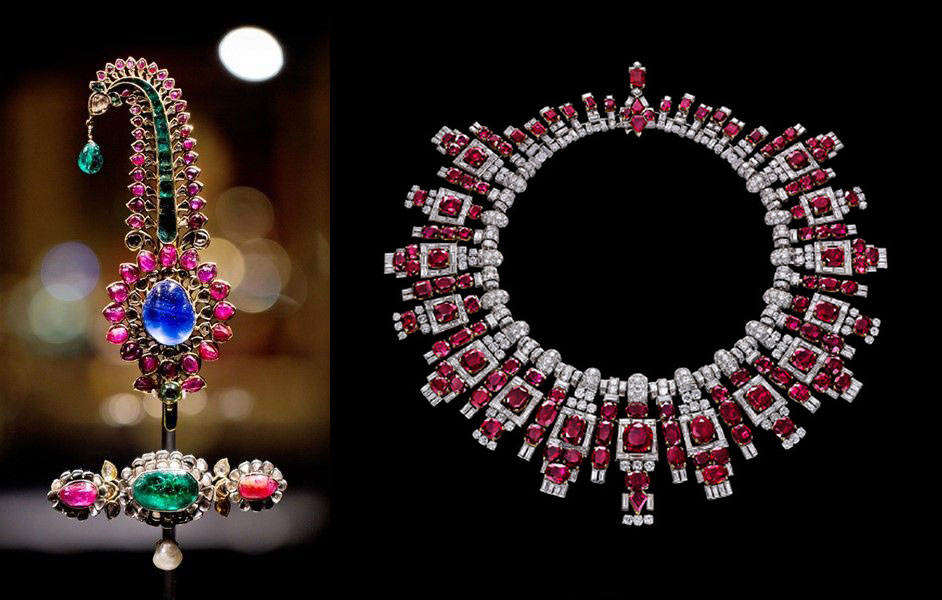
Many of the breathtaking artifacts and jewelry have a historical significance factor added to their appeal. Certain items span centuries-worth of stories, and many lots are comprised of Mughal royal objects, such as a dagger with precious jade affixed to its hilt design.

Other slightly more modern items come from the notable design houses of Bulgari, Linzeler, Lacloche and Cartier among others. Different kinds of rare and illustrious colored stones will take to the spotlight, as emeralds, rubies, sapphires and of course diamonds get showcased through the prestigious sale.


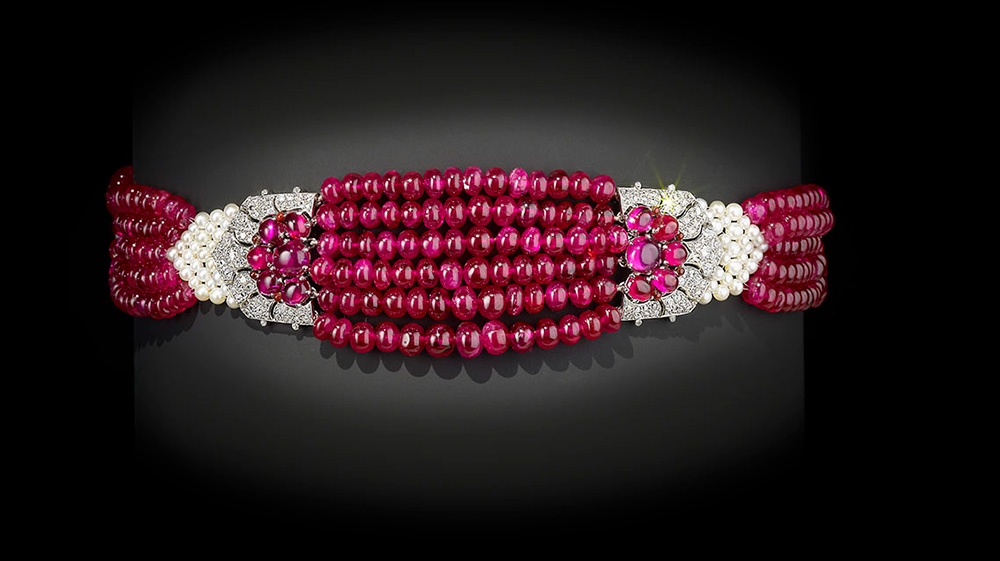
High-visibility items like the Patiala Ruby Choker- commissioned by Maharaja Bhupinder Singh of Patiala to Cartier in the early 1900's, will undoubtedly be some of the center-stage highlights. This item in particular has an estimate pegged at around 1.2 million US dollars.

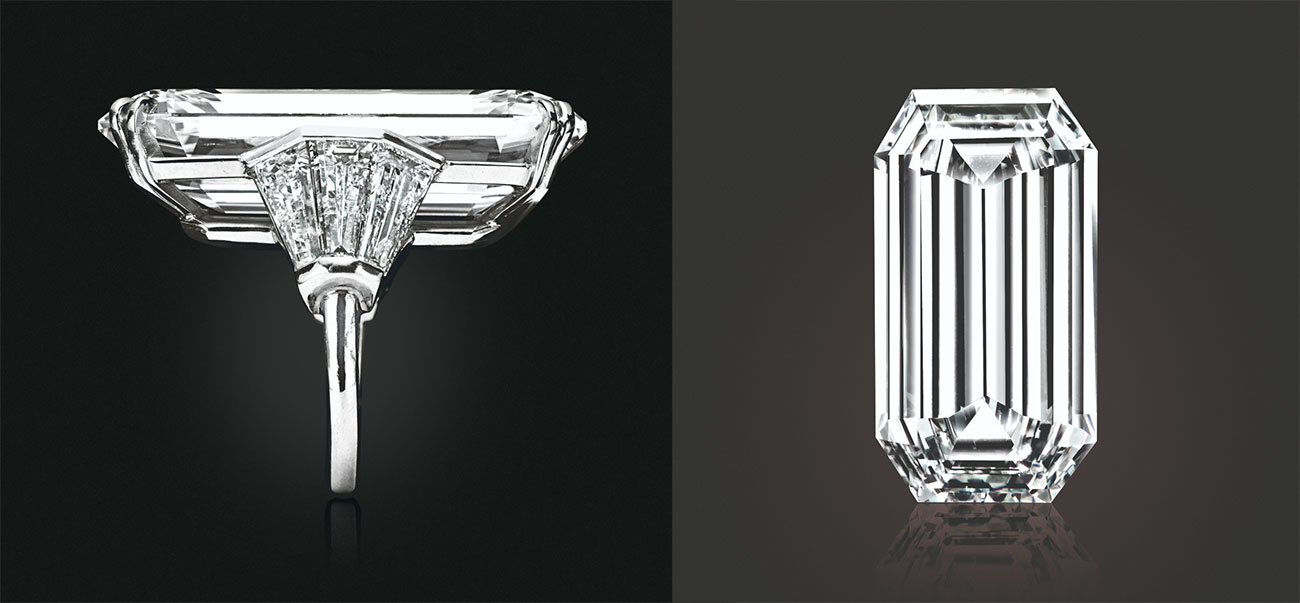
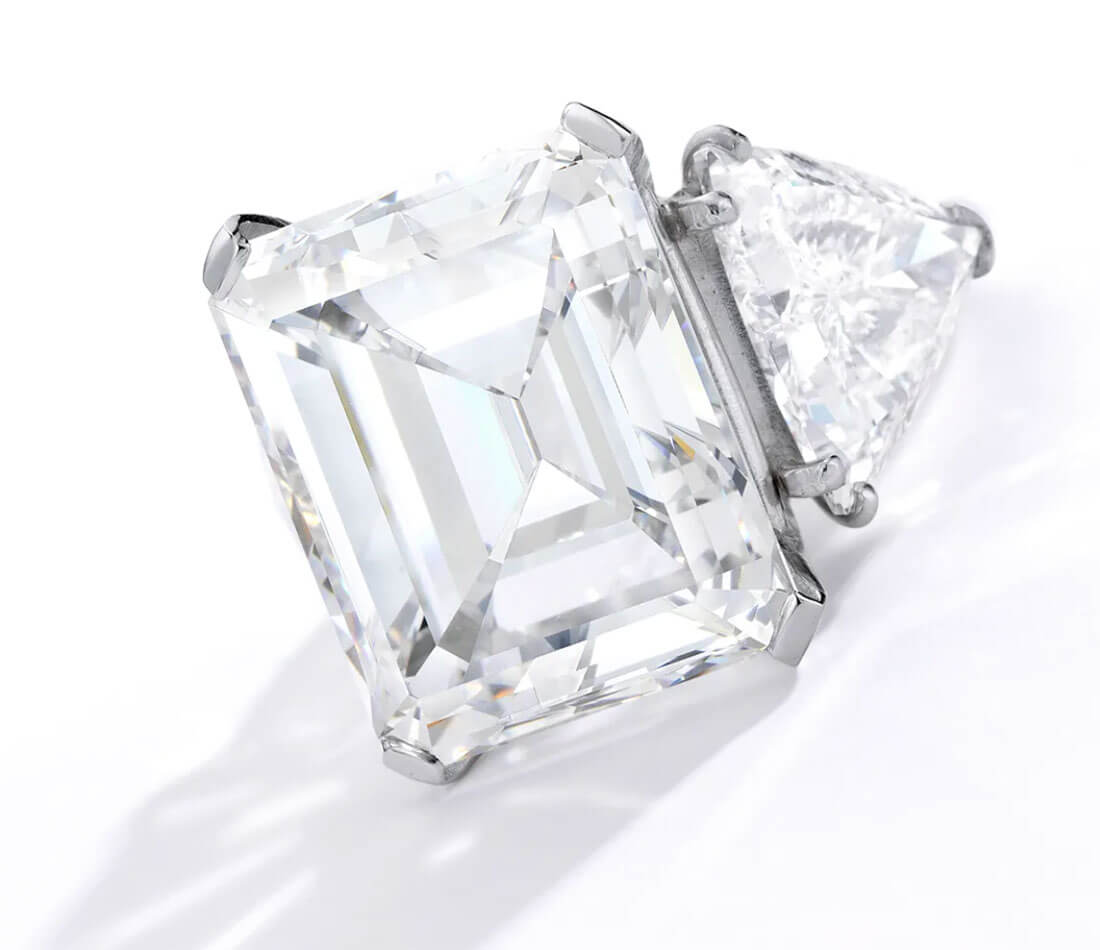
Another included item that has garnered recent fame, is the elegantly named 'Mirror of Paradise' diamond, which is graded at D for color and IF (Internally Flawless) for clarity. This 52.58ct rectangular cut diamond has an estimate range of around 7 to 10 million dollars.


The collection's highlight pieces will be travelling around the world, to displays in Hong Kong, London and Geneva, as is expected of featured lots managed by Christie's. The full suite of the auction items will also be shown at the Christie’s Rockefeller Center galleries located in Manhattan.  The Al Thani Collection still holds around 5,600 individual items, some of which will be shown in Paris starting next year, at a new museum location.

Photography Credit: Christie's Auctions, The Al Thani Collection
Read more »
Gemcamp Laboratories
0 Comments

You Might Also Like

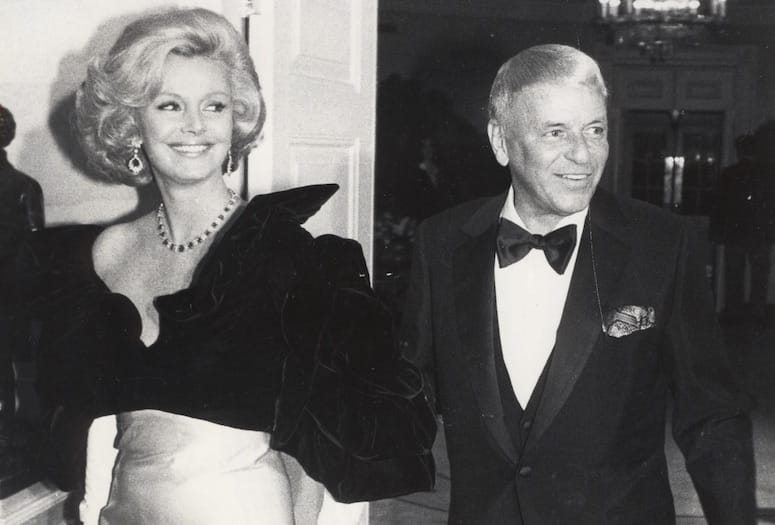
Watching Frank Everett's Narration on The Magnificent Jewels of Barbara Sinatra

Watching Frank Everett's Narration on The Magnificent Jewels of Barbara Sinatra


Many connoisseurs in the jewellery trade are familiar with the annual auction events held internationally. From Geneva to New York, greatly anticipated events led by the duopoly of Christie's and Sotheby's auction houses, have shown us some of the world's most tantalising jewellery from human history's most well known brands and designers.


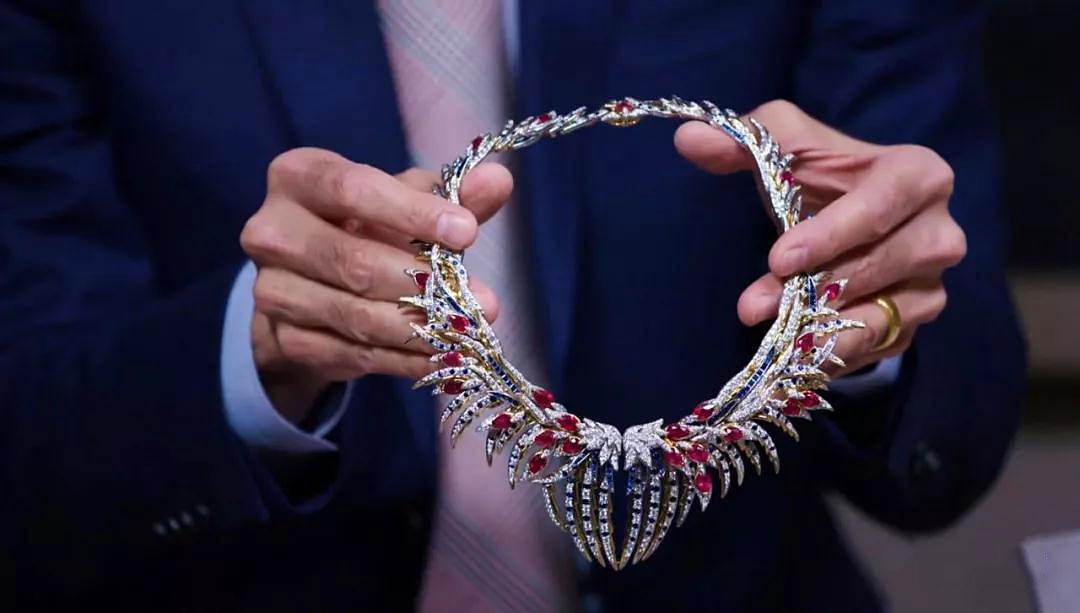
Photography: Sotheby's Auction House, Plume necklace by Jean Schlumberger (Tiffany & Co.)

One particular storyteller we often like watching (just for his charismatic narration of significant pieces) is Frank Everett, who spotlights his own section called Frank's Files, on Sotheby's online platform. Here's an episode link where he timelessly describes a couple of novelty pieces from the collections of Barbara Sinatra (wife of Frank Sinatra) and Happy Rockefeller.


Some of the oldest jewellery design houses in the western world are often featured on his segments, including pieces by Cartier, Van Cleef & Arpels and Tiffany & Co. Both diamonds and rare coloured stones are often incorporated within the same piece, creating a mysterious allure unbound by a single hue or theme. Rubies, emeralds and sapphires are among the world's highest priced gemstones, and they're often found in the collections of society's most well regarded socialites and personalities.


Read more »
Gemcamp Laboratories
0 Comments

You Might Also Like

The Many Colors of Tourmaline

The Many Colors of Tourmaline


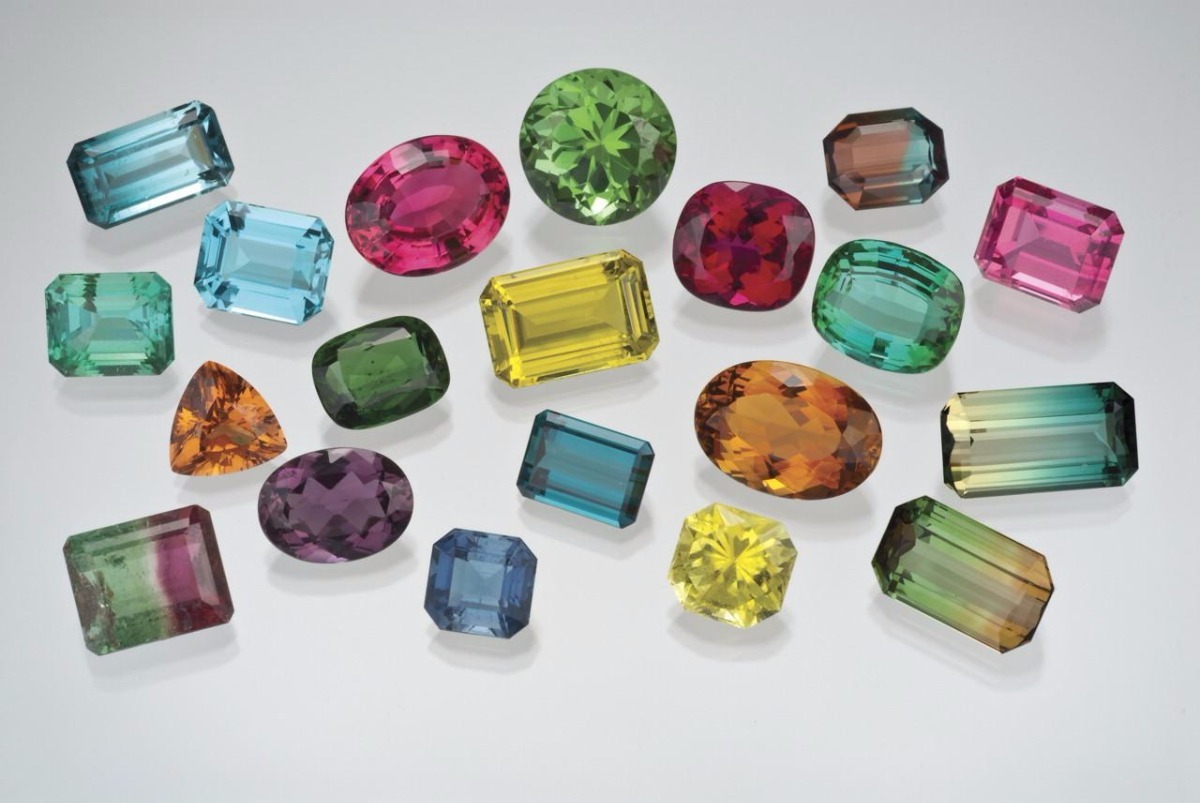
When you think of tourmaline, what color comes to mind first? Is it the raspberry red hues of rubellite? The neon electric blues of specimens from Paraiba? or is it the multi-colored elongated crystals of liddicoatite?

Tourmaline isn't a single gemstone species, it's actually a group. Specifically, it's a boron-silicate group that has a lot of different species and many different varieties, which can all possess a large diversity of colors, inclusions and appealing factors.


Tourmaline though, is the term people are most familiar with. Not many who buy tourmaline jewelry refer to a species specifically by name- examples of which would be elbaite, or dravite. These names are not really used in mainstream jewelry very much.

Certain trade-locality names like Paraiba, named after the vibrant green-to-blue specimens from Brazil's Paraiba area, have become popularly used as well. Paraiba tourmaline is now one of the most expensive kinds of tourmaline.


Other names like indicolite (normal blue) and verdelite (normal green) are also sometimes used for both jewelry and loose-stone trading at gem fairs and shops, but the group name 'tourmaline' is by far the most popularly used name for this gemstone.

Tourmaline is probably the (if not one of the) largest group of gem-worthy minerals out there, with colors ranging from black (schorl) to colorless (achroite), and nearly every color of the rainbow.

It can compete with the upper tiers of colored stones in terms of value, and can also provide slightly more affordable alternatives to traditional gems like ruby or emerald. Tourmaline is one of the fastest growing gems today, in terms of recognition amongst new jewelry collectors and enthusiasts.

Here at Gemcamp, we do see many colored gemstones being brought in for testing, tourmaline being one of the fairly common ones. One of its most defining gemological traits is a very consistent level of birefringence or double refraction, which can be spotted even in faceted gems.
Read more »
Gemcamp Laboratories
0 Comments

You Might Also Like

Sphene, The Jewelry Collector's Spectral Fire Gemstone

Sphene, The Jewelry Collector's Spectral Fire Gemstone


In the world of colored gemstones, there are certain species and varieties that people consider to be collector's gems. This may have different meanings for some (possibly referring to high-end auctioned gems in some cases), but for many enthusiasts- a collector's gem is a species that has its own unique optical beauty, despite not always being used in main stream jewelry stores.


Today we'll look at one of these uncommon, yet beautiful collector's gems that you may or may not have seen in the Philippine jewelry circles. It's frequently seen by our gemological team during visits to international gemstone fairs in Hong Kong or Switzerland, but locally only very few brands seem to carry it in their jewelry designs.

Sphene, which is sometimes also called Titanite, is a stone with a dispersion rate greater than that of diamonds. What is dispersion you might ask? Well, dispersion rate actually governs the amount and intensity of the spectral color flashes you see when rocking and tilting your gemstone. Those sharp, crisp sparks of red, blue and green that a lot of people usually associate with diamond- this in layman's terms is called 'fire', but we refer to it as the dispersion of light.


This gem can be found in many colors, but its most popular hues are yellowish green and orangey brown. It's quite easy to recognise due to its strong fire display. Couple that with another interesting property; a very high birefringence. This specific trait splits incoming light rays into two, visibly observable by looking into the stone and seeing its inclusions or back-facets double. Sphene is considered a doubly refractive stone, and while many other stones also show visible doubling of interior characteristics, sphene's birefringence value of ‎0.100-0.192, makes its doubling one of the strongest in the realm of gemstones.

When buying sphene, always look for a good balance between fire, bodycolor and clarity. Sphene tends to have a lot of inclusions, which may seem larger or more plentiful than they actually are due to the effects of its strong birefringence. This stone, while not as popular as ruby or emerald, has its own indescribable appeal. You'd have to see it in person to really appreciate the elegant combination of traits that it possesses. Here at the laboratory, we have seen a few high-end jewellers and gem enthusiasts bring in specimens of faceted (fully cut) sphene for checking.
Read more »
Gemcamp Laboratories
0 Comments

You Might Also Like

Demantoid Garnets and their Fireworks or Horsetail Inclusions

Demantoid Garnets and their Fireworks or Horsetail Inclusions


In 1868, demantoid garnets were first discovered in Russia, near the village of Elizavetinskoye and the Bobroka river. Being the green variety of the andradite garnet species, demantoid today functions as a popular collector's gem, being prized for its high dispersion rate, which allows it to showcase spectral colors when rocked and tilted. The stone possesses a high refractive index and luster that is significantly sharper than most other colored gemstones.


Demantoid is one of two green garnet varieties that are frequently seen in the modern jewelry trade, the other being tsavorite; the green variety of grossularite garnet. Unlike tsavorite, demantoid can have diagnostic inclusions that notably increase their values due to popular demand. "Horsetail" or "Fireworks" inclusions are radiating thin needles of chrysotile that are frequently seen in certain demantoid specimens.


This variety of garnet gains its green color from the presence of a trace element called chromium. Additionally, the presence of iron also causes a yellowish modifying color in most stones, however pure green colors are more highly sought after, and correspondingly more valuable. Demantoid actually got its name from the french word 'demant' which refers to diamond. This is because it shares many similar properties with the world's most famous colorless gem. Demantoids have strong spectral fire, and incredibly high luster, which caused a lot of people to compare it with diamond during the years after its initial discovery.

(Photography credit: Sotheby's Auction House)

Demantoid garnets' most famous source is Russia, but other localities such as Namibia, Afghanistan and Italy also produce gem-quality specimens of green andradite garnet. Stones are more typically unearthed in small sizes, making a majority of faceted products in very low carat weights. Large demantoid garnets can command high prices due to their rarity.
Read more »
Gemcamp Laboratories
0 Comments

You Might Also Like

[name=Gemcamp Laboratories] [img=http://www.gemcamp.org/img/gemcamp-black-badge-3.jpg] [description=A Philippine-based laboratory group headed by GIA graduate gemologists who share a collective passion for the sciences that support gemstone identification and evaluation.] (facebook=https://www.facebook.com/gemcamplab/) (twitter=https://twitter.com/gemcamplab) (instagram=https://www.instagram.com/gemcamplaboratories/) (pinterest=https://www.pinterest.ph/gemcamplaboratories/)

Follow @Gemcamp Instagram